

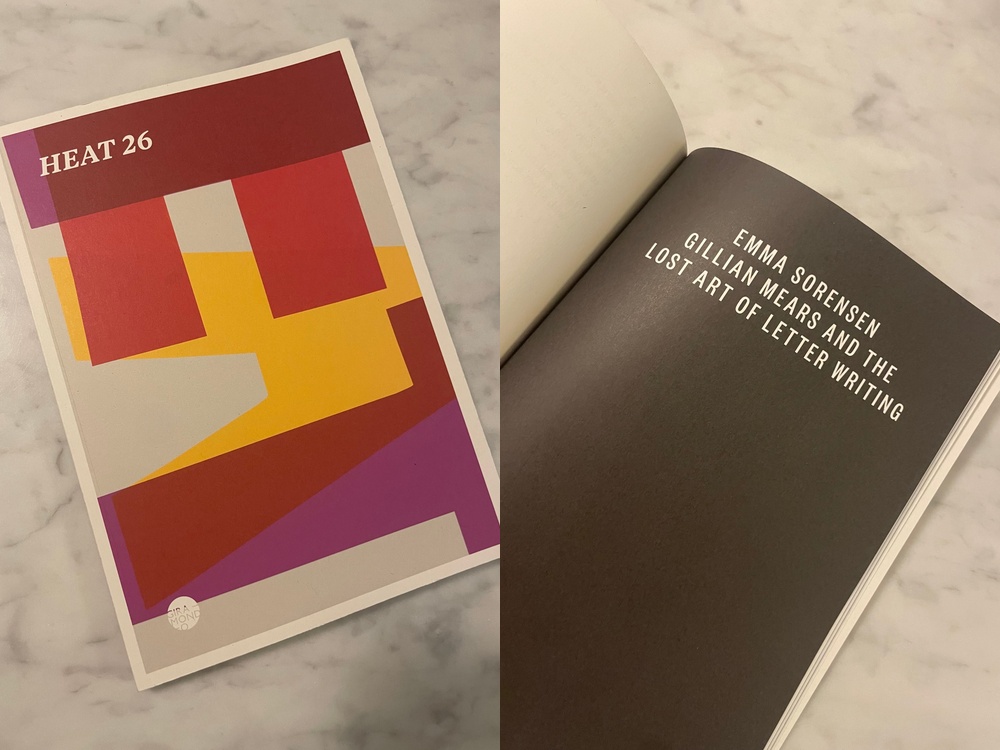
We spotted a post on Instagram from Lane Cove writer Emma Sorensen that made us very happy: her essay on the late novelist Gillian Mears has been published in HEAT 26, the literary journal from Giramondo Publishing. At In the Cove we love featuring our local authors and contributors, especially when you can pick up their work right here in Lane Cove. So we caught up with Emma to hear the story behind it.
Emma is a familiar name to the ITC team. For years she volunteered through her children’s school to find volunteer ethics teachers, which was always a hard slog, and she would regularly reach out to us to share call-outs for new volunteers. So it’s a real pleasure to be sharing her own work this time.
A writer at the dining table
Emma has lived in Lane Cove for 11 years, drawn by “the bushland and convenience”. She began her career in book publishing as a commissioning editor, then moved into journalism, writing and teaching communications at university. Her non-fiction has appeared in Antipodes, Meanjin, Island, The Letter Review and now HEAT.
Most of her working days are spent ghostwriting, “so it goes out with someone else’s name on it”. Her own writing happens at home, sometimes at her desk but more often at the dining table. “Writing for pleasure is usually solitary,” she says, “but I sometimes ask writing friends to read it.”
A letter that got a reply
The essay began with a letter. In 1999, as a uni student working on her thesis, Emma wrote to Gillian Mears to ask for an interview.
“I really didn’t expect a reply, but she was encouraging and generous with her time,” Emma says. “She was a prolific letter writer and we ended up exchanging letters for a few years after I interviewed her.”
For readers who don’t know her, Mears was one of Australia’s most admired writers. She wrote hundreds of short stories and three novels, much of it set in country towns like Grafton, where she lived for much of her life. Her last novel, Foal’s Bread, won the Prime Minister’s Literary Award in 2012 and was shortlisted for the Miles Franklin. She passed away in 2016 after living with multiple sclerosis for seventeen years.
Emma still has the letters, kept in a big box alongside old letters from friends and family. “Given how few snail-mail letters anyone sends or receives now, it feels like entering a time warp to read them.”
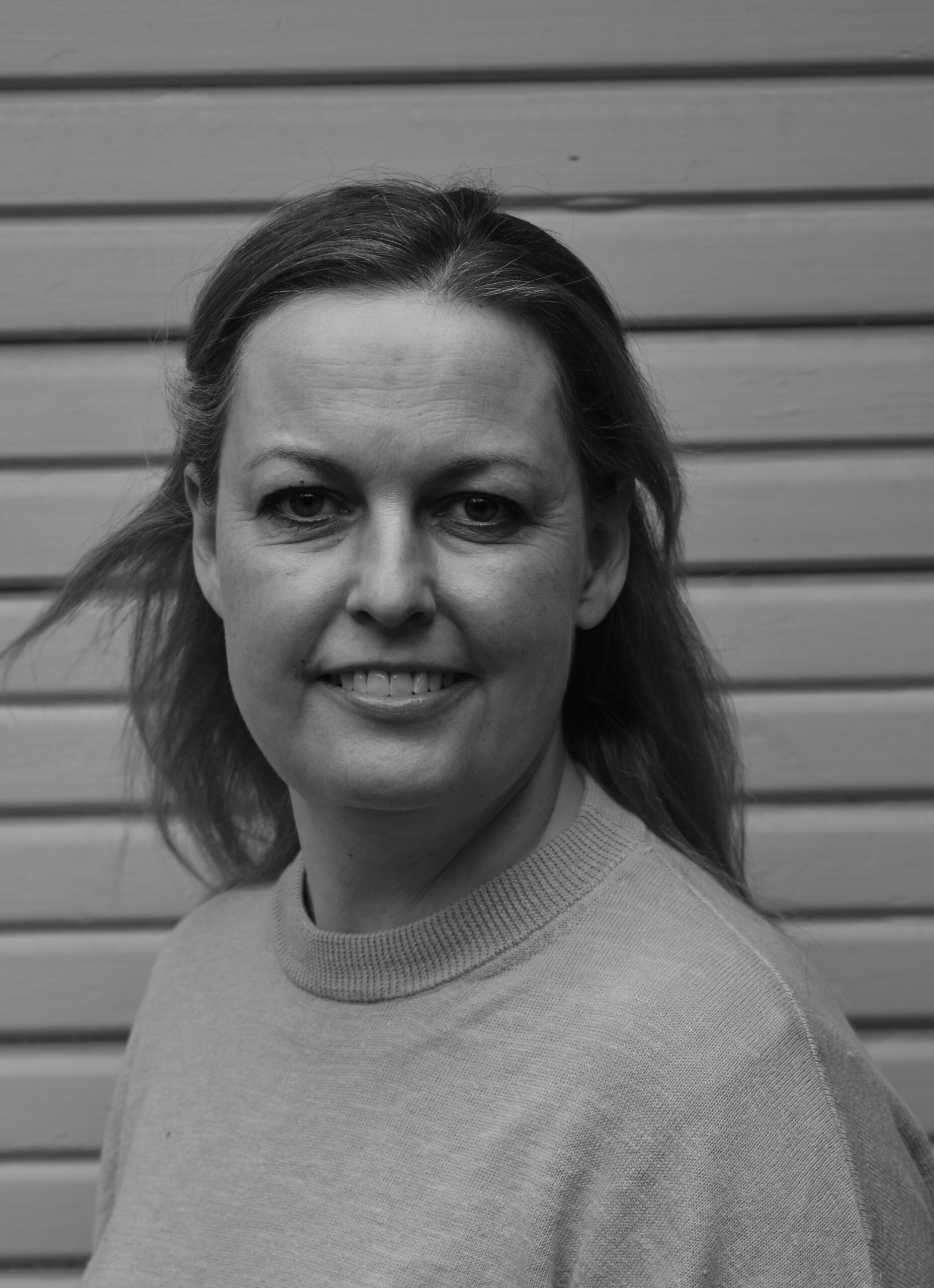
Ten years in the writing
Emma started the essay in 2016, the day after she heard Mears had passed away. She finished it this year. Why so long? “That is one of the things the essay is about: writing and not writing, and procrastination from writing.”
Mears herself once told Emma there are procrastination techniques to stop you writing. Did she take the advice? “Well, I eventually wrote the essay!”
The essay opens with an epigraph from Mears’ collection Paradise Is a Place, a line Emma has never forgotten:
“The shape of the past, I think, is like that of the hungry mosquito hanging in the near darkness by the thin gauze door: the closer I believe I am to reaching its outline, the more uncertain I become of its position.”
Seeing it in print was a thrill. “It was an honour to have my essay selected, and very exciting to see it in print in a literary journal.”
Why a letter still matters
So what does a letter do that an email or a DM can’t?
“A letter won’t be read instantly, or get an immediate reply, so there is time for reflection, depth and mulling things over,” Emma says. “Sometimes the situation may have completely changed by the time the reader receives it. You need a good reason to pay postage and physically go to send a letter. But there’s great joy in the personal nature of receiving one. Handwriting, for one.”
Does she still write them? “I always intend to. I even bought some letter writing notepaper at the Lane Cove Newsagency (I love that place), but I usually only manage a card.” Which, she adds, she also buys there.
Where to start with Gillian Mears
If the essay sends you looking for Mears’ books, Emma has a recommendation. “My favourite is her second short story collection, Fineflour. But Foal’s Bread is her most recent and probably her most popular novel.”
Emma is always slowly writing something of her own in the background, and has finally joined Instagram, where you can follow her at @emmasorensenwriter.
Get your copy of HEAT 26 locally
- The Bookery and Dymocks Lane Cove can order it in for you
- The State Library of NSW shop stocks it
- Buy it online from Giramondo Publishing
- Read Emma’s essay, “Gillian Mears and the Lost Art of Letter Writing”, online here
- Follow Emma on Instagram: @emmasorensenwriter
Are you a Lane Cove author, poet or contributor with new work out? We’d love to hear about it. Get in touch with the ITC team.
In the Cove is free to read, with no paywall. If you value independent local stories like this one, you can support ITC here.