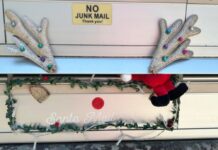
“I’m sure they’re breeding in the letterbox (the magnets, not the tradies).”
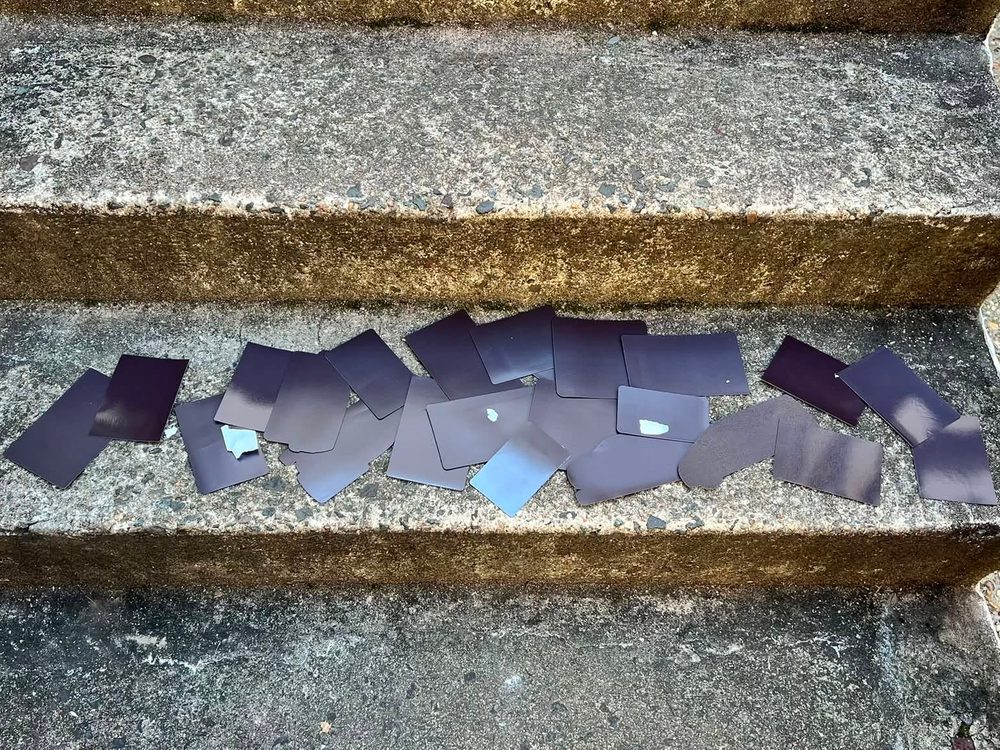
That was one member of our Lane Cove Chat by ITC Facebook group back in April. Five months later another member cleared her letterbox and lined up 23 of them on her front steps. About two to three weeks’ worth, she said. Several from the same businesses.
It’s not just Lane Cove. Next door, Ku-ring-gai Council had to shut its magnet collection bin because it couldn’t keep up.
Both posts lit up. Plumbers, electricians, real estate agents, painters, tree loppers. Everyone had a story and nobody had a good way to get rid of them. So we looked into it. Can you recycle them? Why does your No Junk Mail sticker not stop them? And is anyone doing anything about it?
What our readers said
The frustration was loud and pretty unanimous.
“Maybe we should make a magnet for our letterbox. ‘If you leave me your magnet I will never use you.'”
Several members said they ring the business directly and tell them they will never use them. Another, who has worked in advertising and marketing her whole career, said she had never once recommended magnets to a client or heard of anyone else doing it.
One member noticed something odd. She saw some of the exact same magnets on her sister’s fridge on the NSW South Coast. “Some of them are made to look like they are some young local bloke,” she wrote, “but if that’s the case he has a very wide coverage area from Lane Cove to Milton.”
Real estate flyers came a close second in the complaints. “Our letterbox clearly says no junk mail, but they don’t think it extends to them,” one member said. “Every single day.”
Can you recycle fridge magnets?
No. Not in your yellow bin and not anywhere we could find in Sydney.
Planet Ark explains that advertising magnets are essentially plastic. They are usually a flexible vinyl sheet with a layer of magnetic powder, with the printed ad glued on top. That mix of materials is why they can’t go in kerbside recycling.
For a while the Coal Loader at Waverton collected them. It no longer does. North Sydney Council’s recycling station page now lists advertising magnets as an item it no longer takes, and asks residents to contact the company that sent them and ask them to stop.
If you can’t reuse them, they go in the red general waste bin.
Why your sticker doesn’t stop them
As we explained in our guide to No Junk Mail and No Advertising stickers, a sticker on a NSW letterbox is a request, not a law. The Distribution Standards Board code tells its members to respect it, but the code is voluntary. Plenty of small businesses and the people they pay to drop magnets have never signed up.
Queensland is different. There it is an offence to put unsolicited advertising in a letterbox with a No Junk Mail or No Advertising Material sign, and the Queensland Government’s own list of examples specifically includes refrigerator magnets and letters advertising a tradesperson. In New Zealand, Wellington treats junk mail delivered to a No Junk Mail letterbox as litter and distributors can be fined up to $400.
In NSW the law only covers where advertising ends up outside the letterbox. Leaving it on fences, gates or car windscreens is illegal. Inside the letterbox, sticker or no sticker, it isn’t.
Has anyone tried to ban them?
Yes, a few times. Each time the problem has been passed somewhere else.
In 2021 a petition to federal Parliament asked for the mass distribution of fridge magnets to be made illegal because most end up in landfill. It gathered 65 signatures and was presented to the House of Representatives on 18 October 2021. A Change.org petition the same year called on state governments to do the same.
The federal reply came in December 2021 from Trevor Evans, then Assistant Minister for Waste Reduction. He said phasing out problematic plastics, “including composite materials such as magnets”, is the job of state and territory governments. His advice to the petitioners was to contact their state representatives.
So someone did. In May 2023 Greens MP for Newtown Jenny Leong put a question titled “Fridge Magnet Waste” to the NSW Environment Minister, after constituents raised the waste from unsolicited advertising magnets with her office. She asked what oversight exists for this kind of waste and what the Government could do to reduce it.
The answer, published in June 2023, pointed to existing litter laws. Those only make it an offence to leave advertising in public places, on gates and fences or under windscreen wipers. Letterboxes and doors are fine. The answer added that the state’s Plastic Reduction and Circular Economy Act 2021 can be used to ban problematic plastics or set product design standards, but any new rules would need public consultation first.
So has anything changed since? We asked the NSW Environment Protection Authority whether advertising magnets had come up in any plastics review since 2023. A spokesperson pointed us to the state’s Plastics Plan 2.0.
The ITC newsletter
Never miss what's happening in Lane Cove
Free local news in your inbox every Thursday. Join thousands of locals.
“In November 2025, following two years of public consultation, the NSW Government released the Plastics Plan 2.0, which focuses on regulating the most highly littered or problematic plastic items.
“This includes phasing out things like plastic lollipop sticks, fruit stickers and heavyweight plastic bags, and ensuring single-use items like soy sauce fish, plastic bottles and food containers are designed to be recycled.”
Advertising magnets are not on the list.
Canberra says it is a state matter. The state’s newest plastics plan doesn’t mention them. Meanwhile the magnets keep coming.
Who is actually sending them?
Some magnets come from genuine local tradies. Plenty, as our readers noticed, don’t. If the same magnet turns up in Lane Cove and on the South Coast, it is worth asking who is on the other end of the phone.
Many are also landing in the wrong letterbox altogether. At the 2021 Census, 37.2% of occupied homes in the Lane Cove Council area were rented, well above the NSW figure of 32.6%. In a rental, repairs are the landlord’s job and the agent organises them. Most leases even list the tradespeople the landlord prefers. A renter with a leaking tap or a tripped safety switch calls the agent, not the number on the fridge. For them, a plumber’s magnet is a waste of everyone’s money.
One member made a good point: many flyers and magnets list a first name and a mobile number and nothing else. In NSW that should be a red flag. Licensed tradespeople are legally required to show their name and licence number in all of their advertising. That includes electricians, plumbers, drainers, gas fitters and air conditioning and refrigeration technicians, whatever the size of the job.
Before you call the number on the magnet
- Look for a licence number. No number on a plumbing, electrical or gas magnet is a warning sign.
- Check it on the NSW licence check or call NSW Fair Trading on 13 32 20.
- Look up the business name and see where it is actually based.
- Ask neighbours and Lane Cove Chat for a recommendation instead.
What do they cost?
Not much per magnet, which is part of the problem. One promotional printer’s pricing guide puts business card magnets at around 65 cents to $1.20 each for a run of 250. Bigger runs bring the price down further. Then there is the cost of having someone walk the streets and drop them. As one member pointed out, the people delivering them are often paid by the hundred.
What to do with the ones you’ve already got
Planet Ark and our readers have plenty of ideas.
- Glue them to the back of the kids’ artwork. As one reader put it, it’s “much neater than ‘Joe Blogs Plumbing’ holding up the artwork”.
- Peel off the glossy printed layer and let the kids draw on the paper underneath, or cut them into shapes or a tangram puzzle.
- Cut out the middle of a large one to make a photo frame.
- Stick a peg or small notepad on the front for shopping lists.
- Cover one up and turn it into a No Junk Mail sign. Fitting.
A local preschool or school might take a handful for art and STEM. Just don’t expect anyone to take a boxful. Ku-ring-gai Council found that out this year.
In April it put a collection bin in Gordon Library and passed the magnets on to the Ku-ring-gai Art Centre. “Due to overwhelming demand, the magnet collection is no longer open,” a Ku-ring-gai Council spokesperson told In the Cove.
“We collected 983 magnets over a two-week period. 91% were for trades, 3% were from real estate agents and around 6% were for other services.”
The Art Centre simply couldn’t keep upcycling them at that rate. “The outcome has highlighted the need to find more innovative ways to manage this type of waste,” the spokesperson said.
So could Lane Cove try something similar? In the Cove has asked Lane Cove Council whether it has any advice for residents on advertising magnets and whether it would consider a collection of its own. We will update this story when we hear back.
How to slow the flow
Every authority we checked gave the same main advice: tell the business.
- Call or email the business on the magnet. Tell them you won’t use them and why. As one reader put it, if you’re getting several from the same company, there’s a good chance the company has no idea how its magnets are being delivered.
- Put up a No Advertising Material sticker. It won’t stop everyone but it stops distributors who follow the industry code. Australia Post’s junk mail guide explains what its posties will and won’t deliver.
- Complain to the Distribution Standards Board if a member distributor ignores your sticker. Call 1300 083 241 or email [email protected].
- Don’t reward it. Choose tradies by recommendation and licence check, not by whatever is stuck to the fridge. The In the Cove Business Directory lists local trades whose licence numbers we have verified. These businesses also support In the Cove, so choosing one helps keep local news going.
Over to you
Should Lane Cove try a magnet collection like Ku-ring-gai’s, knowing how fast theirs filled up? Or is it time NSW looked at the magnets themselves?
Tell us what you think in Lane Cove Chat by ITC. Got a letterbox full of them despite a sticker? Send us a photo of your collection on WhatsApp (text only) on 0470 490 417 or email [email protected].
Support independent local news
In the Cove is 100% free to read, with no paywall, and it always will be. We write for the community, from within the community. If you value local news, chipping in helps keep it coming.
Proud member of LINA, the Local & Independent News Association. Want to reach locals? Advertise with us.