

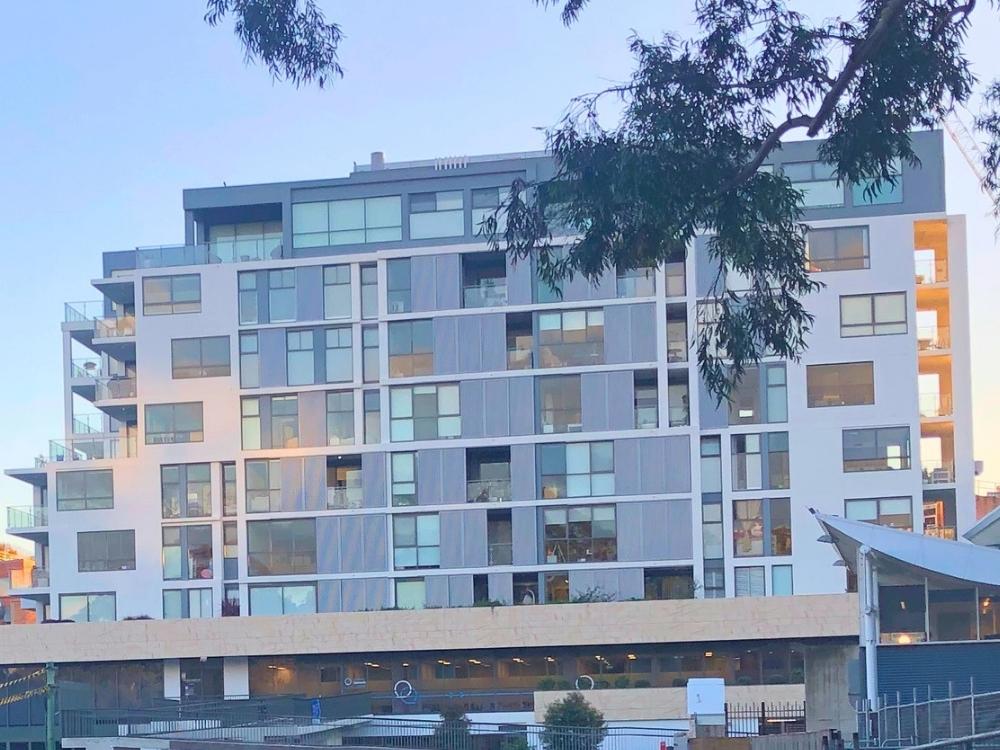
The seven-year fire safety failure at the building Council co-developed, largely owned and was supposed to regulate
Lane Cove Council’s conduct at its Pottery Lane building was unreasonable and contrary to law for more than seven years. That is the finding of the NSW Ombudsman, whose report was tabled in Parliament today. In a statement provided to ITC this afternoon, Lane Cove Council said it acknowledged and accepted the findings.
ITC has been covering the troubled Pottery Lane building since 2023. Today’s Ombudsman report is the most serious development yet and it raises a question that goes well beyond this one building: should councils ever be co-developers of residential apartment buildings in the first place?
It is important to note that the failures identified by the Ombudsman span the period 2017 to 2025, covering multiple council terms and administrations. The Ombudsman’s findings are against the institution of Lane Cove Council, not any individual councillor.
Ombudsman finding
“Unreasonable and contrary to law”
The NSW Ombudsman found Lane Cove Council’s conduct regarding fire safety at 1-5 Pottery Lane constituted maladministration under the Ombudsman Act 1974. The report was tabled in Parliament as a special report due to its broader relevance to the entire local government sector in NSW.
How Did We Get Here?
The site at 1-5 Pottery Lane, directly across from the Lane Cove Aquatic Centre, was previously a council car park. In 2014, Lane Cove Council, as landowner and co-developer, partnered with a private developer to build what became a seven-storey residential apartment tower containing approximately 107 apartments, sitting above commercial office space and a six-level basement car park. The concept was to create additional public parking, maintain community facility connections, and fund the whole thing by selling residential apartments above. Background on Council’s involvement in the project is available on Council’s own website.
It is worth pausing on that structure. A council that approves and regulates developments became a co-developer itself, then remained the regulator of the very building it had co-developed and continued to largely own. The Ombudsman’s report is blunt about the consequences: this created an inherent conflict of interest that Lane Cove Council’s governance systems were wholly inadequate to manage.
The private co-developer and the builder were later subject to wind-up and external administration processes, leaving Lane Cove Council and ultimately ratepayers exposed to the full cost of rectification.
When ITC shared our 2024 article about the rectification orders, councillors debated the issue publicly on our Facebook page. One argued the project had delivered great community benefits, and that the profit-sharing arrangement with the developer was why Council had not needed to borrow money to build the Canopy. Another councillor, who had been closely tracking the matter, pushed back firmly, noting that under the Home Building Act, Council as landowner was always legally a “developer,” that this had been established by Fair Trading and accepted by the Supreme Court, and that the construction process had been “obviously flawed for these defects to have been in place on completion.” The conclusion: “ratepayers are left to pick up the tab.”
The wider community agreed. One commenter asked simply: “Why is the council involved in property development?” Another responded: “to make money. They hoped for an outcome with maximum return and no responsibility or accountability. Unfortunately for them and us as ratepayers, that was a naive view that is now coming back to bite them/us.”
Seven Years of Fire Safety Failures
The building received its final occupation certificate in April 2017, which included a fire safety schedule and fire safety certificate. From then, annual fire safety statement obligations applied – independent declarations that all fire safety systems had been assessed and were performing to the required standard. Every building owner must lodge one, every year.
Lane Cove Council, as owner of five of the six lots in the building, never lodged a single annual fire safety statement for those lots. The Ombudsman found the requirement remained outstanding for the years 2018 to 2025, with non-compliance continuing for more than seven years.
At the same time, Council in its role as regulator was sending annual notices to the residential owners warning that their fire safety statement was overdue, and threatening escalating penalty notices – starting at $1,000 and increasing weekly to up to $4,000 – for non-compliance. Council was threatening residents for the exact same legal failure it was committing itself, year after year.
What made it worse was what Council’s own internal audit found in 2025. Its record-keeping was so poor that staff did not even know Council was a building owner for regulatory purposes. Council had never issued itself a single overdue notice. The audit found existing processes were “inadequate,” causing an “inability to adequately manage” its overlapping roles as owner, co-developer and regulator.
Non-compliance period
7+
Years, 2018 to 2025
Annual fire safety statements
0
Lodged by Council for lots 1-5
Cost to ratepayers
$1.6m
Total rectification works budget
The Defects Were Real and Residents Knew It
This was not a paperwork problem in isolation. When the Building Commission inspected in January 2024, it found serious fire safety defects that had been left unaddressed for years: unprotected penetrations in fire-rated walls, floors and ceilings; excessive gaps in fire doors; unprotected construction joints; and louvres in the gas meter cupboard that were not fire-rated.
A Building Work Rectification Order was issued against Council as co-developer. The budget for all rectification works had blown out to $1.6 million, to be funded by ratepayers, because neither the private co-developer nor the builder remained available to meet their obligations.
Residents had been raising the alarm for years before that. ITC received reports of fire alarms activating repeatedly through the night. After our 2024 article, a top-floor resident commented publicly that mould caused by waterproofing failures had created health issues serious enough that they could no longer live in their apartment, and had been forced to find alternative accommodation while levies and council rates kept coming.
The Ombudsman’s report now puts those resident concerns into a much wider context: the building’s fire safety non-compliance and related defects were not dealt with adequately for years, while Council’s overlapping roles as owner, co-developer and regulator were not properly managed.
What the Ombudsman Found
Acting NSW Ombudsman Chantal Snell did not mince words. The report found Council’s conduct was unreasonable and contrary to law on three counts:
Council failed to address fire safety non-compliance and related defects at the premises between 2018 and 2025.
Council failed to exercise its regulatory powers to take enforcement action against the owners of the premises, including against itself.
Council failed to provide annual fire safety statements for the lots it owned for the years 2018 to 2025, in breach of the Environmental Planning and Assessment (Development Certification and Fire Safety) Regulation 2021.
These findings constitute maladministration under the Ombudsman Act.
When Council told the Ombudsman that its multiple roles had caused confusion for all parties, the Ombudsman rejected this outright. “The council, like any other public authority, has a duty to understand and follow the law,” Ms Snell said. “Confusion or ignorance does not excuse its conduct.”
Significantly, the Ombudsman chose to table this as a special report to Parliament – a step taken when findings have relevance beyond the immediate case. As Council acknowledged in its statement today, this report carries lessons for the entire local government sector in NSW.
The conflict of interest problem
Lane Cove Council held three simultaneous roles at Pottery Lane: co-developer, building owner and fire safety regulator. The Ombudsman found its systems were wholly inadequate to manage the conflicts this created. The council claimed the overlapping roles “caused confusion for all parties” – a justification the Ombudsman rejected outright, saying confusion does not excuse a sophisticated public authority from its legal obligations.
Council Accepts the Findings
In a statement provided to ITC this afternoon, Lane Cove Council said:
“Lane Cove Council acknowledges and accepts the findings of the NSW Ombudsman following its investigation into Council’s administrative conduct between 2017 and 2025 relating to the enforcement of fire safety obligations at the mixed-use strata building at 1-5 Pottery Lane, Lane Cove.
Council cooperated with the Ombudsman in the investigation, which was finalised this month.
Council acknowledges that the systems and processes in place during the period examined fell short of the standard required and resulted in Council failing to adequately meet its responsibilities.
Significant steps have already been taken to address the organisational and governance issues identified during the investigation. Council is reviewing the Ombudsman’s findings and recommendations. A formal report will be presented to the next meeting of Council.
The report will confirm the status of rectification works undertaken at the building, formally acknowledge and accept the Ombudsman findings and recommendations, and outline the proactive measures Council has implemented and will implement to strengthen its fire safety compliance and enforcement framework.
Lane Cove Council is committed to fulfilling its fire safety enforcement obligations and ensuring the safety of our community.
Council notes that the Ombudsman has tabled the investigation report in Parliament as a special report due to its broader relevance to the local government sector.”
Lane Cove Council statement provided to ITC, 29 May 2026
“Council acknowledges that the systems and processes in place during the period examined fell short of the standard required and resulted in Council failing to adequately meet its responsibilities… Council notes that the Ombudsman has tabled the investigation report in Parliament as a special report due to its broader relevance to the local government sector.”
What Happens Now
The Ombudsman has made six recommendations to Lane Cove Council:
The 6 Ombudsman recommendations
1
Formally apologise to the owners of the residential lot for the unlawfulness and unreasonableness of its actions
2
Provide written confirmation to the residential owners of actions taken or planned to rectify any outstanding fire safety issues, within one month
3
Provide the Ombudsman with copies of annual fire safety statements for the premises, along with evidence these have been provided to Fire and Rescue NSW, within three months
4
Provide the Ombudsman with progress updates on implementing the recommendations from its own external building compliance and fire safety audit, every six months until all recommendations are satisfied
5
Perform an audit of its fire safety register across all properties in the LGA, not just Pottery Lane, and consider enforcement action against building owners who have not submitted annual fire safety statements in the past 12 months
6
Advise the Ombudsman of the outcome of that audit within six months
Council has advised that all fire safety defects at Pottery Lane have been rectified, though a Building Commission final inspection remains outstanding before the Building Work Rectification Order can be lifted.
The Lesson
The question asked on ITC’s Facebook page two years ago, “Why is the council involved in property development?”, has now been answered comprehensively by the NSW Ombudsman.
When a council becomes a co-developer of residential apartments on its own land, it creates conflicts of interest that its governance systems are rarely equipped to handle. It becomes simultaneously the party responsible for building defects, the owner with a financial interest in minimising costs, and the regulator supposed to enforce compliance including against itself.
At Pottery Lane, all three of those roles pointed in different directions for more than seven years. Residents lived with the consequences. Ratepayers are now paying for them. And the NSW Ombudsman has told Parliament that this is a lesson every council in NSW should heed.
The full NSW Ombudsman report can be read and downloaded here. The Ombudsman’s media release is here. ITC’s 2024 coverage of the Building Commission rectification orders is here. Lane Cove Council’s own background on the Pottery Lane development is here.