

By Tanya Sharma, Clinical Content Lead and Exercise Physiologist
For many women, menopause can feel like their body suddenly starts to play by a completely different set of rules.
You may notice that you feel weaker despite staying active. Recovery becomes slower, joint aches appear, and weight starts shifting even though your habits have stayed the same. Sleep becomes disrupted, energy drops, and the workouts that once felt effective no longer seem to work.
This stage of life can often feel frustrating, confusing, and isolating, especially when the topic has historically been “taboo” in conversation, and contradictory information runs rampant on the internet.
These changes are not a personal failure but are physiological changes linked to the hormonal transition of menopause. The good news is, there are evidence-based ways to support your body through these changes.
What is Menopause?
Menopause doesn’t happen overnight. It is a transition that occurs in stages [1], and can start as early as your mid-to-late 30s.
- Perimenopause begins years before menopause, when hormones begin to fluctuate. Women often start noticing symptoms, including irregular cycles, poor sleep, mood changes, fatigue, and altered recovery from exercise. It usually lasts for 4-6 years, but can last anywhere from 2-10 years.
- Menopause is officially defined as “12 consecutive months without a menstrual period”. During this phase, the ovaries significantly reduce production of oestrogen and progesterone. Menopause usually occurs between the ages of 45 and 55, however, there are individual differences where women experience it earlier or later.
- Post-menopause refers to the years after menopause and women no longer have a menstrual cycle. Hormone levels stabilise at a lower level and some menopause-related symptoms ease. Although, some symptoms can continue for years.
Menopause is a normal, biological process. However, symptoms can feel abnormal for most women. Declining oestrogen levels affect far more than just your reproductive health. Oestrogen, being the “protective hormone” that it is, plays an important role in maintaining muscle mass, bone density, and connective tissue health (such as tendons and ligaments).
Why Strength, Bone Health, and Metabolism Change
One of the most significant physiological changes during menopause is the accelerated loss of muscle and bone tissue.
Research shows women can lose muscle mass and strength more rapidly during and after menopause, particularly if they are inactive. Bone breakdown can also begin to outpace bone formation, increasing the risk of osteopenia and osteoporosis.
This can contribute to:
- Reduced strength and muscle tone
- Increased joint stiffness and aches
- Slower metabolism (due to less metabolically active tissue)
- Reduced balance and stability
- Increased risk of falls and fractures
- Changes in body composition
Many women describe feeling like their body has become “softer”, weaker, and/or less capable, despite maintaining similar routines.
Age-related muscle and bone loss is common amongst both men and women, however after menopause, there are far more women affected, with these hormonal changes playing a major role. For example, according to the Australian Institute of Health and Welfare [2], an estimated 9.3% of women aged 55-64 are living with Osteoporosis, compared to 1.9% of men of the same age. This difference widens sharply as the population ages, with almost 20% of women aged 65-74 living with osteoporosis compared to 4.1% of men, and over 26% of women aged 75 and over compared to 7.1% of men.
Why You Should Prioritise Strength Training
When women begin noticing these changes, many respond by increasing their cardio-based exercise, or restricting food intake further.
While walking, Pilates, Yoga, and cardiovascular exercise all have very valuable health benefits, they are often not enough on their own to build muscle and optimise bone health during the stages of menopause.
This is where strength training becomes important. Research demonstrates that progressive resistance training (PRT) can [3]:
- Improve muscle mass and strength
- Maintain and even potentially increase bone density
- Improve insulin sensitivity (blood sugar levels) and metabolic health
- Contribute to reducing falls risk, particularly as part of a program that also includes balance and functional training
- Improve physical function and help you maintain your independence
- Support mental wellbeing and confidence
Exercise During Menopause Should be Individualised
One of the biggest challenges many women face is not knowing where to start.
If you’re experiencing joint pain, osteopenia, fatigue, previous injuries, or simply feel unsure in a gym environment, exercise can feel overwhelming or discouraging and you may be apprehensive.
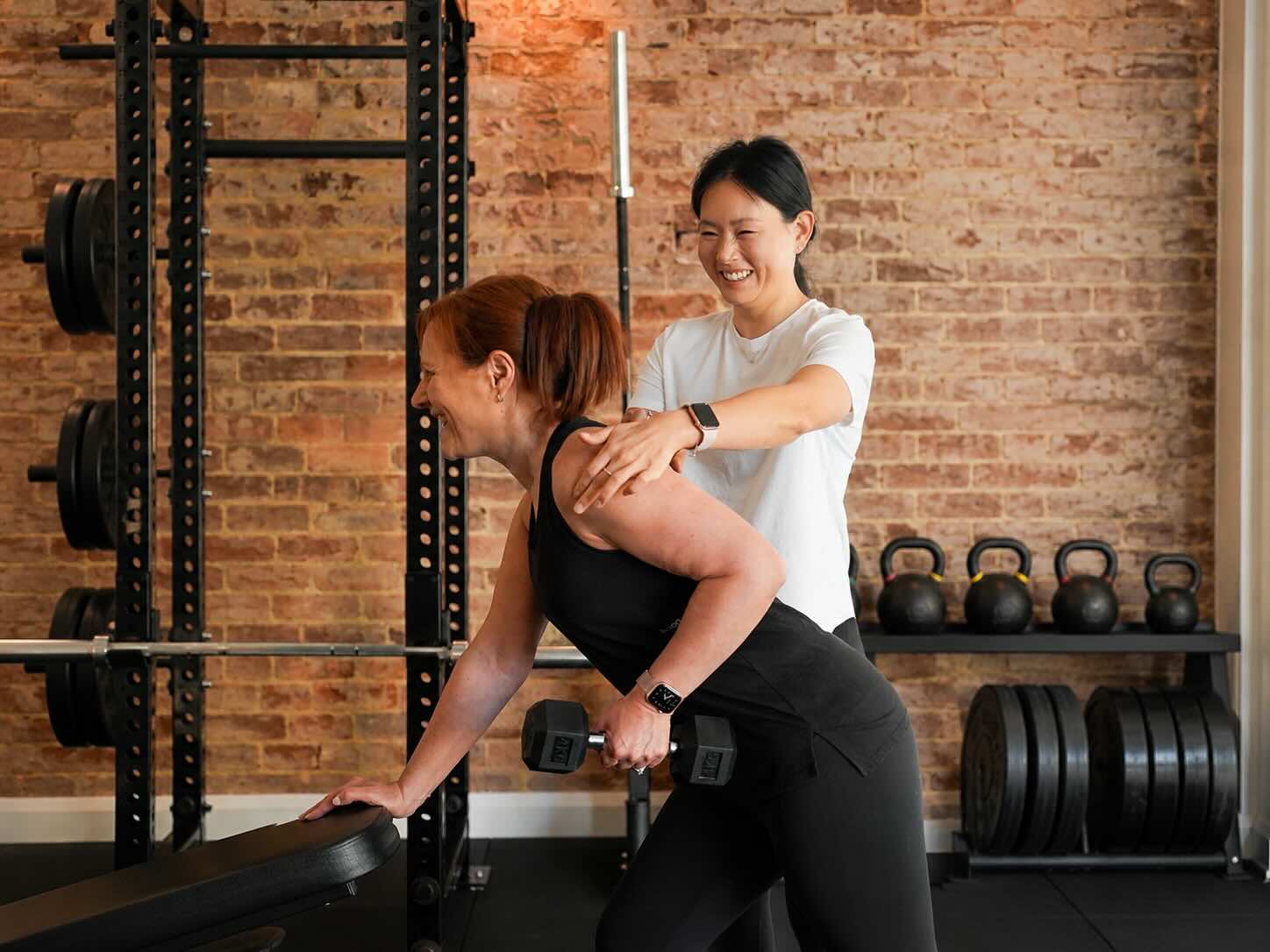
Exercising while going through menopause should be individualised, and most importantly, progressive. You want your exercise program tailored to what your body can currently tolerate, then have a plan to do a bit more week to week so that you are working towards your goals. This is where seeking professional help, especially in the beginning, is valuable. It also works best alongside your GP and wider care, including, where appropriate, hormone therapy, nutrition and sleep.
An evidence-based menopause program considers:
- Current strength and fitness levels
- A plan to progress your program
- Bone health and loading capacity
- Joint pain or arthritis
- Previous injuries
- Pelvic floor strength/consideration
- Recovery and fatigue levels
- Confidence with movement
For beginners, this may initially involve supported, machine-based exercises, stability or lower-impact exercises. For others, it may involve starting free weights and progressing towards heavier weights, including higher-impact exercises that better stimulate bone health. Everyone has a different starting point.
The key is understanding what your body needs to progressively build the very important foundations of strength, movement quality, and tissue tolerance to handle greater loads over time safely.
Menopause Does Not Mean Physical Decline
A very harmful narrative that women receive from the community and online is that menopause simply means it’s time to slow down and accept decline…
In reality, women can become stronger, more capable, and more confident during this stage of life when given the right support and guidance [4].
Menopause is a stage to train through, not around. If you are not sure where to begin, you do not have to work it out alone.
A Discovery Call is a relaxed, no-pressure and complimentary conversation with one of our Exercise Physiologists, a chance to ask questions and understand what starting could look like for your body, with no commitment beyond seeing whether our approach is the right fit for you. You can book one, or read more about our Menopause Program, at strengthbywomen.com
This article is general information and is not personal medical advice. Every woman’s health history is different, so please speak with your GP or a qualified health professional before making changes to your exercise, nutrition, or treatment.
Strength By Women
Women-only Exercise Physiology clinic in Longueville
Address: 2 Kenneth Street, Longueville NSW 2066
Phone: 0450 500 570
Website: www.strengthbywomen.com
Resources
- Everyone experiences perimenopause and menopause differently [Internet]. Australian Government Department of Health, Disability and Ageing. 2026 [cited 2026 May 27]. Available from: https://www.health.gov.au/perimenopause?language=en
- Australian Institute of Health and Welfare. Osteoporosis and minimal trauma fractures [Internet]. Australian Institute of Health and Welfare. 2024. Available from: https://www.aihw.gov.au/reports/chronic-musculoskeletal-conditions/osteoporosis
- Xu J, Lombardi G, Jiao W, Banfi G. Effects of Exercise on Bone Status in Female Subjects, from Young Girls to Postmenopausal Women: An Overview of Systematic Reviews and Meta-Analyses. Sports Medicine. 2016 Feb 8;46(8):1165–82.
- Isenmann E, Kaluza D, Havers T, Elbeshausen A, Geisler S, Hofmann K, et al. Resistance training alters body composition in middle-aged women depending on menopause – A 20-week control trial. BMC Women’s Health. 2023 Oct 6;23(1).