

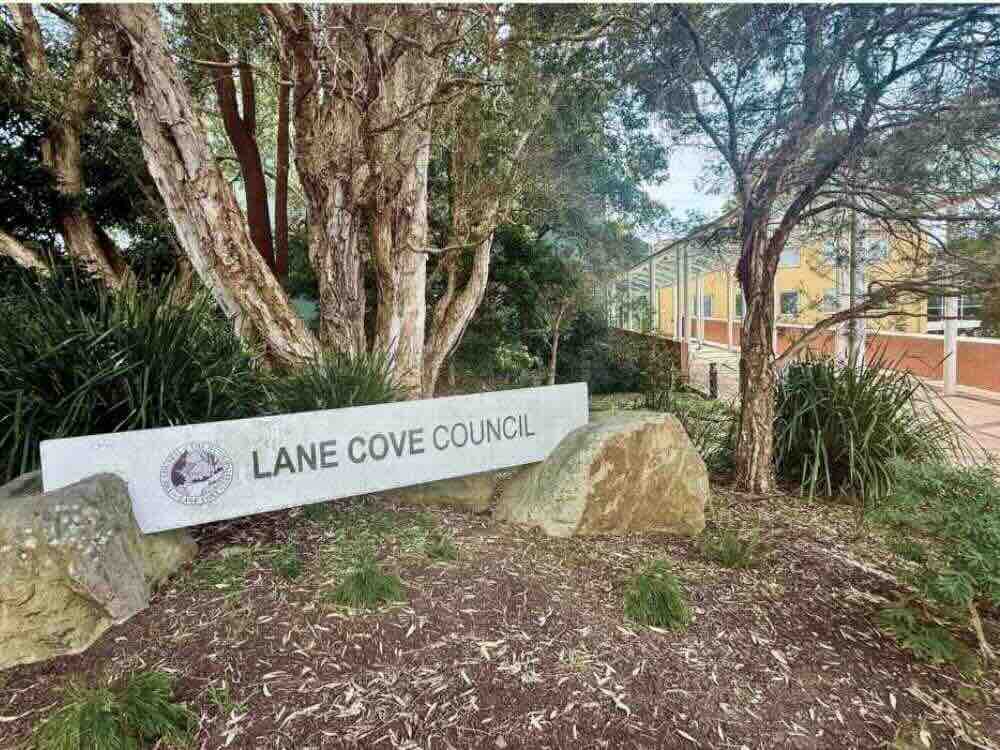
Lane Cove Council meets on Thursday 22 October 2026 at 7pm and this is your summary of the agenda from ITC.
At a Glance
- Food waste bins for apartments would start in February 2027 and roll out in stages to 2030, after six months of house collections gathered 280.62 tonnes of food scraps.
- Council will consider a new data centre advocacy push for evidence-based statewide siting rules, plus signing the C40 Cities Global Urban Data Centres Pact.
- The 2025/26 accounts show a $946,000 operating surplus, but spending on renewing ageing assets has fallen below benchmark for the first time in a number of years.
How residents can have their say
The Public Forum Meeting is tonight, Monday 19 October.
Missed the 10am cut-off for the public forum? Written addresses on agenda items are accepted. Email [email protected] with the subject line “Written Submission for Council Meeting – 22 October 2026 – [Subject]”. Submissions are a maximum of 500 words and must reach Council no later than midnight on Wednesday 21 October, the day before the meeting.
The meeting is held in the Council Chambers and is webcast, with recordings published on Council’s website. Minutes are published by 5pm on the Tuesday following the meeting. Residents who need assistance to participate due to a disability can contact Council’s Director of Corporate Services and Strategy on (02) 9911 3550.
Food scrap bins for apartments, starting February 2027
Council will receive a six month report on the food waste service and decide whether to stick with a staged rollout for apartments and other multi-unit dwellings (item 15.1, page 40). NSW law requires every council to offer a food organics service to all households by 1 July 2030.
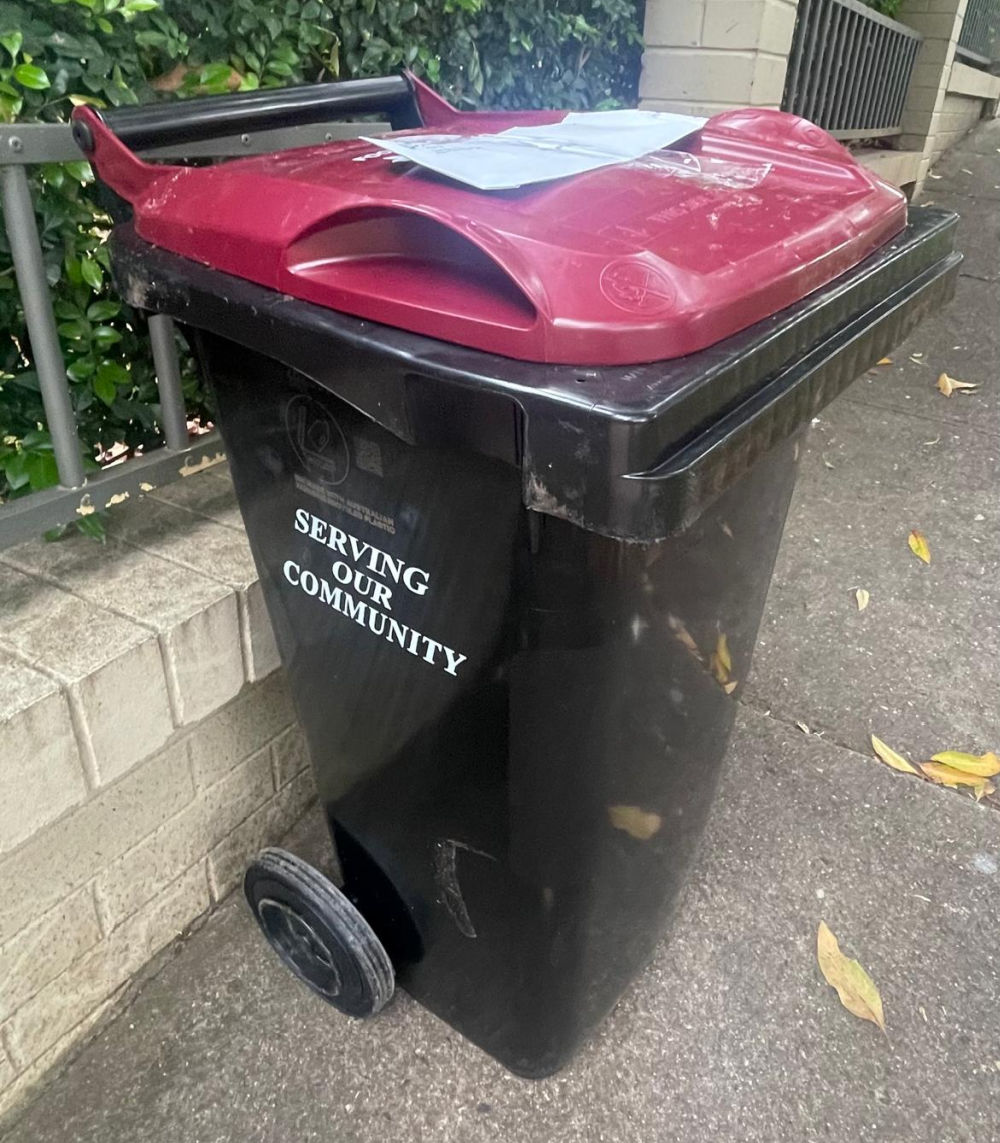
Collections for stand-alone houses started on 16 March 2026. By 18 September, 280.62 tonnes of food waste had been collected, tracking slightly above the modelled 40% capture rate (page 42). Average monthly presentation rates ranged from 22% to 46% across collection zones, with September between 37% and 43%. Contamination is low: 90% of bins inspected had none, and the processor has reported no contamination issues (page 43).
Why some houses aren’t putting a bin out: of residents who answered a survey left in letterboxes, 46% said they compost or use a worm farm instead and 11% share a neighbour’s bin.
For units, the scale is much bigger. The LGA has 456 unit complexes with 11,172 dwellings (page 44). Staff propose this sequence:
- February 2027: start with complexes that have registered interest.
- February to May 2027: a learning phase to refine servicing and engagement.
- May 2027 to May 2028: recruit neighbouring complexes to build density.
- June 2028 to June 2029: compulsory rollout by zone.
- July 2029 to June 2030: work with constrained sites and seek NSW EPA exemptions where required.
Of 27 registered complexes inspected so far, 19 had enough space for the bins and 8 had fewer than three units and could start straight away. The existing EPA exemption for older buildings with waste chutes is unlikely to cover any Lane Cove complex, so Council would seek site-specific exemptions where needed (page 45).
The report also answers an April resolution asking Council to monitor general waste volumes and review bin numbers for apartments. Red bin fullness data wasn’t available because of early collection times, but the small share of households filling more than half their 80L food bin suggests little scope to change general waste bin allocations for units (page 43).
Where you come in: if you live in a strata building, this sets when and how food bins arrive. A written submission by midnight Wednesday 21 October is the way to raise concerns about space, bin numbers or timing before the vote.
Data centres: a push for statewide siting rules and a global pact
Councillor Rochelle Flood will move that Council develop an evidence-based advocacy position on where data centres should be located in NSW and how they should be assessed (item 11.1, page 10). The General Manager, with the Mayor and Deputy Mayor, would prepare a draft for the February Council meeting.
Matters to cover include separation from sensitive uses, air quality and diesel generation, noise, heat, environmental and waterway impacts, fire and emergency management, energy and water demand, infrastructure capacity and community amenity. Once endorsed, letters would go to the Premier and the Ministers for Planning, the Environment and Innovation, Science and Technology, with an open letter seeking support from councils including Ryde, Willoughby, City of Sydney, North Sydney, Penrith and Blacktown.
The background cites AirTrunk’s phase 1 acoustic report, which found the facility was already exceeding its approved night-time noise limit of 43dB by 11dB at the nearest homes while running at 25% of capacity (page 11). It also points to research suggesting data centres with diesel generators should sit at least 609 metres from the nearest home or school, and to Victoria’s recently announced exclusion zone (page 12). The motion frames the work as advocacy ahead of the upcoming state election.
“A random radius without evidence to support it is not enough.”
Councillor Rochelle Flood, Notice of Motion 11.1
Separately, Council will consider authorising the Mayor to sign the C40 Cities Global Urban Data Centres Pact, following up a July resolution (item 12.2, page 17). The Pact is free to join and non-binding. In Australia it has so far been signed by the City of Melbourne and City of Sydney (page 19). Council would publish the Pact on its website and encourage other NSROC mayors to sign.
Where you come in: the draft advocacy position is due back in February, which is the next point to weigh in on the detail.
Council’s annual accounts: a surplus, three duplicated assets and a renewal gap
Council will consider adopting its audited financial statements for the year ended 30 June 2026 (item 13.1, page 28). The result is an operating surplus of $946,000 before capital grants and contributions, or $14.9 million after them. Net assets exceed $1.25 billion and the auditors are likely to issue unmodified opinions.
The accounts correct prior-period errors for three assets that had been counted twice: two parcels of land ($27.2 million) and the Blackman Park synthetic field ($7.3 million), which was duplicated in the 2020 revaluation (page 30). The revaluation of open space assets was not completed for a second year because of delayed condition assessments, so those assets were indexed instead. The accounts also provide $0.7 million for redundancy payments linked to the organisational restructure proposal announced on 17 June.
The flag to watch is asset renewal. Council’s renewals ratio is 72.6%, under the 100% benchmark for the first time in a number of years (page 31). The report says this is manageable in the short term, but staying below benchmark will increase future renewal pressures and need intervention strategies to fund.
Big-ticket items include $119 million in capitalised assets, among them the Galuwa Recreation Centre ($85 million), land for open space ($14.1 million), Bob Campbell Oval masterplan works ($5.6 million) and the St Leonards South childcare centre fitout ($3 million). Council received $11.9 million in developer contributions and planning agreements, and its 2026/27 rate levy of $34.394 million sits just under the $34.4 million permissible limit.
Where you come in: the statements will be publicly exhibited, and the Audit Office of NSW will present its reports at the 19 November Council meeting. Council will give notice on its website and invite written submissions from the public ahead of that meeting (page 29).
Governance review finds no systemic failure, but 47 fixes to make
Read our full article on this item here.
Council will receive the final Governance Health Check Review by Morrison Low Advisory, commissioned unanimously in February (item 12.3, page 21). The reviewers interviewed all Councillors, the General Manager, the executive team and all independent Audit, Risk and Improvement Committee members in July.
The review found no evidence of systemic governance failure, but said established frameworks and controls are not yet consistently embedded (page 23). It rated Council’s general governance position as foundational, with some areas more mature, and described this as symptomatic of an ad hoc approach. A consistent theme was that governance depends on the knowledge and commitment of key individuals, and governance resourcing is likely lower than at other councils.
The 47 improvement opportunities are grouped into seven programs across four implementation windows, aligned with the organisational transformation and the change of Council term at the end of 2028 (page 25). The General Manager would prepare a yearly action plan, with quarterly updates to the Audit, Risk and Improvement Committee and Councillors. The review has cost $49,235 ex GST so far, and the report warns implementation will carry substantial resourcing and cost implications (page 26).
Pedestrian safety and parking changes for four local streets
Council will consider adopting the recommendations of the 15 September Local Transport Forum (item 16.1, page 47). They cover a pedestrian refuge on Centennial Avenue at Elizabeth Parade, pedestrian safety on Northwood Road at Arabella Street, parking restrictions on Sofala Avenue at Tambourine Bay Road (beside Marjorie York Park, Riverview) and road safety on Coonah Parade, Riverview. The detail and consultation results sit in the Forum agenda and minutes, which are attachments available electronically rather than in the main agenda. Changes are proposed for this financial year.
Where you come in: residents who made a submission on these items should have been notified of the recommendations and the meeting date. A written submission by midnight Wednesday is the remaining route to Council.
Other items on the agenda
- Mayoral Minute, celebrating community life this spring (item 7.1, page 5), noting the Lane Cove Festival drew an estimated 13,000-plus people in September, up from 7,742 in 2025. Ross Harvey won the $15,000 acquisitive Lane Cove Art Award for Fragonard ii and the Lane Cove Fun Run attracted more than 2,000 participants (page 6).
- Mayoral Minute, General Manager’s Performance Agreement 2026-2027 (item 7.2, page 8), noting the agreement was signed by the Mayor and General Manager on 15 October, with McArthur engaged as external facilitator.
- Internal audit and risk management attestation (item 12.1, page 14) for the 2025/26 financial year, to be published in the annual report due before 30 November.
- Audit, Risk and Improvement Committee 2025/26 Annual Report (item 13.2, page 34) for noting, to be made public on Council’s website.
- Designated persons returns 2025-2026 (item 13.3, page 37), tabling disclosure of interest returns for 9 Councillors, 3 committee members and 47 staff. Councillor and staff returns were lodged by the 30 September deadline except for one staff member on parental leave. Committee members’ returns were delayed by an administrative oversight (page 38). Returns will be published online with addresses and signatures redacted.
- Council Snapshot September 2026 (item 18.1, page 50), with the Resolution Tracker, a summary of the 22 September North Shore Police Area Command Community Safety Precinct Meeting and minutes from five Advisory Committees.
- No petitions, rescission motions, questions with notice, Community and Culture Division reports or closed committee items this month.
What’s next
The Ordinary Council Meeting is at 7pm on Thursday 22 October 2026 in the Council Chambers, and is webcast.
Read the full agenda PDF or the web version of the agenda.
Straight to the items people are talking about:
- 15.1 Six Month Status Report for the Food Waste Service
- 11.1 Data Centre Location Requirements and Joint Council Advocacy
- 13.1 Financial Statements for the Year Ended 30 June 2026
- 12.3 Governance Health Check Review
Renee Maxwell
Owner & Publisher, In the Cove
In the Cove is free to read and paywall-free, and we’d like to keep it that way. If you value independent local journalism, consider supporting us.
Buy us a coffee ·
Support via Presspatron ·
Advertise with us
Lane Cove Council meets on Thursday 22 October 2026 at 7pm and this is your summary of the agenda from ITC.
At a Glance
- Food waste bins for apartments would start in February 2027 and roll out in stages to 2030, after six months of house collections gathered 280.62 tonnes of food scraps.
- Council will consider a new data centre advocacy push for evidence-based statewide siting rules, plus signing the C40 Cities Global Urban Data Centres Pact.
- The 2025/26 accounts show a $946,000 operating surplus, but spending on renewing ageing assets has fallen below benchmark for the first time in a number of years.
How residents can have their say
The Public Forum Meeting is tonight, Monday 19 October.
Missed the 10am cut-off for the public forum? Written addresses on agenda items are accepted. Email [email protected] with the subject line “Written Submission for Council Meeting – 22 October 2026 – [Subject]”. Submissions are a maximum of 500 words and must reach Council no later than midnight on Wednesday 21 October, the day before the meeting.
The meeting is held in the Council Chambers and is webcast, with recordings published on Council’s website. Minutes are published by 5pm on the Tuesday following the meeting. Residents who need assistance to participate due to a disability can contact Council’s Director of Corporate Services and Strategy on (02) 9911 3550.
Food scrap bins for apartments, starting February 2027
Council will receive a six month report on the food waste service and decide whether to stick with a staged rollout for apartments and other multi-unit dwellings (item 15.1, page 40). NSW law requires every council to offer a food organics service to all households by 1 July 2030.
Collections for stand-alone houses started on 16 March 2026. By 18 September, 280.62 tonnes of food waste had been collected, tracking slightly above the modelled 40% capture rate (page 42). Average monthly presentation rates ranged from 22% to 46% across collection zones, with September between 37% and 43%. Contamination is low: 90% of bins inspected had none, and the processor has reported no contamination issues (page 43).
Why some houses aren’t putting a bin out: of residents who answered a survey left in letterboxes, 46% said they compost or use a worm farm instead and 11% share a neighbour’s bin.
For units, the scale is much bigger. The LGA has 456 unit complexes with 11,172 dwellings (page 44). Staff propose this sequence:
- February 2027: start with complexes that have registered interest.
- February to May 2027: a learning phase to refine servicing and engagement.
- May 2027 to May 2028: recruit neighbouring complexes to build density.
- June 2028 to June 2029: compulsory rollout by zone.
- July 2029 to June 2030: work with constrained sites and seek NSW EPA exemptions where required.
Of 27 registered complexes inspected so far, 19 had enough space for the bins and 8 had fewer than three units and could start straight away. The existing EPA exemption for older buildings with waste chutes is unlikely to cover any Lane Cove complex, so Council would seek site-specific exemptions where needed (page 45).
The report also answers an April resolution asking Council to monitor general waste volumes and review bin numbers for apartments. Red bin fullness data wasn’t available because of early collection times, but the small share of households filling more than half their 80L food bin suggests little scope to change general waste bin allocations for units (page 43).
Where you come in: if you live in a strata building, this sets when and how food bins arrive. A written submission by midnight Wednesday 21 October is the way to raise concerns about space, bin numbers or timing before the vote.
Data centres: a push for statewide siting rules and a global pact
Councillor Rochelle Flood will move that Council develop an evidence-based advocacy position on where data centres should be located in NSW and how they should be assessed (item 11.1, page 10). The General Manager, with the Mayor and Deputy Mayor, would prepare a draft for the February Council meeting.
Matters to cover include separation from sensitive uses, air quality and diesel generation, noise, heat, environmental and waterway impacts, fire and emergency management, energy and water demand, infrastructure capacity and community amenity. Once endorsed, letters would go to the Premier and the Ministers for Planning, the Environment and Innovation, Science and Technology, with an open letter seeking support from councils including Ryde, Willoughby, City of Sydney, North Sydney, Penrith and Blacktown.
The background cites AirTrunk’s phase 1 acoustic report, which found the facility was already exceeding its approved night-time noise limit of 43dB by 11dB at the nearest homes while running at 25% of capacity (page 11). It also points to research suggesting data centres with diesel generators should sit at least 609 metres from the nearest home or school, and to Victoria’s recently announced exclusion zone (page 12). The motion frames the work as advocacy ahead of the upcoming state election.
“A random radius without evidence to support it is not enough.”
Councillor Rochelle Flood, Notice of Motion 11.1
Separately, Council will consider authorising the Mayor to sign the C40 Cities Global Urban Data Centres Pact, following up a July resolution (item 12.2, page 17). The Pact is free to join and non-binding. In Australia it has so far been signed by the City of Melbourne and City of Sydney (page 19). Council would publish the Pact on its website and encourage other NSROC mayors to sign.
Where you come in: the draft advocacy position is due back in February, which is the next point to weigh in on the detail.
Council’s annual accounts: a surplus, three duplicated assets and a renewal gap
Council will consider adopting its audited financial statements for the year ended 30 June 2026 (item 13.1, page 28). The result is an operating surplus of $946,000 before capital grants and contributions, or $14.9 million after them. Net assets exceed $1.25 billion and the auditors are likely to issue unmodified opinions.
The accounts correct prior-period errors for three assets that had been counted twice: two parcels of land ($27.2 million) and the Blackman Park synthetic field ($7.3 million), which was duplicated in the 2020 revaluation (page 30). The revaluation of open space assets was not completed for a second year because of delayed condition assessments, so those assets were indexed instead. The accounts also provide $0.7 million for redundancy payments linked to the organisational restructure proposal announced on 17 June.
The flag to watch is asset renewal. Council’s renewals ratio is 72.6%, under the 100% benchmark for the first time in a number of years (page 31). The report says this is manageable in the short term, but staying below benchmark will increase future renewal pressures and need intervention strategies to fund.
Big-ticket items include $119 million in capitalised assets, among them the Galuwa Recreation Centre ($85 million), land for open space ($14.1 million), Bob Campbell Oval masterplan works ($5.6 million) and the St Leonards South childcare centre fitout ($3 million). Council received $11.9 million in developer contributions and planning agreements, and its 2026/27 rate levy of $34.394 million sits just under the $34.4 million permissible limit.
Where you come in: the statements will be publicly exhibited, and the Audit Office of NSW will present its reports at the 19 November Council meeting. Council will give notice on its website and invite written submissions from the public ahead of that meeting (page 29).
Governance review finds no systemic failure, but 47 fixes to make
Council will receive the final Governance Health Check Review by Morrison Low Advisory, commissioned unanimously in February (item 12.3, page 21). The reviewers interviewed all Councillors, the General Manager, the executive team and all independent Audit, Risk and Improvement Committee members in July.
The review found no evidence of systemic governance failure, but said established frameworks and controls are not yet consistently embedded (page 23). It rated Council’s general governance position as foundational, with some areas more mature, and described this as symptomatic of an ad hoc approach. A consistent theme was that governance depends on the knowledge and commitment of key individuals, and governance resourcing is likely lower than at other councils.
The 47 improvement opportunities are grouped into seven programs across four implementation windows, aligned with the organisational transformation and the change of Council term at the end of 2028 (page 25). The General Manager would prepare a yearly action plan, with quarterly updates to the Audit, Risk and Improvement Committee and Councillors. The review has cost $49,235 ex GST so far, and the report warns implementation will carry substantial resourcing and cost implications (page 26).
Pedestrian safety and parking changes for four local streets
Council will consider adopting the recommendations of the 15 September Local Transport Forum (item 16.1, page 47). They cover a pedestrian refuge on Centennial Avenue at Elizabeth Parade, pedestrian safety on Northwood Road at Arabella Street, parking restrictions on Sofala Avenue at Tambourine Bay Road (beside Marjorie York Park, Riverview) and road safety on Coonah Parade, Riverview. The detail and consultation results sit in the Forum agenda and minutes, which are attachments available electronically rather than in the main agenda. Changes are proposed for this financial year.
Where you come in: residents who made a submission on these items should have been notified of the recommendations and the meeting date. A written submission by midnight Wednesday is the remaining route to Council.
Other items on the agenda
- Mayoral Minute, celebrating community life this spring (item 7.1, page 5), noting the Lane Cove Festival drew an estimated 13,000-plus people in September, up from 7,742 in 2025. Ross Harvey won the $15,000 acquisitive Lane Cove Art Award for Fragonard ii and the Lane Cove Fun Run attracted more than 2,000 participants (page 6).
- Mayoral Minute, General Manager’s Performance Agreement 2026-2027 (item 7.2, page 8), noting the agreement was signed by the Mayor and General Manager on 15 October, with McArthur engaged as external facilitator.
- Internal audit and risk management attestation (item 12.1, page 14) for the 2025/26 financial year, to be published in the annual report due before 30 November.
- Audit, Risk and Improvement Committee 2025/26 Annual Report (item 13.2, page 34) for noting, to be made public on Council’s website.
- Designated persons returns 2025-2026 (item 13.3, page 37), tabling disclosure of interest returns for 9 Councillors, 3 committee members and 47 staff. Councillor and staff returns were lodged by the 30 September deadline except for one staff member on parental leave. Committee members’ returns were delayed by an administrative oversight (page 38). Returns will be published online with addresses and signatures redacted.
- Council Snapshot September 2026 (item 18.1, page 50), with the Resolution Tracker, a summary of the 22 September North Shore Police Area Command Community Safety Precinct Meeting and minutes from five Advisory Committees.
- No petitions, rescission motions, questions with notice, Community and Culture Division reports or closed committee items this month.
What’s next
The Ordinary Council Meeting is at 7pm on Thursday 22 October 2026 in the Council Chambers, and is webcast.
Read the full agenda PDF or the web version of the agenda.
Straight to the items people are talking about:
- 15.1 Six Month Status Report for the Food Waste Service
- 11.1 Data Centre Location Requirements and Joint Council Advocacy
- 13.1 Financial Statements for the Year Ended 30 June 2026
- 12.3 Governance Health Check Review
Renee Maxwell
Owner & Publisher, In the Cove
In the Cove is free to read and paywall-free, and we’d like to keep it that way. If you value independent local journalism, consider supporting us.
Buy us a coffee ·
Support via Presspatron ·
Advertise with us