
The harp has a reputation as a beautiful string instrument that is relegated to angels’ choruses, grand orchestral halls and old European palaces. The history of the harp is so connected to that of European aristocracy of a bygone era. So, what does being a harpist look like in modern day Australia?
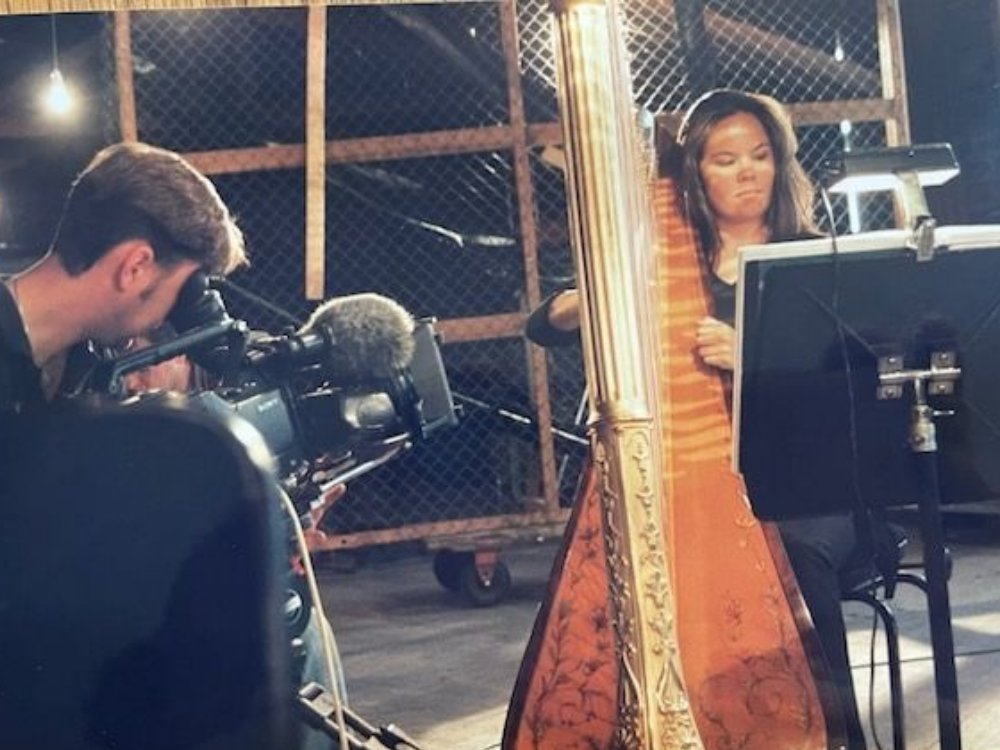
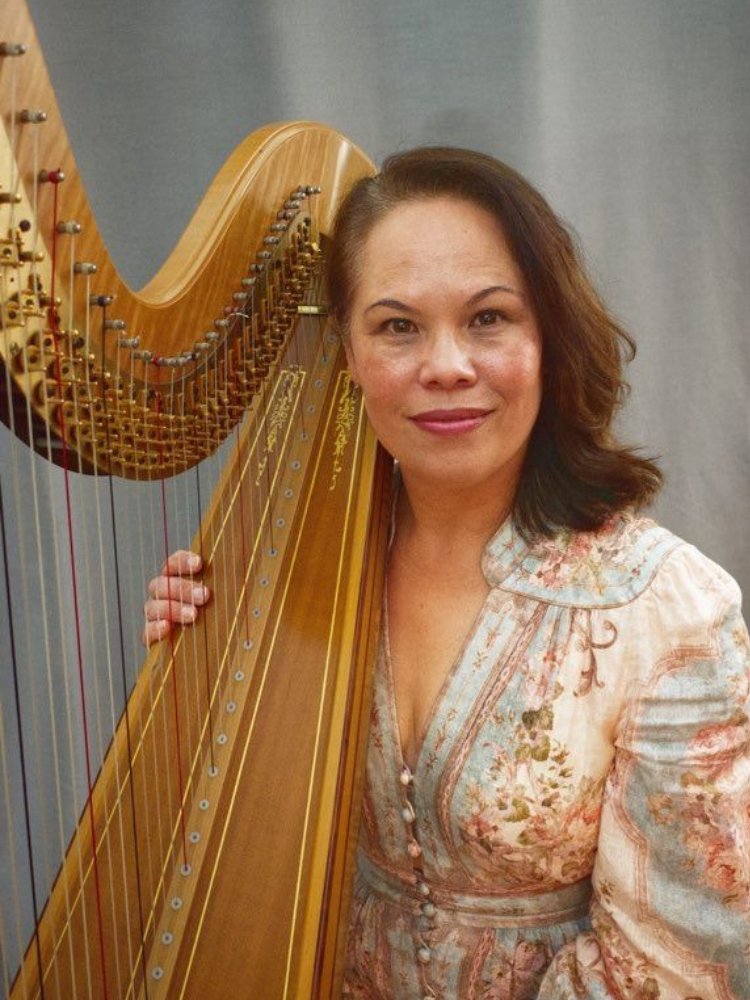
Azumi Lehmann is a local freelance harpist who trained at the Sydney Conservatorium and has performed with many orchestras such as the Australian Youth Orchestra. She’s also played for numerous Opera Australia and Australian Ballet productions. She is someone you want in your neighbourhood: warm, welcoming, down to earth and ready to have a laugh.
Her story
Azumi was born into a life of music with both her parents being musicians. Her father was a violinist, conductor and composer, and her mother a violin and piano teacher. When Azumi was two, her family moved from Brisbane to Nashville, Tennessee (also known as ‘Music City’ for being the capital of country music). Azumi began piano early on and would be dragged to Nashville Symphony Orchestra concerts, in which her father was the concertmaster.
It was there she first saw a lady playing a big and beautiful instrument. She left the concert hall completely inspired. “I came home and was like, that’s it,” said Lehmann. “I want to play the double bass.” Azumi pondered that perhaps she had a love of big instruments, which was why a few weeks later she came home and asked if she could play the harp. It was only after returning to Australia, around Year 6, that she was finally allowed to take up lessons.
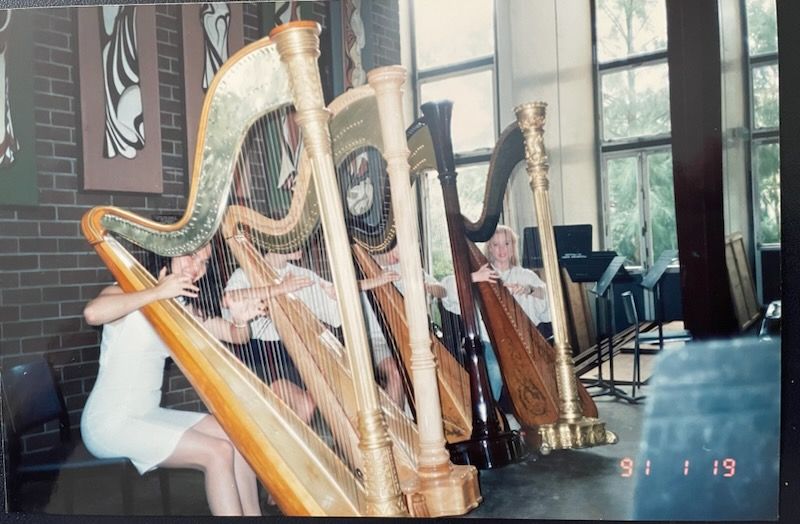
Azumi got into the Sydney Conservatorium in high school and then went on to Sydney University to pursue an arts degree. Marshall Maguire, a renowned harpist known for his contemporary music ensembles, started getting her to play second harp next to him at the Ballet. She began picking up more work as a harpist. “It was rehearsals rather than lectures. Sort of got to the point where I wasn’t doing well in exams. So I thought, well if I’m going to do music… I better go do this seriously,” she said. She returned to the Conservatorium at university level, not fully sure if this was what she wanted to do permanently.
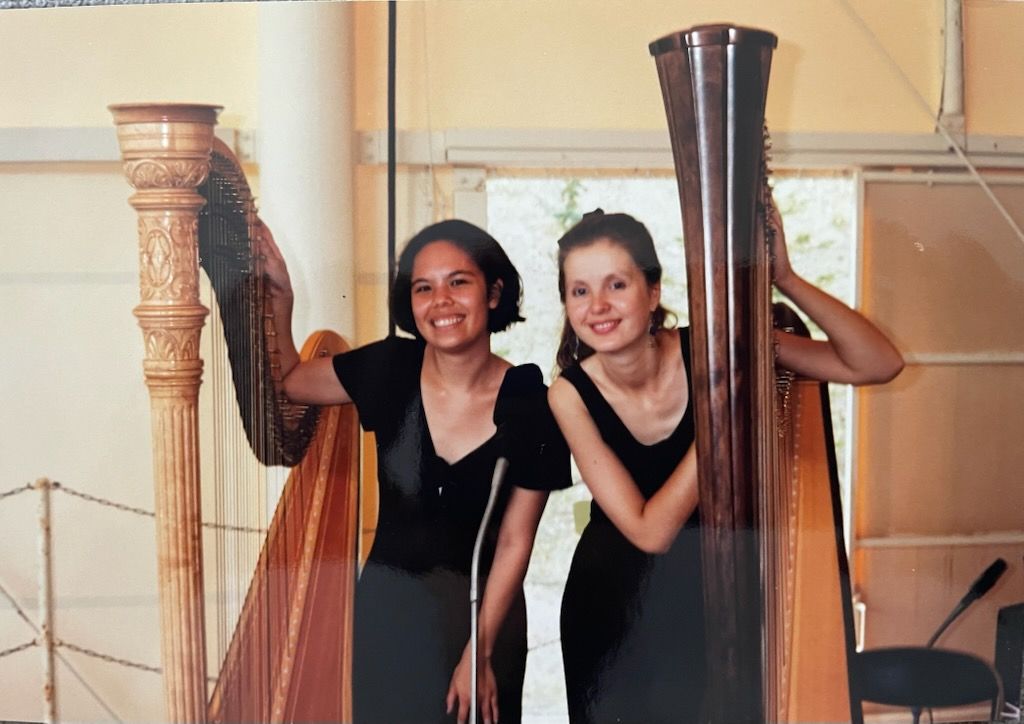
After university, she worked weekends at the former Renaissance Hotel, now the Sydney Harbour Marriott. After work one night she got chatting to a British Airways flight attendant and decided to become a flight attendant. She continued working freelance as a harpist, working quite a bit with the Symphony Orchestra in Tasmania, which is where she met her husband, a double bass player. “To this day I only maintain that I got together with him because he was living in my fantasy of being a double bass player,” joked Azumi.
Azumi Lehmann then took a break from music to fly full time with Qantas. She returned to the harp while pregnant with her daughter in 2005 to 2006. Her husband worked for the Opera and Ballet Orchestra.
Azumi tells the story of one particular late night. She had been half-asleep, tucked away in bed, when he came home and mumbled to her. Lehmann said it was something along the lines of “I’ve got you a gig”. “The next morning I woke up and I was like, y’know, I had this really weird dream that you got me a gig. He said that wasn’t a dream. ‘I signed you up for Aida to play harp at the Opera.'” From her time working full time as a flight attendant and throughout her pregnancy, she hadn’t been playing the harp to a professional standard. Azumi recounts her husband responded to that with a simple, “You better start practising then!”
Azumi returned to work as a harpist and after the birth of her daughter and son, she returned to Qantas but only part-time, keeping up freelance work on the side. “I really worked too hard to get to that level and rebuild my identity as a harpist.”
Azumi’s identity as a harpist
One of the first things her parents noticed when she was a baby was that she was often opening and closing her hands. It’s perhaps the physical sensation of pulling the strings and the feeling of touch in the production of sound that keeps drawing Azumi Lehmann back to the harp.
In an era of sitting and swiping, we’re seeing more people find less satisfaction with the online world and return to traditional forms of enjoyment. It’s not just about doing something creative and keeping away from screens, it’s taking the time to sit down for a few minutes a day and grounding yourself in the physical world. “Your brain is engaged with your senses, your listening… your touch,” says Azumi.
When asked about what kept drawing her back to the harp, Azumi said, “I think it was something about the sound. When I started playing, the actual physical touch of the feeling and the sound that it produces.”
It’s that physical touch that harpists from around the world have experienced for centuries upon centuries. The earliest known harp-like instruments can be found in Sumer (southern Mesopotamia) and ancient Egypt, dating back to around 3500 BC. The sensation of pulling sound from strings has travelled from ancient Egyptian temples to the courts of European aristocracy and finally to concert halls today.
Lehmann described a trip to the Palace of Versailles, a palace that was once at the very centre of the high arts and historically decadent living that many of us can only imagine. The harp had once been a permanent guest amongst the court musicians who would entertain the French nobility. “On the tour they said young Mozart performed for King Louis in this room. And just the shivers of like, what? I’m standing in the same room as Mozart?”
Azumi Lehmann described a sort of deep connection to those court musicians amongst the vast halls of Versailles. Despite the hundreds of years between them, they were linked. “Of course they’re not with us anymore but that natural empathy of like, being for them. They were doing what I do.”
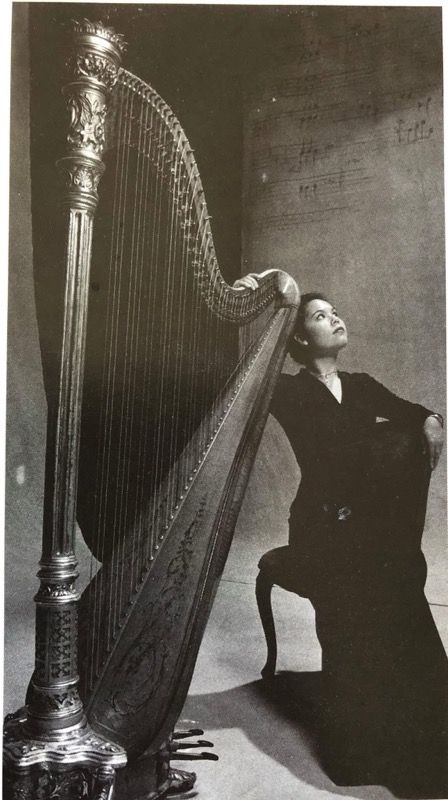
The harp itself is a very isolated instrument. A standard orchestra will only have one or two. Even within an orchestra, there are vast amounts of time, especially in opera, where a harp doesn’t play (known as a tacet). You could have a five-hour opera and get maybe two hours of not playing anything. “Harpists around the world have had to endure these massively long operas where you’re only playing for bits and pieces and when you’re on you’re on. Like a massive harp part that you’ve got to come in for. Take a deep breath and go,” said Azumi.
Azumi had a spark in her eye while imagining out loud the goings-on that could have occurred throughout history during these shared tacets. Maybe an affair or a scandal? However, when asked to recount her experiences during tacets, it was a lot more ice cream focused than embroiled in drama. Despite the harp being a very solo instrument, there is a very real camaraderie between harpists. Even to the ones that have long gone. They are all connected to the same music being played on the same set of strings.
Lane Cove
Despite Azumi Lehmann’s high-profile career, she has a strong connection to Lane Cove and a strong desire to give back to the community.
While her parents had been living in Lane Cove, Azumi and her family only moved here just before the pandemic. “Lane Cove wasn’t really somewhere I was looking at… but… sometimes places choose you,” said Azumi, recounting how her house had sort of fallen into her family’s lap, just as they were about to give up on looking any further.
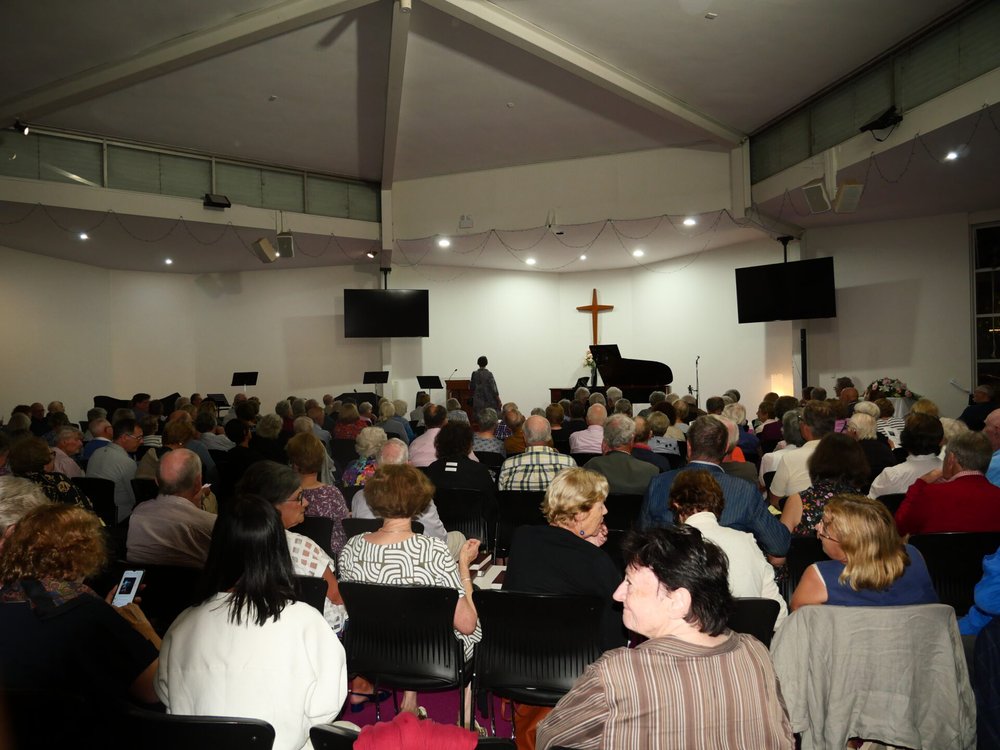
Azumi is now an active member of Lane Cove’s local music scene. This year in August, Azumi joined forces with Verna Lee and the Lane Cove Music Society to perform a harp duo concert titled Tales from Afar at St Andrew’s Uniting Church. The concert featured three main sets focusing on Celtic harp music, French harp music and a ‘Water’ set, which took inspiration from nature. For Azumi this was an opportunity to experiment with what a harp concert can look like. “It’s important to… keep pushing boundaries and this ensemble is unique to have two harps,” said Azumi, detailing the many challenges in finding pieces that feature duo harps, a traditionally solo art form.
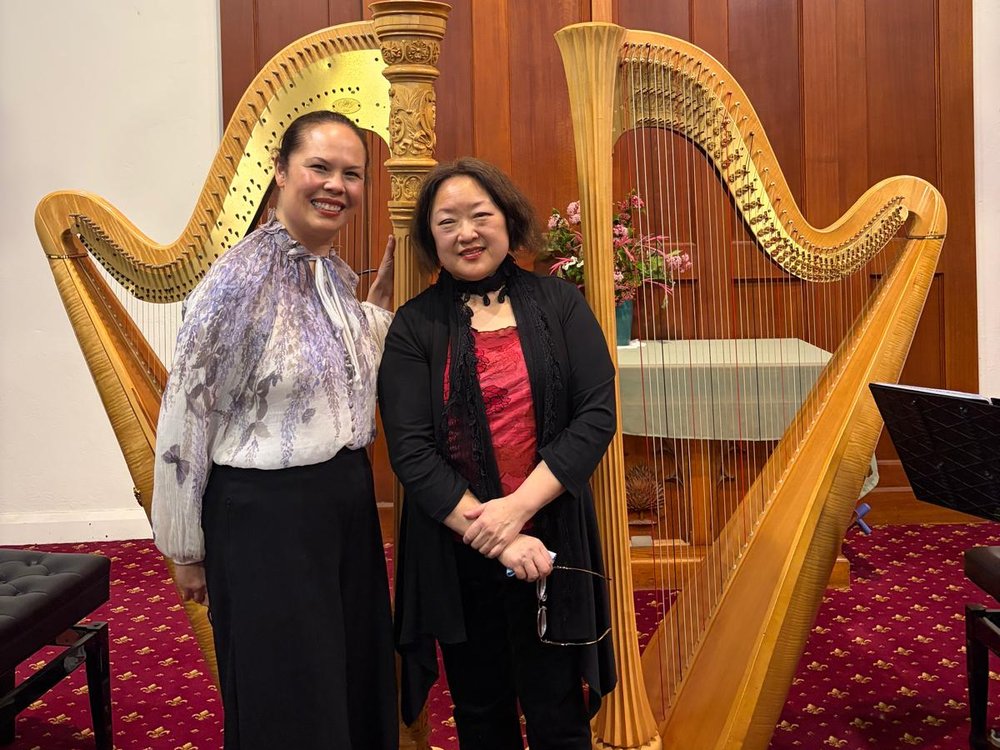
Azumi also described how much she loved playing locally. “It showed me what a special community Lane Cove is to have… over 150-odd subscribers to a music society and that they can draw an audience to come in and hear live music.” The harp isn’t only about the technical experience. It’s about connecting to the audience and immersing her community in a performance.
“Sometimes it’s not about the right notes. Everyone can play the right notes but if you’re not connected to it, it’s not the human experience. That’s what robots do. Robots will play the right notes.”
There is something mystical between a live musician and their audience. A connection and communication that goes beyond words. Azumi completely agreed, saying the actual performance was on a completely different level to the rehearsal experience. “You just go, where did that come from?… Performers need an audience just as much as the audience needs the performer. It’s this joint… experience,” she said.
Future
The new generation of harpists looks very different from the old European days of court musicians. “There are composers that are becoming more brave… There are now harpists who are now commissioning composers to write new concertos. It was very hard for a long time because you had stock standard harp concertos. They were the ones that got performed and that’s what you did,” pointed out Azumi. There’s a movement amongst harpists to not only get new repertoire but to also bring new types of voices to a very old instrument.
That was the goal with the Tales from Afar Water set, which used music from an American female composer. In Azumi’s opinion the Water set had been the “best received one”. Audiences are hungry for experimentation in centuries-old compositions. “I think any performer now needs to be diverse in their program,” said Azumi, whether that be from non-western or minority composers or musicians or even from new repertoire designed for a modern world. “Everyone now has to reinvent themselves… We didn’t have movie and orchestra things when I was growing up but now that’s such a big money maker for so many orchestras… It’s another kind of experience,” said Azumi.
As the harp adapts to a modern world, the landscape of being a musician in the industry is changing too. “When I first started at the Conservatorium there was this traditionalised view of… you go through and your aim is to get an orchestral job. Very few solo instruments ever made it to be a soloist. It’s hard for the rest. What do they do? I think actually giving people an understanding that you don’t have to just do that, there’s other things that you can do,” said Azumi. There are now so many new ways to be a musician other than the traditional path, from social media content creation to exploring more genre-bending music outside of the classical space. In 2021, Grammy-nominated harpist Brandee Younger experimented with R&B, soul and Latin jazz on the harp on her LP Somewhere Different.
To Azumi the future of the harp looks bright, as the next generation of musicians are more easily able to pick up the harp in comparison to Azumi’s generation. “I am so excited that here in Australia the harp has become more accessible. It’s easier to start,” said Azumi, pointing out Aldi Special Buys for entry-level instruments. “I can see the jokes like, OK music teachers, brace yourselves. Aldi Special Buys is coming up! But the reality is, and especially for an instrument like harp, where it is very hard to initially get started. To now see instruments at entry-level price points.”
As the financial barrier to learning the harp eases, the ability for all types of students to be exposed to this instrument increases. “It was a long time before I got my first own harp,” said Azumi.
The benefits of the harp
Sitting down to listen to Azumi Lehmann’s experience, there isn’t just one story. It isn’t the story of a single harpist, one of a kind amongst a big, grand orchestra. For her, the harp hasn’t just been a way to engage with the physical and make something beautiful from it. It’s been a way to connect to the past, the future and local community and audiences.
It’s fascinating the ways in which human beings can engage with each other, even in ways that go beyond language, and how an instrument that has been taught and mastered since ancient times can be such a beautiful way to communicate. It was a simple statement from Azumi that summarised her experience playing the harp well for me. “Maybe that’s my way of connecting.”
Lane Cove Music Society

Lane Cove Music has provided classical and jazz concerts to the Lane Cove area for over 80 years. Their website can be found here.
Get the Lane Cove news in your inbox every Thursday.
Support independent local news
In the Cove is 100% free to read, with no paywall, and it always will be. We write for the community, from within the community. If you value local news, chipping in helps keep it coming.
Proud member of LINA, the Local & Independent News Association. Want to reach locals?