

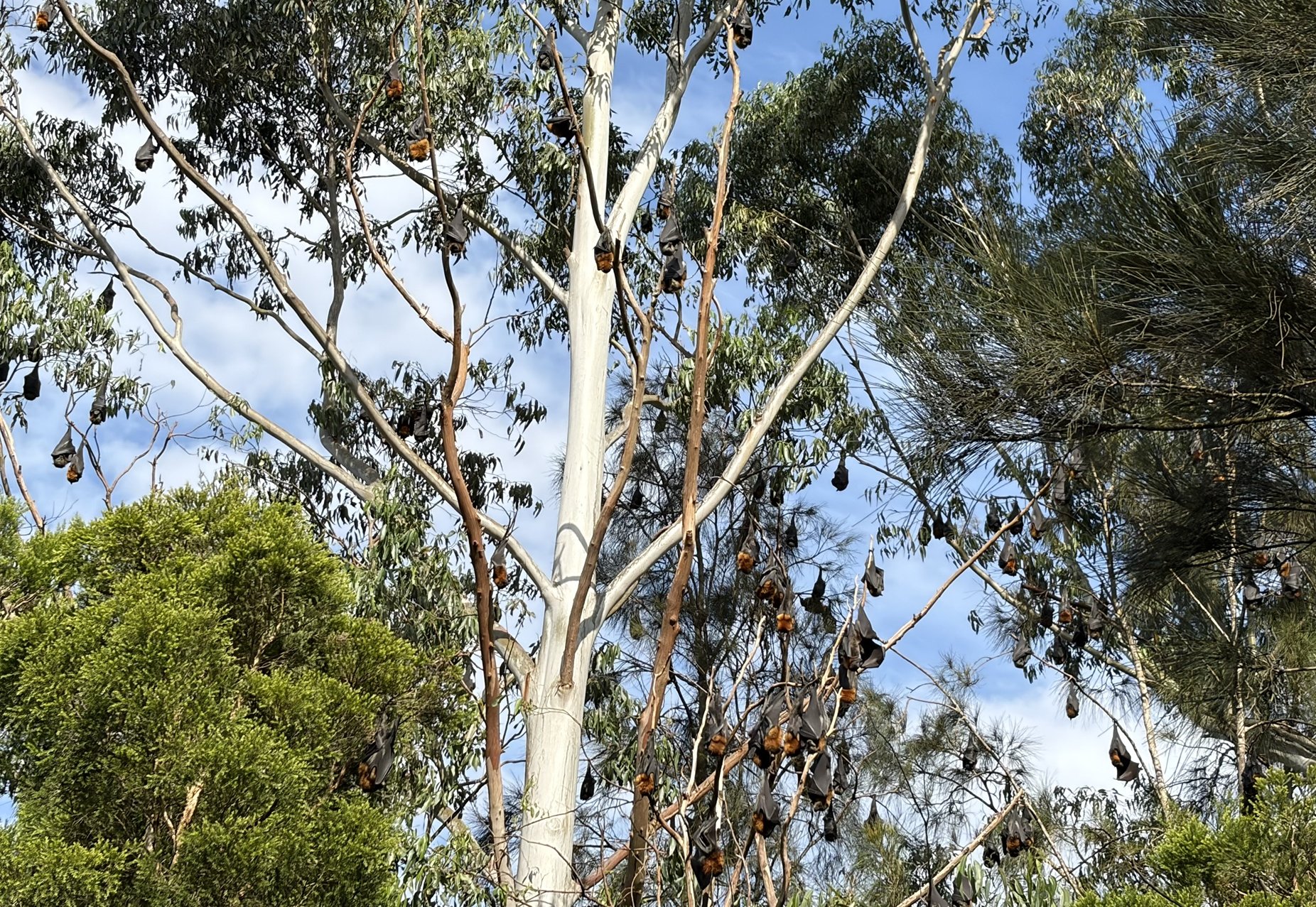
If you have spotted a flying fox hanging around your backyard in broad daylight lately, you are not imagining it. A food shortage along the NSW coast has bats roosting in suburban trees instead of their usual colonies, and NSW Health has issued a warning after a sharp jump in people being bitten and scratched. We asked Dr Caitlin McQuarrie from Advanced Vet Care Lane Cove what locals need to know, for themselves and for their pets.
Why are there so many flying foxes around right now?
According to the NSW Department of Climate Change, Energy, the Environment and Water (DCCEEW), a food shortage is affecting flying foxes along the eastern coast from the Clarence Valley in the north to the South Coast.
“During food shortage events, flying-foxes typically stay in feed trees during the day instead of returning to their larger colonies,” said Ingrid Emery, Executive Director Conservation Programs at DCCEEW. “Consequently, members of the community are seeing flying-foxes remaining in their backyard trees during the day.”
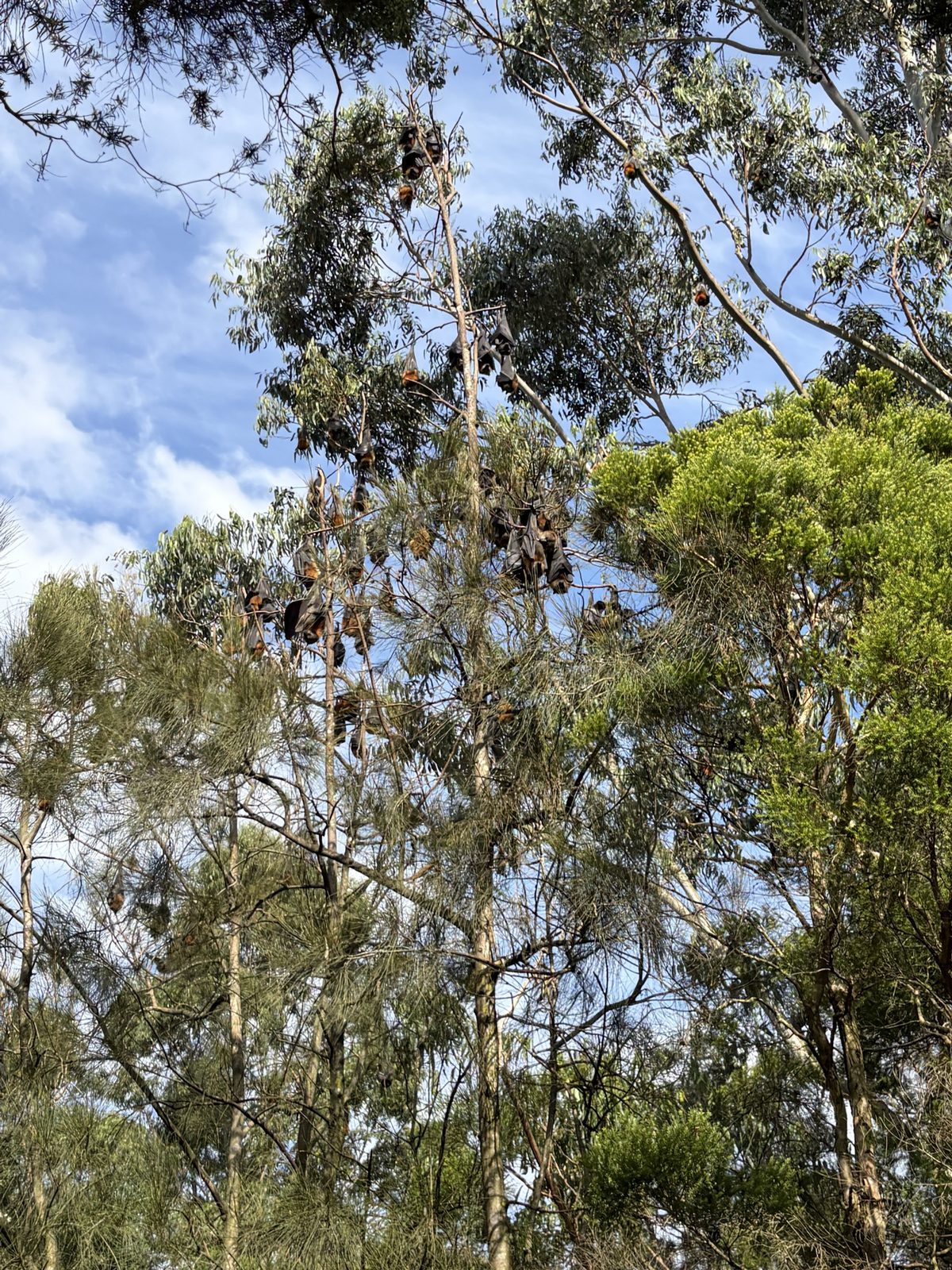
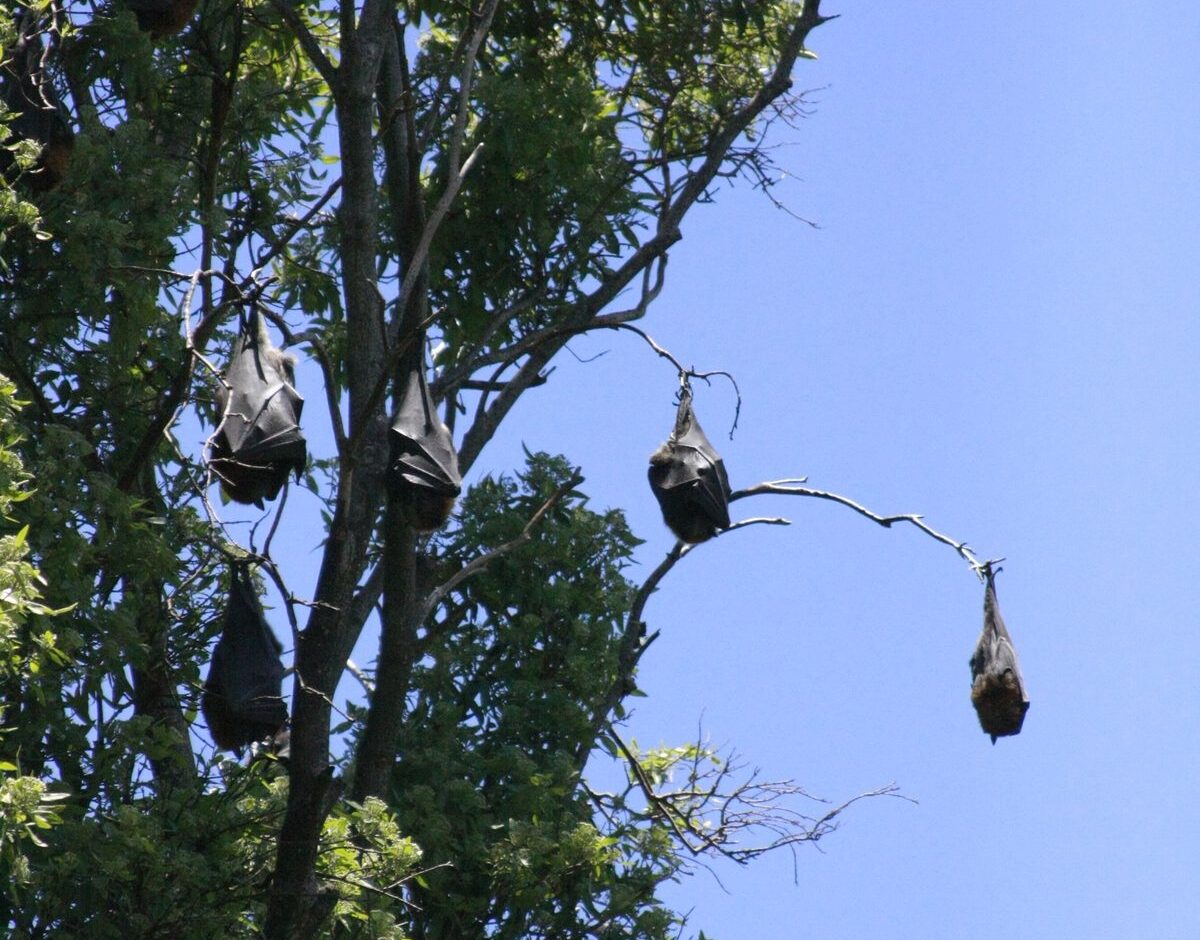
The grey-headed flying fox is the species you will see around Lane Cove, feeding at night on figs, eucalypt blossom and backyard fruit trees. They are a threatened species and protected by law.
Dr McQuarrie says the clinic is seeing the effects locally. “Unfortunately we are currently experiencing an increase in sick, dehydrated and malnourished flying foxes due to a food shortage across large parts of NSW. Along with this, there is an increase in the number of people being treated for bat-related bites and scratches.”
DCCEEW expects things to return to normal once natural food supplies become more widely available, which will depend on seasonal conditions.
The NSW Health warning
In the two weeks from 28 September to 10 October, 43 people were assessed by NSW Health after being bitten or scratched by bats. That compares with 10 for the same two-week period in 2025.
“We want people to assume that any bat could carry Australian bat lyssavirus, which is a close relative to the rabies virus and very dangerous to humans,” said Keira Glasgow, Director in Health Protection at NSW Health.
“It is incredibly rare for Australian bat lyssavirus to transmit to humans, but once symptoms of lyssavirus start in people who are scratched or bitten by an infected bat, sadly there is no effective treatment. If you are bitten or scratched by a bat, urgent medical assessment is crucial.”
You found a bat. Now what?
Dr McQuarrie’s advice is simple: don’t go near it.
“If you see an injured bat, or are worried about a bat in your backyard, please do not approach them and definitely do not touch them. Please call WIRES to get an expert wildlife rescuer to take care of them,” she said.
“I understand that it is distressing to see an injured or sick animal, but it is important to treat every bat or flying fox as if they carry lyssavirus and stay safe.”
NSW Health echoes this: only trained, protected and vaccinated wildlife handlers should interact with bats.
What about my dog or cat?
Pets are at risk too, and they can pass the virus on.
“Just like people, dogs and cats can be infected with lyssavirus through a bite or a scratch from an infected bat. The best thing to do is reduce the risk of exposure. Keep pets in at night time, and make sure you check your backyard before you let them outside in the morning,” Dr McQuarrie said.
“If a dog or cat gets scratched or bitten by a bat they can contract lyssavirus and potentially pass it on to humans.”
If you suspect your pet has come into contact with a bat, Dr McQuarrie says to contact your vet immediately. “There are several factors that need to be assessed to ensure everyone is safe. Your pet may need a series of post-exposure vaccinations to ensure they remain healthy. Also contact WIRES to have someone collect the bat as testing can be performed on the bat to see if they carry the virus.”
Two things people get wrong
Healthy-looking bats are safe. Not so, says Dr McQuarrie. “You cannot tell by looking whether or not a bat is carrying the virus. Whilst it is true that sick or injured bats are more likely to carry the virus, it is found in healthy bats too and they can transmit the virus to people.”
Bats flying over the yard, or their droppings, are a risk. They are not. “Lyssavirus is not an airborne virus, it can only be transmitted through direct contact with infected saliva or, crucially in the veterinary world, infected neural tissue like the brain. Being near a bat or their faeces is not a risk,” she said.
What to tell the kids
“Kids should be taught not to touch or handle wildlife at all. If they see something, they should tell a responsible adult,” Dr McQuarrie said. “If an accident happens and they are scratched by a bat, they should be taught to tell someone immediately so they can receive urgent medical attention.”
If you are bitten or scratched by a bat
- Straight away, wash the wound thoroughly with soap and water for 15 minutes
- Apply an antiseptic with anti-virus action, such as Betadine, and let it dry
- See your doctor immediately about post-exposure treatment. Do not wait for symptoms
Fruit tree netting
Loose, fine netting is one of the main reasons flying foxes end up tangled, injured and on the ground, which is exactly when people are tempted to help.
“Whilst I understand why people with fruit trees want to protect their crops, a lot of netting sold in stores is very dangerous for our wildlife,” Dr McQuarrie said. “Choose netting with a hole size of 5mm x 5mm, white netting is much easier for wildlife to see, and make sure you stretch the netting taut. Loose netting causes more entanglement and more severe injuries.”
Who to call
- Injured, grounded or trapped bat: WIRES on 1300 094 737, or find your local licensed wildlife rescue group
- Pet has had contact with a bat: your vet, straight away. Advanced Vet Care Lane Cove is at avclanecove.com.au
- More information: NSW Health’s Australian bat lyssavirus fact sheet and be careful around wildlife
In the Cove is free to read, with no paywall. If you value independent local stories like this one, you can support ITC here.