

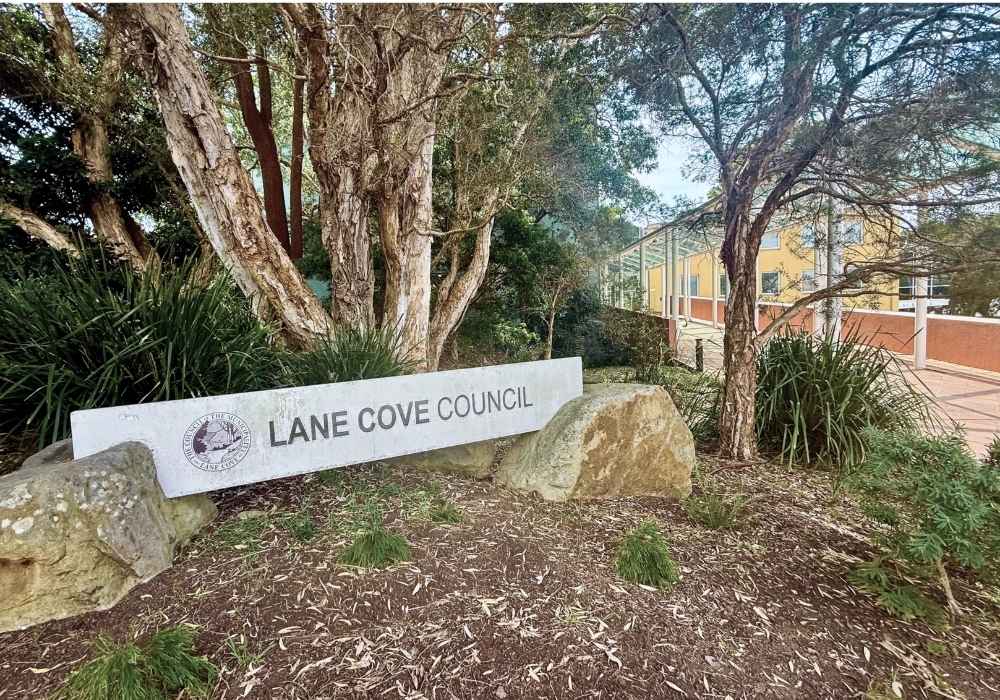
Lane Cove Council meets on Thursday 24 September 2026 at 7pm and this is your summary of the agenda from ITC.
How residents can have their say
The Public Forum Meeting for this round was held on Monday 21 September, so registrations to speak in person have closed.
Written addresses are still open. Email [email protected] with the subject line “Written Submission for Council Meeting – 24 September 2026 – [Subject]”. Submissions are a maximum of 500 words and must reach Council no later than midnight on Wednesday 23 September, the day before the meeting.
The meeting is held in the Council Chambers and is webcast, with recordings published on Council’s website. Minutes are published by 5pm on the Tuesday following the meeting. Residents who need assistance to participate due to a disability can contact Council’s Director of Corporate Services and Strategy on (02) 9911 3550.
A new Bike Plan, and six weeks to tell Council what you think of it
Council will consider putting a new draft Bike Plan on public exhibition for six weeks (item 16.1, page 79). The plan was prepared by the Institute for Sensible Transport and replaces the 2019 version.
The headline numbers: a proposed network of 31.6km mixing existing, partly existing and new infrastructure, a target of lifting cycling mode share from around 1% of trips today to 2.4% by 2036, and a projected rise from about 1,800 bike trips a day to roughly 4,800. Council will also aim to maintain zero cycling fatalities while reducing serious crashes.
Earlier consultation drew more than 500 online contributions and over 150 face to face conversations. The most common barriers people named were a lack of dedicated and protected bike infrastructure (26% of survey responses), discomfort riding alongside cars (25%) and a lack of separation between pedestrians and riders (15%). More than 8 in 10 respondents said they would like to ride more.
The report notes the draft plan is not a policy position on share bikes such as Lime. Some of the regional cycling routes are rated as high priority, but they aren’t included in Council’s staging program because they would need State Government funding and coordination.
Smart glasses could be banned from change rooms, the kids’ pool and childcare
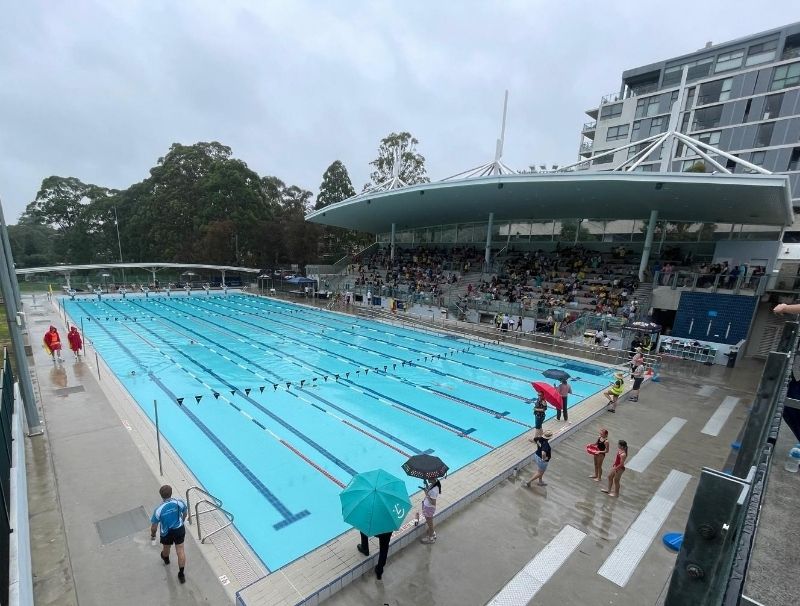
A Notice of Motion from Councillor Kathy Bryla asks Council to develop conditions of entry regulating camera-enabled smart glasses and other wearable recording devices at Council-owned and Council-operated facilities (item 11.3, page 24).
The nominated privacy-sensitive areas are change rooms, toilets, showers, childcare facilities and the children’s swimming and play pool area. The motion asks for clear exemptions where a person with disability relies on smart glasses or similar technology for reading, object identification, navigation or communication, with the Access and Age Friendly Advisory Committee consulted before implementation.
The background section notes these devices can look like ordinary glasses, making it hard to tell whether you are being recorded, and that cut price versions are now sold by mainstream retailers including Kmart and Amazon. It cites Brisbane City Council, which has introduced pool conditions of entry prohibiting non-consensual recording, and Yarra City Council, which has gone further and banned smart glasses from Council leisure centres and other facilities used by children.
If carried, the General Manager would obtain legal advice and build an implementation and enforcement framework covering signage, complaints, incident reporting and Council’s powers to impose conditions of entry.
Burns Bay Reserve Masterplan up for adoption, with a full netball court added
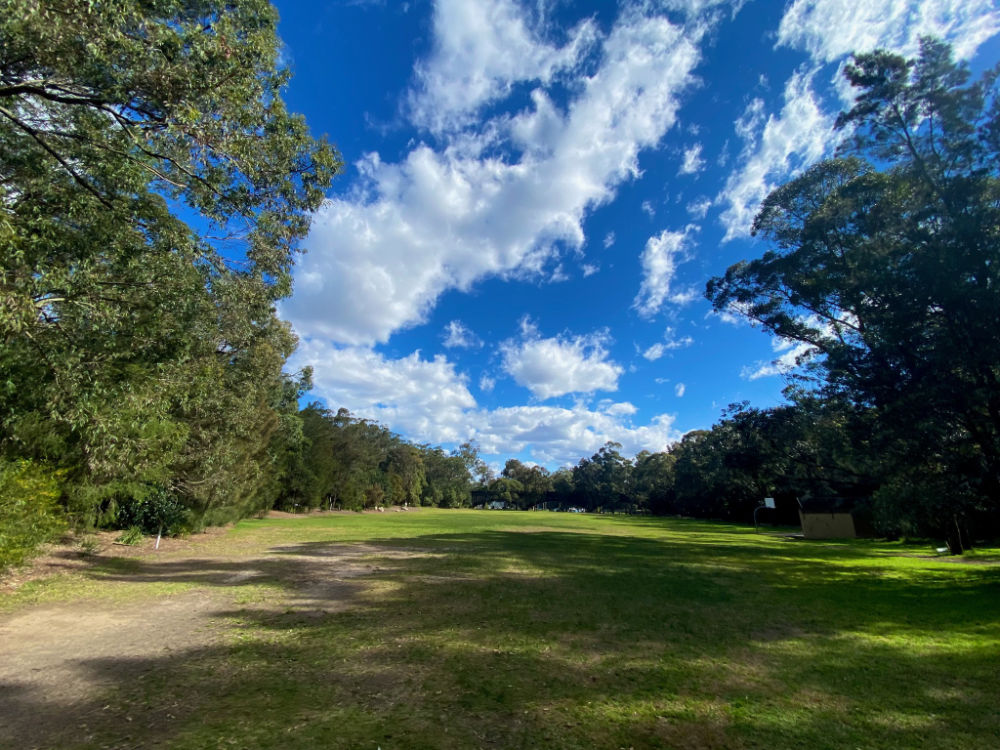
The Burns Bay Reserve Masterplan returns for final adoption after its third round of consultation (item 16.2, page 84). The exhibition ran from 30 July to 10 September and drew 43 survey responses, 18 votes at pop-up sessions in the Reserve and 10 email submissions, three of which came from representatives of a stakeholder group.
Council says the large majority of respondents were generally supportive of the plan, with a smaller number neutral or seeking major changes.
The most substantive change is the multi-use court. The draft proposed a half court. Consultation identified high demand for at least one full-sized netball court for casual play, so the final Masterplan proposes one full size multi-purpose court suitable for casual netball and basketball.
Sportsfield lighting remains the sticking point. Some residents opposed it. Council’s response is that lighting stays, arguing it is needed to meet demand that already exceeds capacity and to expand opportunities for women and girls, and that without lighting the cost of a full drainage upgrade could not be justified. Hours would follow Council’s standard sportsfield hours, with a lighting expert engaged at detailed design to assess impacts against Dark Sky principles, AS 4282 and AS/NZS 1158.
Residents also voted on a staging order. Grass field drainage ranked first with 23 votes, followed by a new amenities and toilet block (15), bridge replacement (14) and the multi-use half court (13). The playground sits outside the ranking because it is already funded for construction this financial year. Ping pong tables have been dropped for lack of support.
Foxes, chickens and Powerful Owls

Councillor Bridget Kennedy will move that Council review how it manages urban foxes (item 11.1, page 9). Council currently takes part in the Sydney North Regional Fox Control Program and uses licensed contractors for strategic shooting, which it considers the most effective and humane method in an urban setting.
The motion asks Council to look at targeted cage trapping, den identification, coordinated programs with neighbouring councils and NSW National Parks, better mapping through FoxScan, and practical advice for residents on fox-proofing poultry enclosures. A report would come back within four months.
The background cites local media reporting, including ITC, on Lane Cove residents losing backyard chickens with the fox returning the following night. It also points to the Powerful Owl, listed as Vulnerable in NSW and breeding locally, where fledgling predation by foxes is a recognised threat. Council records roughly 200 animal species locally, including more than 150 bird species.
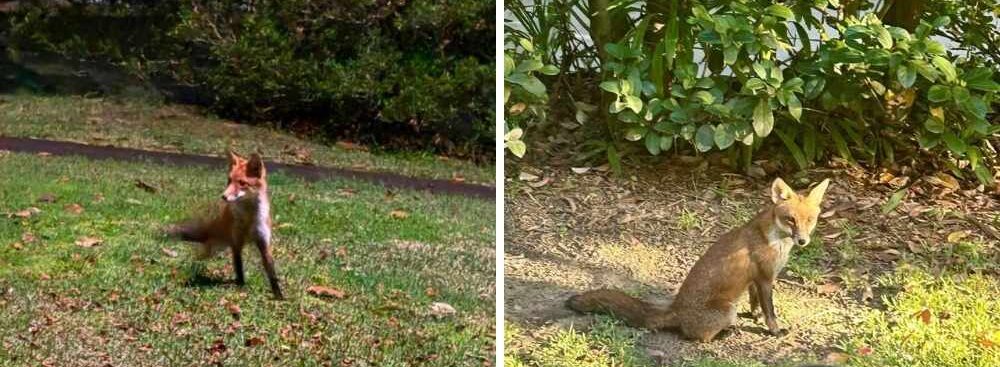 H5 bird flu also features in the background to the motion, following Australia’s first confirmed mass mortality event in wild birds and a suspected H5 infection in a red fox in South Australia. The motion does not suggest fox control would prevent bird flu, but argues reducing other pressures on native wildlife is something Council can act on locally.
Bushland rules written in the 1990s meet 2026-sized development
Councillors Rochelle Flood and David Roenfeldt will move a targeted review of Part H of Council’s Development Control Plan, which governs bushland protection (item 11.2, page 15).
The motion draws on a July 2026 paper from the Bushland Management Advisory Committee identifying gaps in the current controls. Chief among them is whether a standard 10 metre setback is adequate for large multi-storey developments, along with excavation and basement works affecting root zones, sediment and stormwater during construction, light spill and noise, and the cumulative effect of several intensive developments creating a continuous lit and noisy bushland edge.
The paper also flags ambiguity between the terms buffer, setback and construction zone, and uncertainty about whether Part H applies where adjoining C2 conservation land is degraded or does not meet the technical definition of bushland. The motion argues the scale and intensity of development next to Lane Cove bushland has changed substantially since the original controls were written in the 1990s.
Two Austin Crescent houses set to lose heritage listing
Council will consider finalising planning proposals to remove 1 Austin Crescent and 3 Austin Crescent from Schedule 5 of the Lane Cove Local Environmental Plan 2009, the local heritage list (item 15.1, page 59 and item 15.2, page 66).
Both were exhibited together from 30 July to 10 September 2026 and each report records two submissions. One asked that other heritage-listed properties in Morrice Street also be de-listed if owners wish, which Council says is outside the scope of the current proposals. The other raised concern that delisting may increase future development potential under the Low and Mid-Rise Housing reforms, and asked that building scale, streetscape, privacy, overshadowing, tree canopy, traffic, parking and infrastructure be considered.
Council’s response is that those impacts would be considered through any future development application, and that its independent heritage consultant supports removal of both items. The Local Planning Panel found both proposals had strategic and site-specific merit, while noting that planning proposals should spell out the development potential that delisting unlocks. Any LEP amendment must be completed by 12 March 2027.
Council set to close and sell part of Anglo Road, Greenwich
Council will consider formally closing and selling a 954.5 square metre section of the northern Anglo Road reserve between the Pacific Highway and the cul-de-sac (item 16.3, page 96). The buyers are the proponents behind a proposed Seniors Living development at 126 and 130-134 Pacific Highway, Greenwich, who want to consolidate the land into a site of roughly 3,468 square metres.
Notification ran from 12 June to 9 July 2026 and drew four submissions, two supporting and two objecting. Both supporters live in the affected area. One objector lives elsewhere in the LGA and the other gave no address.
Council’s response is that the land will be sold, so maintenance becomes the new owner’s responsibility, and that a right of carriageway will preserve pedestrian access for Anglo Road residents walking to public transport. Planning approval for the Seniors Housing development has not yet been obtained. The sale price would be set by an independent valuer and, under the Roads Act, proceeds can only be spent acquiring land for public roads or carrying out road work.
A rewrite of how community groups get Council funding
Council will consider putting a draft Community Funding, Subsidies and Support Policy on public exhibition for six weeks, together with new grant guidelines (item 14.1, page 51). It replaces the existing Financial Assistance to Community Groups Policy and pulls cash grants, venue hire subsidies, fee waivers, equipment and storage support, event partnerships and ongoing service partnerships under one framework.
Community Grants would still require Council approval. Venue hire waivers and subsidies below $5,000 could be approved by the General Manager under delegation, with anything at $5,000 or above going to Council. Ongoing service partnerships would need a formal funding or performance agreement.
Grant funding changes could cost Lane Cove Council $300,000 a year
The NSW Local Government Grants Commission is changing how Commonwealth Financial Assistance Grants are shared between councils, moving to a needs-based model where 70% is allocated on need and 30% per capita (item 13.3, page 47).
On 2025/26 data, Lane Cove Council’s grant would fall by $300,000, with the hit landing in the 2027/28 Budget. Staff recommend supporting the methodology in principle, on the basis that regional and rural councils face greater disadvantage, while asking for the change to be phased in over three years and continuing to lobby through LGNSW and ALGA for a bigger grant pool. Submissions close 9 October 2026.
Other items on the agenda
- Mayoral Minute, Cameraygal Wind Symphony (item 7.1, page 5) congratulating the ensemble on winning the Open B Grade Concert Band section at the NSW State Band Championships on 22 August, placing first in all three of its Percy Grainger works.
- Mayoral Minute, NSW Volunteer of the Year Awards (item 7.2, page 7) recognising Greenwich resident Gabriel Dickinson, named North Shore Volunteer of the Year, and Riverview resident Jeff Lewis, named North Shore Adult Volunteer of the Year.
- Draft Data Breach Response Policy (item 12.1, page 28) returning for adoption after a six week exhibition that attracted no submissions.
- 2026 LGNSW Annual Conference motions (item 12.2, page 31) seeking endorsement of three further motions on preschool funding in long day care, competitive neutrality thresholds and retaining council discretion over development notification. Council has already endorsed motions on Emergency Services Levy reform and a moratorium on AI data centre projects.
- Local Government Performance Ratios submission (item 13.1, page 38) responding to the Office of Local Government discussion paper before the 7 October deadline.
- Local Government Summit Against Antisemitism (item 13.2, page 44) seeking expressions of interest from Councillors for the 26-27 November summit, at $465 per ticket if registered before 30 September.
- DV Safe Phone initiative update (item 14.2, page 55) reporting that residents can donate phones at the Civic Centre Recycling Hub, 25 surplus Council phones have been identified for donation, and a community donation drive is planned for November.
- Vacant development sites and sediment run-off (item 15.3, page 72) finding Council cannot lawfully require bonds for site maintenance on private land, and recommending a new consent condition requiring revegetation at demolition where construction will not start within six months.
- Council Snapshot August 2026 (item 18.1, page 102) with the Resolution Tracker and minutes from six Advisory Committees.
- No petitions, rescission motions, questions with notice or closed committee items this month.
What’s next
The Ordinary Council Meeting is at 7pm on Thursday 24 September 2026 in the Council Chambers, and is webcast.
Read the full agenda PDF or the web version of the agenda.
Straight to the items people are talking about: