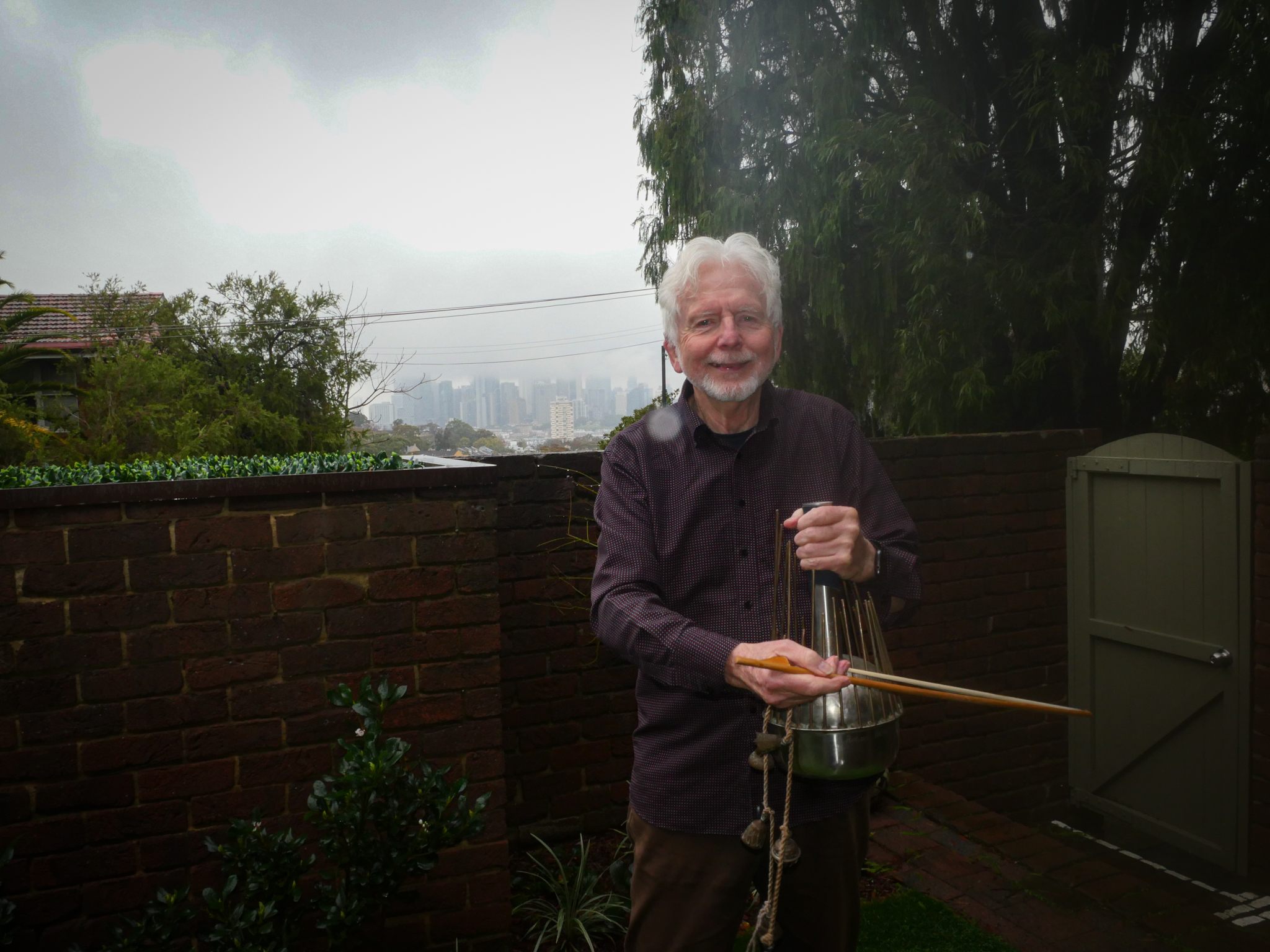
Lane Cove is brimming with incredibly talented artists. You may have blissfully followed the sweet sound of their flute, but have you ever inquired who’s playing the piper? We can answer that question after interviewing Michael Atherton AM.
Michael Atherton’s life story is a crescendo of passion and purpose.
Who Is The Music Man?
Michael has dedicated his life to not only creating music but also featuring it in films, authoring multiple books, and paving the way for future generations to do the same as the Head of School of Contemporary Arts at Western Sydney University.
The 75-year-old lived in Lane Cove for 16 years. He recently made the dramatic move to the outskirts of Waverton, where he and his family now reside.
As expected, multiple instruments are scattered around his living room, all exotic yet somehow familiar, mimicking more widely known strings and pipes. However, considering he plays over 30 instruments, these may be his flavour of the month.
The view from his backyard, seen from the living room, on any given day, is pristine; the backdrop of Sydney’s CBD basking before the sparkling harbour.
But, with our recent soggy weather, the usual striking Centre Point Tower was instead engulfed in a thick layer of fog, matching more closely to Michael’s origins in Northwich, England (see our cover photo).
Not A Prodigy
Michael spent his formative years in England. Back then, he wasn’t too interested in playing music; in fact, he was told he was pretty “useless” at it.
He firmly believed an injustice was at play when he was being dragged away from the explosion of the London sound in 1965 to live a life in Sydney. “I wanted to bring something with me. And I brought a beat-up old guitar that I’d purchased from a mail-order catalogue. And that was my connection,” he said.
This connection not only kept the bridge to his old life intact but also helped him assimilate into a new one. As he formed new relationships with the people he lived with in his migrant hostel, he also came to appreciate the easy-going nature of Australians, which contrasted with the lifestyle he had left behind in England.
“I was a pimply 15-year-old in a migrant hostel with quite a strong pommy accent, but the kids were immediately accepting. I could talk about anything from surfing or music.”
“Sometimes I think it would have been harder to have that kind of freedom in England… It’s still a very rigid society. There’s still a lot of class. And unless you go to Oxford or Cambridge, there’s still a lot of barriers.”
You Got Passion? You’re In
Michael’s roots indeed did not foreshadow a life of academia. For many years, he lived in a freelance world, where he toured as a musician and wrote scores for films (more on that later).
However, in 1993, an opportunity to shape the music department at the University of Western Sydney shifted his priorities as he fell in love with guiding students in a way that had not been previously offered to him.
“I’m probably the only head of a music department, the only Professor that’s ever let a couple of people into a music degree who couldn’t read music,” Michael laughed.
The newly appointed Professor of Music never forgot his roots and held in high regard his identity as a mostly self-taught immigrant musician. This did not mean he turned his nose up at the elitism of music; instead, he transformed the perception of what is usually expected to be a great musician.
What was initially meant to be a five-year academic stint evolved into a 19-year career, culminating in the title of Emeritus Professor.
“Being a freelance musician, this was the first long-term job I’d really had… I wouldn’t change that, and it’s been great to see where the students have gone.”
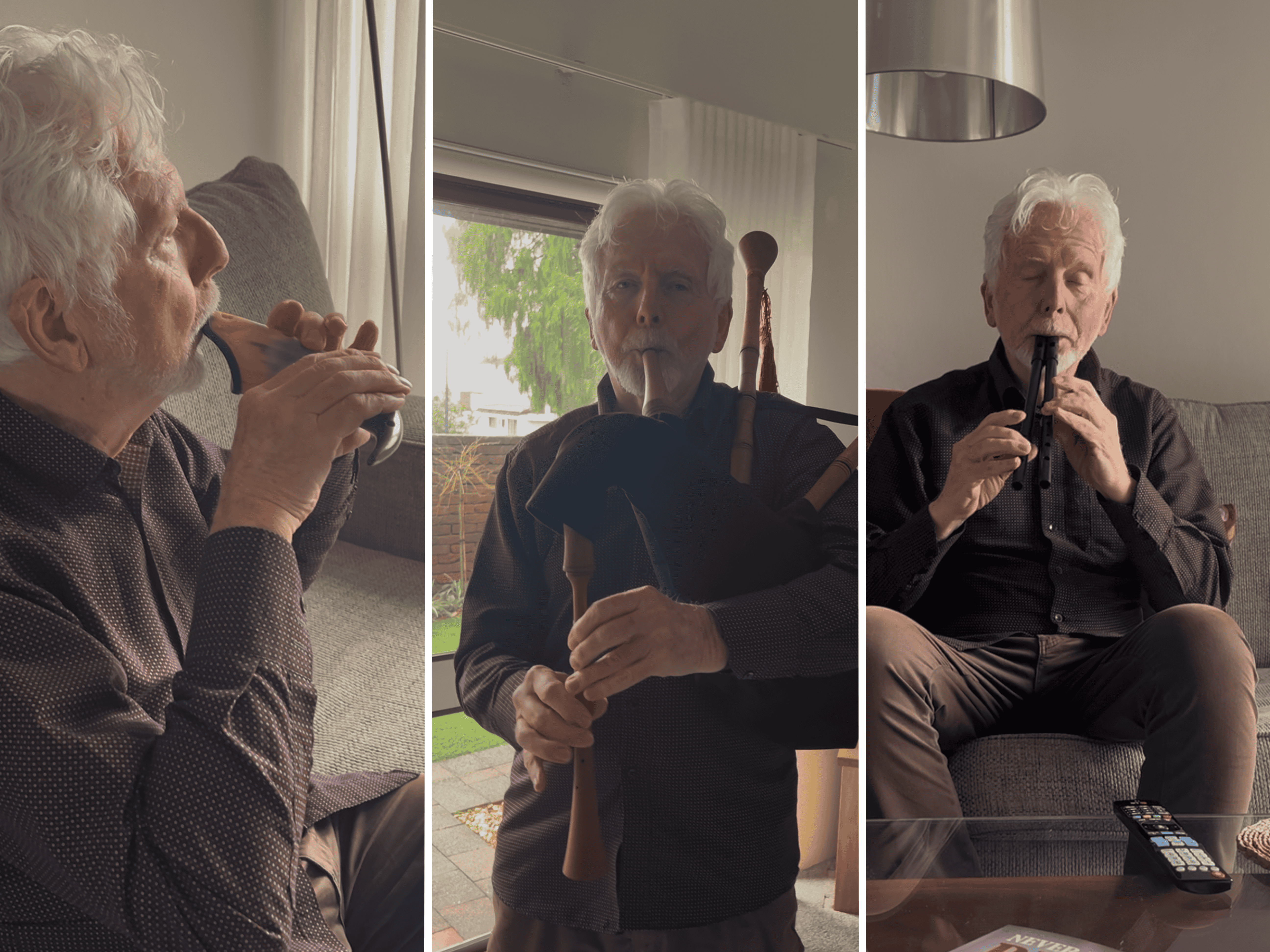
Michael may have shown leniency in letting students in. Still, as a Master of Arts with Honours graduate from the University of NSW, he had high standards of what a musician should learn to make a name for themselves.
“If someone came and was a drummer, in 1993 I’d say to them, okay, if we let you into this course, there’s a vibraphone there and a marimba there. In three months, I want you to be able to play something,” Michael said, relaying his strict expectations of his students, “your first three weeks, you’re going to learn, day in day, everything you can about sound and lighting, and you’re going to run all that in the next student concert.”
He had a very “project-based” approach, which involved sending students out to curate their own projects, training them to be multiskilled as well as entrepreneurial so they could one day traverse the music landscape in Australia.
The nature of these projects ranged from person to person. One wrote music for the Air Force Band, while another created a choir in the Blue Mountains to complement her thesis on how music can assist with depression. These were all worthy of pursuit under Michael’s rule: “When you finish with it, it can’t fall apart. You’ve got to make it sustainable.”
He would also encourage his students’ entrepreneurial spirits by convincing them to back themselves. Often saying if they have a first performance, the first tickets should be sold to their grandparents.
“You ask her [their grandma], Would she like to buy a ticket to invest in you?” He said.
“What I’m trying to teach them that’s not callous. It’s about self-promotion. It’s about backing yourself. Can you get all your parents to come to this concert? Don’t give them freebies. Ask them to buy a ticket, because you’ll fund it. You will understand what that means, and they all appreciate your being entrepreneurial.”
Under his postgraduate supervision, Michael supervised sixteen successful doctoral students, including one who went on to become the Dean of Research and the inaugural head of the School of Contemporary Arts.
Listen; Music Is Everywhere
Despite not initially having an interest in instruments until his journey across the pond, Michael says that growing up, he noticed the power of sound in everyday life. The scraping of metal shovels removing snow from side streets, the trotting of horses paired with the calls of the coalman being pulled by wagon closely behind or the eruption of screams overtaking tense silence from thousands of fans at Goodison Park.
To him, this was not just noise, but meaningful sound, and with correct rhythm, an opportunity to be transformed into music. However, even music has no direct definition for the music man, as different cultures he has visited combine the art form’s definition to include dancing, sound, and storytelling.
In the mind of Michael, language is trumped by sound, and music is the ultimate unifying communicator.
“The word for music in some cultures doesn’t exist,” Michael began to explain.
“We’re hardwired for music. As babies, our mothers will hold us, look at us, and start singing or humming. It’s almost as if the baby triggers that in the mother, like we’re almost genetically wired to make that communication.”
He explored this in various ways, most notably through his career as a freelance film score musician.
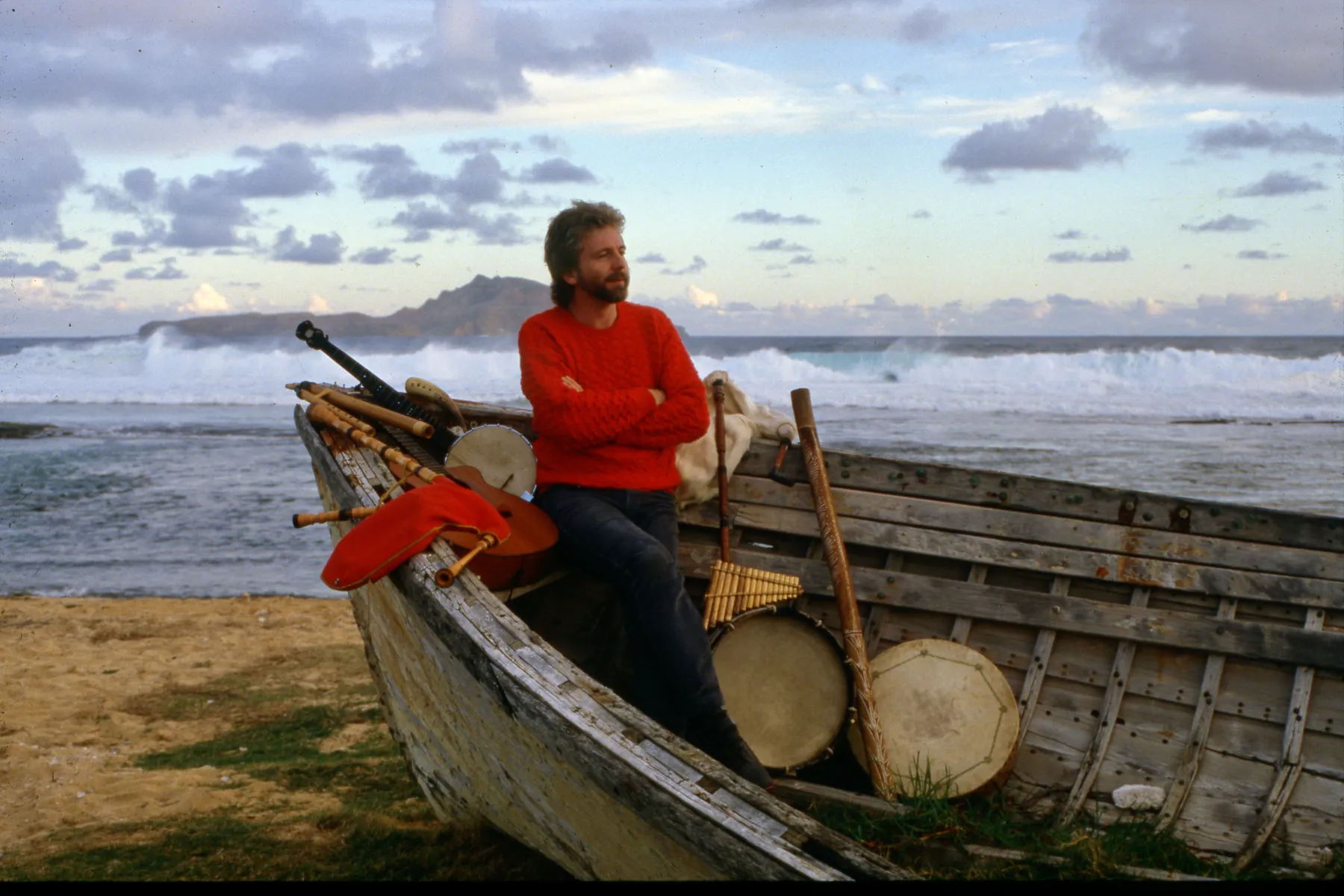
Music and Film
Michael mainly wrote for social history documentaries such as Admission Impossible and Black Death in Custody.
To Michael, music is the “invisible character” in film. And with the way he took his Welsh crwth (fiddle) from the shelf and played a dramatic tune in the rain, in front of the cityscape backdrop in his backyard, I couldn’t help but believe him. In a stroke of a chord, we were transported from a gloomy day in Sydney to a serene homestead somewhere in the fields of Wales.
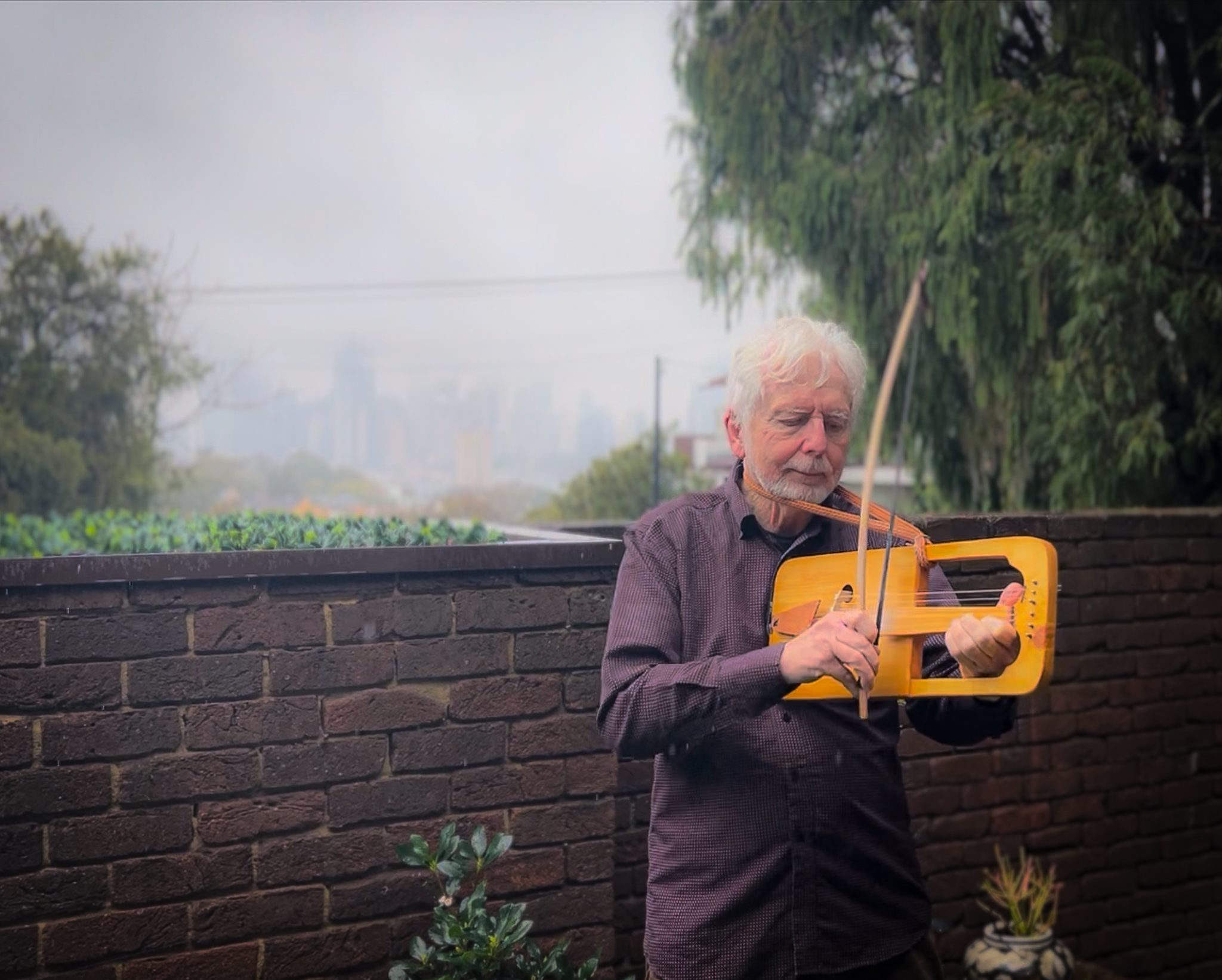
He believes that music shapes the emotion in writing, and it’s a composer’s responsibility to conjure that emotion with their own personal feelings, while simultaneously producing a sound that brings audiences closer to the mood.
“When you hear a soundtrack on a film, you realise you’re mimicking reality, but you’re also creating new sounds that no one’s ever heard. And that’s where composing comes in,” Michael told ITC.
A complicated task, for some, second nature to Michael, which was quickly demonstrated to ITC when Michael once again flipped the dynamic of the atmosphere in his backyard, switching out his Welsh crwth (fiddle) to his waterphone – an eerie instrument used in many traditional horror flicks.
Music Therapy
His implementation of music to affect one’s emotions didn’t stop in entertainment; he also dabbled in therapy, working with former Governor Professor Dame Marie Bashir.
“She [Pr Bashir] found a job for me as a music therapist in her adolescent unit, a special place for kids that couldn’t cope with school, and so I was invited to develop music as a communication outlet, a thing of self-esteem for those kids. And that was just a wonderful experience,” he said.
With all these wonderful uses of music intended to connect people through personal and emotional experiences, the obvious question arose.
AI and Music
“With the rise of AI, do you reckon it’s a dire time for the music industry?” ITC asked.
“I’m optimistic,” Michael replied reassuringly.
“We’ll lose some jobs because the recording studios had to change… but I don’t think we’ll ever replace musicians, actors, people talking, because we communicate this way.”
“If you look at folk festivals, and you look at the amount of books that are being printed, those things haven’t gone and people are still tinkering with music cassettes. There are clubs that are creating cassettes and LPs, and there are photographers still wanting to use emulsion film. So I think it’s just another, another tool. It is a big one, and it’s part of a major shift.”
Never Miss a Beat
If you ask Michael Atherton what he’s up to now that he’s retired, he’ll tell you plenty.
Most recently, he has released another book, ‘Never Miss a Beat’, which delves into his life in even greater detail than this article (and believe us, if it wasn’t for this pesky word count, it would be a lot longer!). ITC first met Michael when he released a book about the rise and fall of the piano in Australia. Read more here.
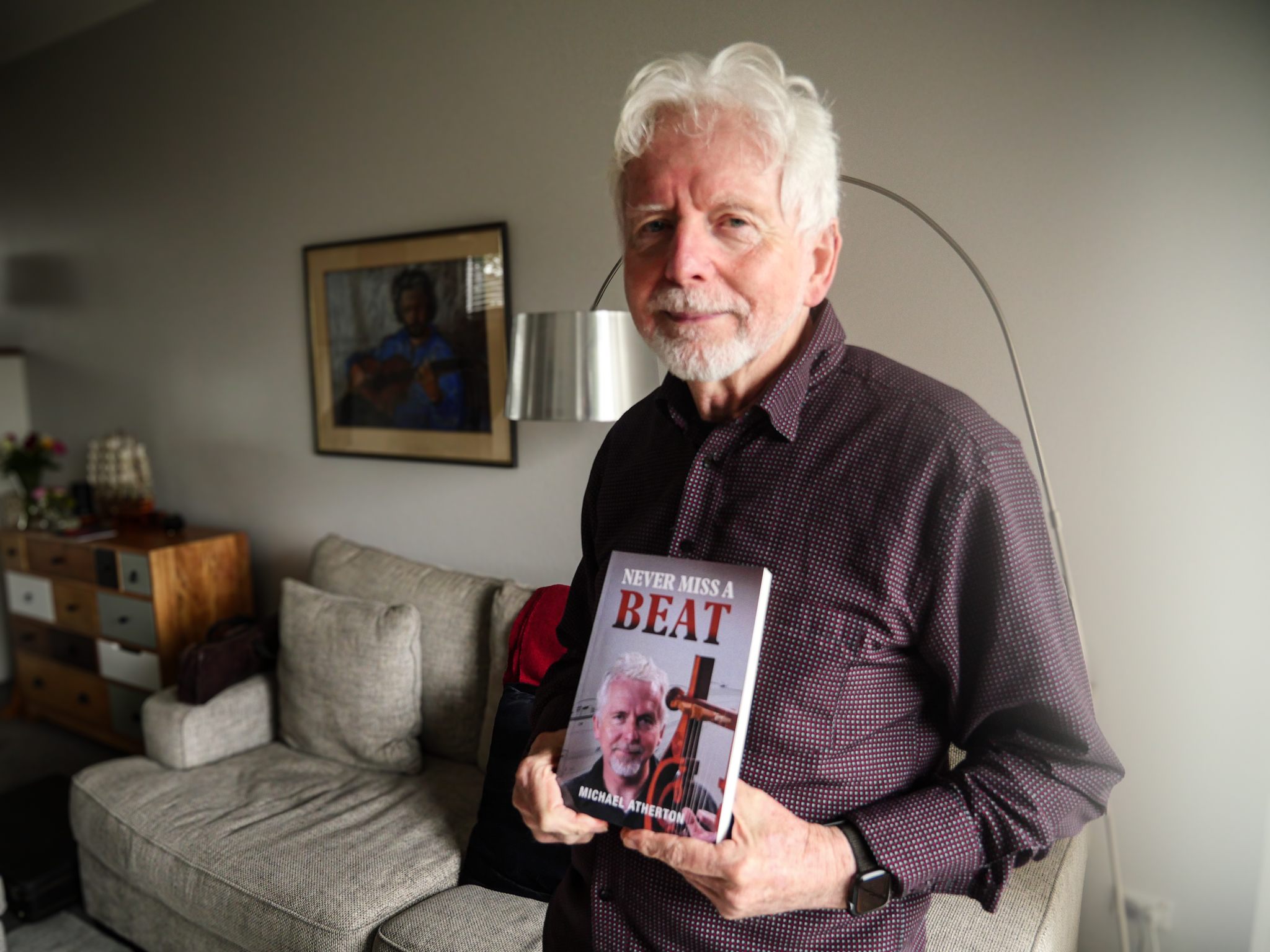
Although Michael isn’t living within the Lane Cove LGA anymore, he’s still very much involved in the community, where you can catch him giving talks at the library.
He is even finding time to write a play on the Changi Piano, and eventually plans to showcase it at the new Pottery Lane Performance Space.
And the apple doesn’t fall far from the tree with his ‘pitch-perfect’ son, who is a member of the Willoughby Symphony Orchestra and also teaches violin and piano at the Lane Cove Music and Cultural Centre.
“I think the music community has really evolved. There are several choirs, there are music schools and clubs. I think it’s a fantastic area, and we’ve got a lot of friends there, and a lot of good memories,” Michael said.
If you have an interest in music, you can pick up a copy of Michael’s book online or at stores. Or, if you see this legendary music man out and about, why not stop and sing out – he may show you a thing or two about walking to the beat of your own tune.
Help Support Local and Independent News
You can support us in three ways:
- Become an ITC reader sponsor – Feel free to sponsor if you have enjoyed our local news coverage and would like to be an ITC reader sponsor. You can sponsor us with a monthly sponsorship fee. We have reader sponsors who sponsor us for $5.00 a month and some who sponsor us for $100 a year – no amount is too small or too big. Thank you so much to the people who have already supported us via our press Patreon account. Help Us Here.
- Buy the ITC team a coffee – We now have a team, and they need to be paid – buy the ITC team a coffee (or two) and that will help us pay their wages Buy a Coffee here.
- Do you own a Lane Cove Business or a Lane Cove resident who owns a business, you can advertise with ITC – our packages start from $36 a month (for a 12-month commitment). Email us here for our rates card.