

With AI on the rise, the business of data centres is booming with hyperscaled versions of the structures clustering in our suburbs. But as the State Government approves more centres, just how significant will their impact be on local communities?
The Cove has conducted a three-month investigation into how data centres in Sydney interact and use resources, as well as how the State plans for them. We will report our findings over four instalments, focusing on water, noise, planning, and energy.
Jumping The Water Gun
Clusters of data centres are being greenlit around Sydney, but will there be sufficient water infrastructure to cater for this development boom?
Sydney Water has already confirmed more infrastructure will be needed to supply water to data centres, projecting they will need 250 megalitres a day by 2035, equivalent to 100 Olympic-sized swimming pools. At the moment, this water is primarily from Sydney’s drinkable water supply, entirely new systems will have to be built to supply the facilities with recycled water.
Industry Fellow and sustainable finance professional Gordon Noble says Sydney’s Victorian-era water infrastructure is not equipped to meet today’s water service standards. And this seems to be true, as IPART’s Sydney Water pricing assessment for 2025-30 reveals that the water service provider only realised and reported the extent of its infrastructure months ago.
Despite this sudden revelation, ten State Significant Developments (SSD) for data centres have been approved by the Department of Planning, Housing and Infrastructure (Planning NSW) since 2021, with more than 21 applications submitted or in the first stages of planning assessment.
The SSDs did not require the data centres to stipulate their water usage; they only needed them to provide plans to minimise water consumption; many cited recycled water as a provision.
Planning NSW has told ITC that Sydney Water confirmed its ability to supply water to all the approved data centres determined to date. However, since city water suppliers back track on this stance – now needing more infrastructure than originally planned – IPART has withheld additional costs for their request, creating delays for mass recycled water to be accessible to data centres and potentially putting strains on clean water accessibility.
Just How Much Water Will Data Centres Drink?
Hyperscale Data Centres are big and thirsty; they host thousands of servers and storage equipment that are constantly running and require cooling. Currently, all the centres in Sydney use up to almost one per cent of our maximum drinkable water supply – this could jump to a quarter by 2035, according to Sydney Water.
Goodman is one of the developers seeking approval for a data centre at 12 Mars Road within Lane Cove West Business Park. It will occupy approximately 8,830 m² and use an average of 1,405 kilolitres per day. Their Artarmon facility will use about 2,300 kl, which, when combined, is equivalent to the average daily water consumption of just under 6,000 Sydney houses – well over a quarter of the number of private dwellings in Lane Cove.
Another facility already operating in Lane Cove West Business Park is AirTrunk’s data centre at 1 Sirius Road. The behemoth, which takes up about four hectares of land, is only set to grow as the company’s second centre next door on Apollo Place was recently approved. Although AirTrunk were unable to disclose their water usage, it’s combined facilities’ may use even more water than both of Goodman’s data centres as it will be almost twice their size and use similar adiabatic cooling systems.
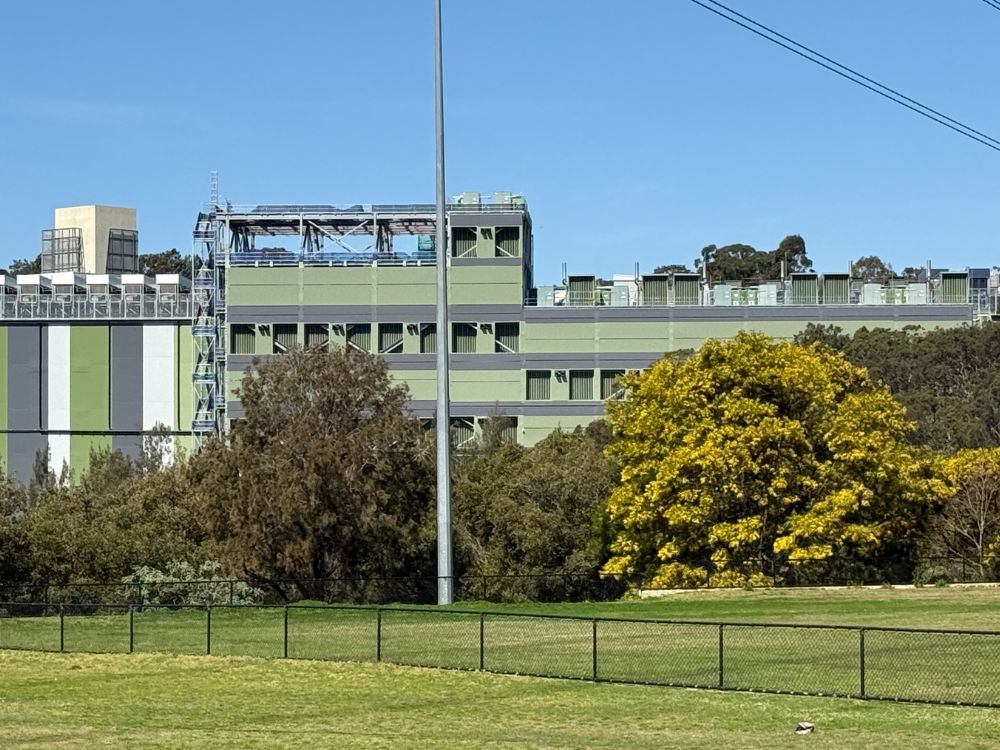
Across the Lane Cove River, ISPT’s proposed data centre on Julius Avenue, North Ryde, will be about 18,829 sqm. Although ISPT said it wasn’t ready to share its water consumption predictions for the facility, given its size, it could have similar rates to Goodman and AirTrunk.
The physical impact of these water demands is already clear to some Lane Cove residents, who have endured over a year of construction by Interflow on behalf of Sydney Water to provide additional water infrastructure for AirTrunk.

Ryde has similar infrastructure work underway with Sydney Water. Pipes will eventually have to support enough water to service 11 data centres in the area – the council estimates a need to provide 15,000 megalitres of water per year to these facilities. This would equate to 2.7 per cent of Sydney Water’s entire supplied drinking water for Greater Sydney, Illawarra, and the Blue Mountains in 2023/24.
These are just clusters within the Lane Cove and Ryde area. The environmental impact of the mass consumption of these data centres around Sydney – which is quickly turning into tha tech hub – is yet to be fully understood.
Mr Noble says the data centre boom is happening fast and planning protocols are being tossed out the window in the face of FOMO.
“The Googles, the Microsofts, Amazon’s, etc, genuinely want to get investments here in Australia; they will take their time. They will be prepared and do the right planning structures, I don’t think we need this kind of FOMO, this fear of missing out, that we’re not going to get these data centers,” he said.
“We’re very well placed, as a nation, to build a data center industry. But it doesn’t mean to say we should throw out the planning book and just say, let’s just quickly get them.”
Federal Governmebnt’s National AI Plan Fails to Address Water Shortages
The Albanese Government released this week their National AI Plan. The Plan was very light on in terms of infrastructure requirements (it mentions water once). The Federal Government decided not to implement new legislation to regulate AI, but rather to keep existing legislation and ride the coattails of the economic investments in AI technology driven by private companies. This decision comes from the belief that Australia could lose out on a unique business opportunity.
When releasing the plan Assistant Minister for Science, Technology and the Digital Economy Dr Andrew Charlton said:
“This is a plan that puts Australians first. We are making sure Australians can benefit from this transformative technology.
“The Government is setting out an agenda that will attract positive investment, support Australian businesses to adopt and create new AI tools, and address the real risks faced by everyday Australians.
In a potential arms race to build mass water-consuming data centres in a climate that is prone to drought, the question begs…
Are We Planning For These Data Centres Correctly?
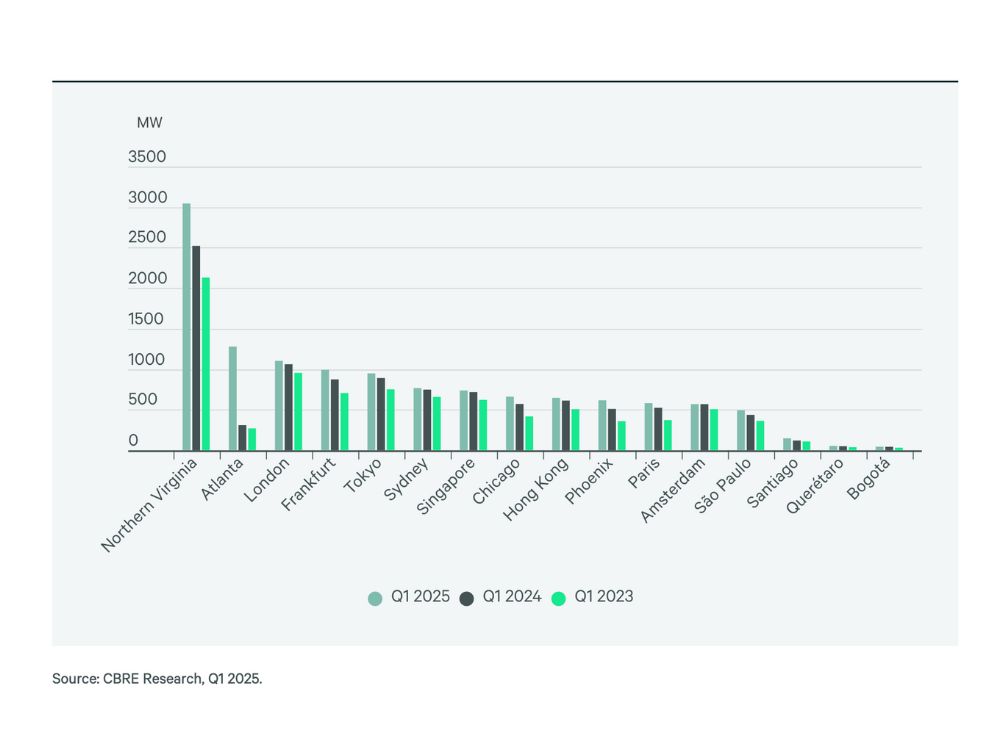
According to a 2025 CBRE report, Australia’s live build-out capacity currently ranks it among the global top ten. When factoring in projects under construction, committed or in early planning stages, the nation could potentially rise to the top three in the world. There are about 90 data centres in NSW, with 5 more SSDs already determined, 14 currently in assessment and seven in Environmental Impact Stage.
Amazon has also shared its plans to invest $20 billion to expand its data centre infrastructure in Australia before 2030. Microsoft is looking to invest $5 billion.
The decision not to create new AI legislation was made by Minister for Industry and Innovation Tim Ayres, stating he wants to see “artificial intelligence digital infrastructure underwriting and securing our energy future.” But current planning around the AI infrastructure seems to have already hit a snag.
Though Planning NSW says current data centre applications need to provide information around their water and wastewater demand, previous applications did not. Instead, they were only required to show that ecologically sustainable development principles were worked into their design and ongoing developments.
The use of recycled water to cool data centre systems rather than drinkable water was promised in designs and was accepted as a means to approve the applications. However, recycled water infrastructure through Sydney Water essentially does not exist.
AirTrunk and Goodman both say they are in contact with Sydney Water to make this a reality, with AirTrunk CEO Robin Khuda airing frustration to the Financial Review, saying they’re “looking to do a water recycling project in Australia and invest $50 million into the utilities companies but they can’t make a decision,” calling their process “too slow.”
Sydney Water did not confirm a timeline to ITC for when recycled water infrastructure would be constructed. In fact, IPART’s 2025-30 pricing assessment for the water service provider indicates this was not considered at all until recently.
IPART are responsible for regulating and authorising Sydney Water’s capital works and although consultation opened in November 2024, Sydney Water only made IPART aware of their data centre water infrastructure concerns almost a year later in September 2025.
During this time, the need for more water infrastructure, including the possibility to create systems to deliver recycled water to data centres was not only known, but also authorised as part of the Planning Department’s SEARS conditions. IPART claim they were not aware of this lack of infrastructure and decided to provide no additional costs for Sydney Water to service the data centres.
The IPART report further stated it may reconsider reviewing the set prices before 2029-30 if the need to service data centres accelerates in the next few years.
NSW has further ambitions to accelerate data centre development through its new Investment Delivery Authority that can make recommendations directly to the Planning Minister. The IDA has already received 23 projects related to data centres and technology valued at $72 billion.
Though government funding for recycled water alternatives seems years away, Danielle Francis from the Water Services Association of Australia says customers can accelerate the rollout by funding the systems themselves.
“We can actually create situations for them… you can forward fund that infrastructure. It can actually bring on the asset creation that can benefit the whole community as well,” she said.
This was echoed in the IPART’S In IPART’s 2023/2024 compliance report which considered Sydney Water could levy upfront charges to developers for existing infrastructure needs, “However, a number of challenges continue to impact the ability of businesses to develop and maintain viable private recycled water schemes in NSW,” it read.
The communication disarray is further seeping into local government. Lane Cove Council has raised concerns about the impacts on electricity and water, calling for greater local government involvement and a seat at the table as a consent authority.
The City of Ryde shared this sentiment with the existence and development of 11 data centres within the Macquarie Park Innovation District. The LGA referenced the Macquarie Park TOD Urban Framework which outlined Sydney Water nominating a need for a duplication of one wastewater line due to impending constraints on water supply in the scale of recent developments.
City of Ryde Mayor Trenton Brown further voiced concerns of the drought.
“When we have a future drought, what’s our plan to conserve water use when data centres drink plenty?”
Building Data Centres Without A Shred of Drought
The next time Sydney will be in drought and implementing public water restrictions isn’t a matter of if, but rather when. The millennium drought is still present in many minds with the International Water Association stating alternative water sources are a main solution to prepare for future events.
NSW Planning states that it does not assess alternative water-source plans during droughts, and that this is the responsibility of data centre operators and water service providers.
There is no current plan to manage water to these facilities during these times, but Sydney Water has begun drafting a data centre planning policy this year. This may require operators to accommodate daily demand fluctuations by incorporating internal reservoir storage into the development design.
Sydney Water says it will not provide any capacity in its network for data centres, which are reserved for emergency storage in reservoirs, and that during drought conditions, water for drinking and public health uses will always be prioritised.
In Sydney, there is no current risk of drought. But, water scientist at Western Sydney University Ian Wright says “the amount of our water supply used in these data centres now is absolutely colossal,” and it’s not uncommon for the city to be caught off guard.
“I’ve been around Sydney Water for enough time that no one thinks about it when the dams are full. And the dams are full at the moment, but if it’s anything like Victoria, South Australia, we may have a drought starting at the moment. Then it switches from complacency to utter panic, and then this will become a massive issue,” he said.
As mentioned, data centres are required to demonstrate sustainability efforts integrated into their design and applications. Both AirTrunk and Goodman are using hybrid water- and air-cooled adiabatic systems for direct liquid-to-chip cooling in their proposed facilities. This method uses more energy than traditional open-loop evaporative cooling towers, but they can save upwards of 90 per cent more water.
However, a flaw in the system may be triggered by humidity over 70 per cent – common in Aussie summers – which can render the method that relies on outside air for evaporative cooling ineffective.
This technology is far more effective in cooler climates. Microsoft shared their Water Usage Effectiveness (WUE) for data centres was 16 times higher in Asian Pacific regions compared to colder European climates. But although operators say centres focused on AI training are more effective in these locations, facilities that handle cloud data and storage say they need to be closer to CBDs to ensure fast, reliable digital services.
Alternative recycled water sourcing via rainwater catchment systems is encouraged, though AirTrunk advised that its Lane Cove sites’ roofs don’t have the capacity to accommodate such infrastructure. Goodman says in the event of a drought, their Lane Cove facility will have water tanks with a 24-hour storage capacity as well as rainwater collection tanks for irrigation and flushing toilets, but not for cooling.
Other data centres are making strides toward rendering water almost completely obsolete in their cooling processes. CDC, a company with 27 data centres in Australia and New Zealand uses a closed loop process where their systems are filled once and then circulated for life – saving five gigalitres of water a year.
Other recent innovations include direct-to-chip cooling, a method which circulates dielectric coolant directly to processors, absorbing the heat and significantly reducing water consumption. While Indra Water, in India achieves up to 95 per cent waste water recovery through treating industrial wastewater by breaking down chemical bonds of pollutants by passing electricity through it.
Back in the recycled water sector, Infrastructure investor coNEXA is working through Aquanet to step up to the plate with sewer mining; a process that involves taking effluent waste from Sydney Water systems, treating it, and supplying it to data centres.
The organisation says this is not only a more energy efficient and less noisy way to provide cooling, but reduces wastewater load. It will commence expansion to service data centres in Western Sydney next year and is in talks with AirTrunk in Lane Cove as well as operators in Macquarie Park. There is no timeframe as to when the North Shore area Data Centres could use recycled water.
Noble says water infrastructure is crucial, stating the desalination plant can be used to manufacture more water in drought conditions but at a high energy cost, believing the true way to manage water is by utilising recyclable alternatives.
“As Sydney grows, Melbourne grows, major cities grow, they’ll be producing more recycled water… we’re literally just pouring it into basins and oceans. So this is an asset for Australia. My argument there is, what if data centers are coming here? That’s fine, but let’s use it to create a new form of water infrastructure that could then have a whole lot more benefits.”
Sydney may be winning the race to host the most data centres, but at what cost? Is there a clear plan for building sustainable water infrastructure? Are we building for the future or creating tomorrow’s crisis?
Questions such as this should have been answered before billions are invested in AI infrastructure. For now, the answer lies in the government department’s ability to plan and communicate with one another, and in the data centre’s willingness to implement innovative, sustainable technology.