


With AI on the rise, the business of data centre development is booming with hyperscaled versions of the structures clustering in our suburbs. But as the State Government approves more centres, just how significant will their impact be on local communities?
In The Cove has investigated how data centres in Sydney interact and use resources, as well as how the State plans for them. We will report our findings over four instalments, focusing on water, noise, planning, and energy. We have published our water article here; this articler is about data centres and noise.
The Sound Of Data
When examining the cumulative impacts of data centres on communities, attention is typically focused on water and energy consumption. However, a third factor can have a serious impact on local communities’ health and sleep.
Sound is considered in any NSW data centre planning process. This is primarily measured in dB(A) and frequency; the former measures decibels perceived by the human ear, and the latter is how pitch and sound waves affect the mind and body.
In Lane Cove, there’s one current, one approved, and one proposed hyperscale data centre within 600 metres of each other in the Lane Cove West Business Park. Airtrunk’s SYD2 on 1 Sirius Road, the soon-to-be-built SYD1 on Apollo Place and the Goodman facility, currently under assessment by Planning NSW at 12 Mars Road.
Both AirTrunk and Goodman facilities are surrounded by businesses, a childcare centre, and residential areas, with decibel levels high enough to potentially affect locals in some of these areas.
Although data centres are not permitted to be constructed in a residential area, homes sit just over 100 metres from the proposed Goodman Facility.
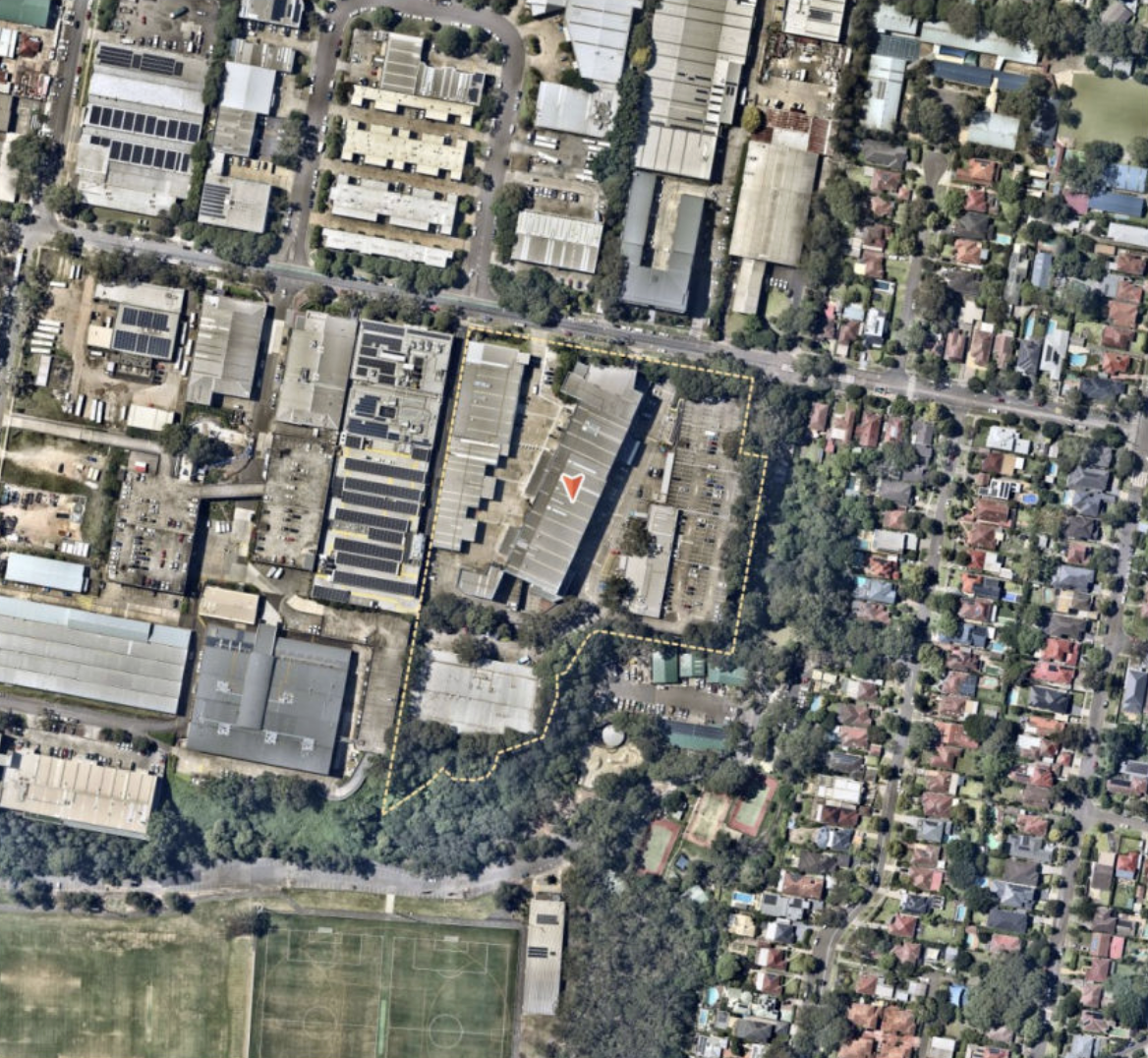
Noise emissions from data centres come from a range of sources. Primarily, their numerous cooling systems transfer cold air onto thousands of hot servers. But this noise doesn’t affect everywhere at once. It affects areas differently depending on their proximity to the facility.
Locations in open spaces, like parks or nature reserves, tend to be more vulnerable than those in obstructed areas or those with existing background noise, such as business or industrial areas. Meteorology can also come into play.
AirTrunk’s SYD1 facility is no exception, with some areas being more impacted by sound than others. The most affected residential area is on 150 Epping Road, Lane Cove, with 50 dB(A) during the day and 43dB(A) at night; the former is comparable to the noise of a typical office space. The SYD2 building will aim to reduce this number by 10, according to documents lodged with Planning NSW.
These noise levels have been assessed by Planning NSW. However, even when the assessment looks good on paper, the impact of sound isn’t always accurately measured until it’s tangible.

A resident from an apartment tower on 150 Epping Road said they can hear noise from the AirtTrunk data centre all the time as their apartment looks out over the Lane Cove River and AirTrunk.
While Lane Cove MP Anthony Roberts argues his Great North walk (located near AirTrunk), which was previously “incredibly peaceful”, is now subject to humming noises from cooling systems.
“You used to be able to hear frogs, everything, it was peaceful,” Mr Roberts said, “and now you’re subjected to a continuing hum, as if there’s an air conditioner you’re carrying on your back.”
Goodman’s proposed data centre is still in the planning stage, so the numbers are subject to change. However, it’s currently looking to emit up to 51 dB(A) during the day, and 35-38 dB(A) at night.
Information sent to locals after a community information session by Goodman’s consultants stated that the noise during the day “Is noticeable but generally not disruptive for most people.” Nighttime was compared to a library, with sound relatively low and unlikely (ITC emphasis) to disturb most residents.”
In other areas of Sydney, the City of Ryde has expressed concerns about a cluster of data centres planned in the Macquarie Park Innovation District (MPID), citing that the land could instead be developed as residential buildings or affordable housing.
“As someone who has fought to protect open space and balance housing targets with a high-quality lifestyle for residents, I find this trend deeply troubling. It feels like once again, decisions are being made in Macquarie Street about the City of Ryde without listening to the people who actually live here,” City of Ryde Mayor Trenton Brown shared.
“Data centres are bad neighbours in areas that have been earmarked for aggressive housing uplift.”
The NSW Environmental Protection Agency Noise Policy for Industry recommends a maximum of 55 dB(A) for suburban residential areas during the day. This noise limit is determined on a case-by-case basis and usually equates to the sound of an office or a library. This may seem tolerable enough, but the constant exposure to sound, even at this level, can have an impact.
Will Constant Office-Level Noise Really Impact Me?
First off, will it affect your health? Probably not, at least in the case of examples listed above.
Constant exposure to noise above 75 decibels can cause cardiovascular disease and hearing loss. Levels between 53–55 dB(A) have been linked to elevated blood pressure and increased cardiovascular risk, according to the World Health Organisation (WHO).
WHO recommends community noise levels be below 30 dB(A) in bedrooms at night for good-quality sleep. The decibel count in some Lane Cove areas affected by data centres will be 5 to 10 decibels above this.
The Environmental Protection Agency states noise impacts are assessed as part of planning and assessment. The process doesn’t just survey sound levels, which could impact health, hearing or sleep, but it also takes into consideration human annoyance levels – a factor becoming more relevant in discussions of mental health burdens and well-being.
While it’s easy to see how constant night-time noise can be annoying, another aspect data centre operators need to consider is the frequency of the emissions.
The sound these hyperscale facilities make has been likened to a humming refrigerator, piercing low vibrations through the air, streets, and walls of suburbs. Though people are most sensitive to sounds in mid-range frequencies, tonal low-frequency noise is also problematic, not because it is loud, but because it travels far, penetrates buildings, disrupts sleep and resists habituation, making it disproportionately stressful compared to ordinary background noise at the same decibel level.
NSW Planning has given the green light to the AirTrunk facility. But best-practice modelling for sound frequencies is not a sure thing, and while they work on paper, frequency sensitivities can be picked up unpredictably in environments, by humans or otherwise.
How About The Wild Life?
AirTrunk’s data centre on Sirius Road is adjacent to the Lane Cove National Park.
Animals have a different way of processing and reacting to sounds than humans do, so it’s essential to understand how species located near data centres react to frequencies being emitted.
According to a 2020 Lane Cove Council Bushland and Conservation Society survey, there were 79 recorded species in the area of bush north of Blackman Park, including two threatened bird species and six microbat species. Numerous mammal, reptile and amphibian species were also in the area.
The AirTrunk facility operates at different frequencies around the clock, all within the low-to mid-range. Professor Kirsten Parris at the University of Melbourne says that due to this factor, the threatened airborne species shouldn’t be affected, but those on the ground could have some disturbance.
“[The frequency] would probably not really affect acoustic communication in most birds or bats, because birds tend to use higher frequencies to talk to each other and bats to find prey and things,” she told ITC.
“But those low frequencies would probably have a vibrational effect. So I would expect that might be more problematic for ground-dwelling animals. So, little mammals and reptiles on the ground don’t like it when the ground shakes.”
Although the decibels and frequencies emitted from AirTrunk is disclosed in their environmental impact statement, Professor Parris says it’s inconclusive just how much it would impact ground-dwelling animals without surveying the area with a vibrometer.

Do Data Centres Need To Be Loud?
Hyperscale data centres cooling systems are the primary source of noise.
Mark Acton, a chartered engineer and data centre consultant with 25 years’ experience, says there are a variety of cooling systems that all do the job effectively, but the trade-off for reduced noise is sacrificing one resource for another. Open-loop water cooling is far cheaper and quieter, but during times of water scarcity, it may prove problematic, while systems that rely on energy and air for cooling use significantly less water, but are cheaper and louder.
“Unfortunately, both metrics [Power Usage Effectiveness and Water Usage Effectiveness] used by governments and people looking at environmental impact are mutually exclusive. You can’t say one is more important than the other and that one will negatively impact the other,” Mark told ITC.
He argues that this trade-off may become increasingly prevalent as data centres are progressively situated within or adjacent to residential areas, enabling the repurposing of excess energy to provide free domestic heating during winter months, albeit at the expense of increased ambient noise within living spaces.
In the Lane Cove precinct, Goodman and AirTrunk will utilise adiabatic cooling systems, which essentially function as a hybrid between water and air cooling. This system reportedly uses less water, albeit at the expense of increased energy consumption and noise.
A different noise will be emitted if a data centre loses power due to a power blackout – a common occurrence in Lane Cove – these data centres will need to switch to backup diesel generators. These can often be louder than the cooling systems.
AirTrunk’s SYD1 and SYD2 facilities will have a combined 150 backup generators on site. These become operational during times of testing and maintenance, or during main failure emergencies. In this case, the noise levels are not dissimilar to those already experienced on Epping Road.
Goodman will have an unknown number of generators on their Mars Road site, but they will also undergo occasional maintenance and testing strictly during the day. The generators will be located on the rooftop of the building, behind acoustic screens.
How Are Noise Limits Measured For Each Area?
Sound mitigation is a crucial step in data centre development. Although there is no concrete legislation requiring these facilities to adhere to specific noise levels, the EPA establishes criteria for noise mitigation during the planning stages.
Because every environment is different, noise triggers are assessed and then set. These are typically established by recording the area’s existing background noise and adding 5dB(A). They also vary depending on the time of day, whether it’s morning, afternoon, evening, or night.
Sleep disturbance triggers are measured to ensure residents are not disturbed by data centre noise at night.
This is measured through LAeq,15min, which tells you how noisy the night feels overall, by recording the average sound energy over 15 minutes. Another measurement is LAFmax, which records whether single noise events – such as fan surges or generator start-ups – are loud enough to wake people. NSW EPA trigger levels decide when those impacts become unacceptable.
Assessments like this are crucial to communities, as areas without industrial or business noise at night, such as Lane Cove West, are more vulnerable to low-frequency sounds. And although assessments may be completed on paper, noise sensitivity depends on a diverse set of factors, meaning some may still be sensitive to noise and frequencies, especially at night.

What Sound Mitigation Techniques Can Be Done?
Mr Acton says sounds from data centres can be influenced by their environment; something as common as wind direction can affect how sound travels to residential areas. He states, evidently, these noises can be mitigated with techniques such as absorbing walls for cooling machines, and while diesel engines are often rarely used, they can be “attenuated pretty effectively.”
AirTrunk notes that the noise at its SYD1 and SYD2 facilities is mitigated through a combination of acoustically enclosed generators, strategic placement on upper-level gantries shielded by the building structure, heavy concrete plant rooms, acoustically treated ventilation louvres, and low-speed variable cooling systems.
Generators are also mitigated through operational controls that restrict routine generator testing to daytime.
Even with sound-mitigation techniques, noise may still be heard by surrounding residents.
In the United States, data centre clusters have formed in several states, such as Virginia, and some local counties, such as Fairfax, have tackled noise issues head-on. Under local regulations, data centre buildings must be at least 200 feet from residential areas or properties. Equipment such as back-up generators must be 300 feet from residential property or separated from the lot line of a residential district or residential property by the data centre building.
Lane Cove locals are no strangers to noise, with certain areas already bearing the brunt of noise with Sydney Airport’s choice in flightpaths.
To address external sound, locals can take steps to mitigate noise. Window glazing is one of the more effective measures, with secondary glazing reducing noise by 10-20 dB, including low-frequency sound.
Other techniques can include upgrading trickle vents to acoustic vents to reduce low-frequency noise, changing bedroom layouts to face away from data centres, or using thick rugs and upholstered furniture to absorb noise.
Mr Roberts says the cumulative effect of data centres across residential Sydney seems to have “Very little, if any, government advice,” and calls for better technology and regulation.
“These data centres are using old technology normally used in the US and in Europe, and there needs to be additional regulation upon these,” the local MP said.
It is important to remember that some data centre developments are still in their planning assessment stages, so concerns about noise can still be raised. The proposed data centre at Mars Road, Lane Cove West, is still in the very early stages, and residents will be able to make submissions after Goodman lodges its Environmental Impact Statement.
If a developer chooses to lodge their development application with NSW planning as a state significant development, local councils can only provide comments on the proposed development, but have no power to require NSW planning to draft development conditions that would assist them if residents complain about data centre noises.
For concerns, it’s best to reach out to the EPA, your local MP, or even the operators of data centres within your community.
Support Independent Community News
In the Cove relies on the financial support of our community to continue providing free, independent local news. If you value what we do, please consider contributing.
We deliver independent Lane Cove news every day — with no paywall, no media owners and no political agenda. We write for the community, from within the community.
We are proud members of LINA – the Local & Independent News Association, supporting small publishers who keep local journalism alive.
Why local news matters:
Strong local news keeps communities informed, connected and accountable. Without it, misinformation rises and important local issues go unreported. Your contribution directly keeps independent journalism alive in Lane Cove.
 Shout ITC a Coffee – here
 Contribute Any Amount – here
 Advertise with Us – here