

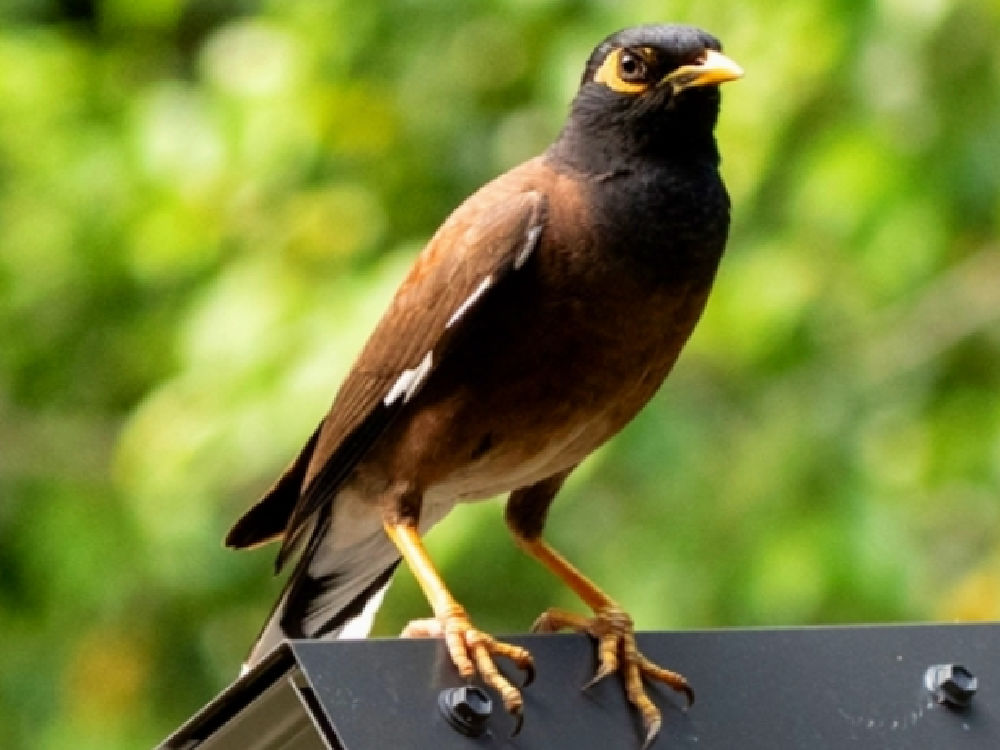
Indian Myna birds are an invasive species and a significant pest in urban environments.
They pose a threat to native birds and animals that nest in tree hollows, as they aggressively compete for space. Mynas are regularly seen to usurp nests, kill young and destroy the eggs of native species, including seabirds and parrots.
Unlike native birds, Indian Mynas breed multiple times each season, allowing their populations to grow rapidly.
The large nests they build often rot after they are vacated, leaving tree hollows unsuitable for native species to use.
There are also public health risks associated with Indian Myna birds. They are known to nest in roofs, and their droppings and mites can contribute to disease.
Bites from bird mites can cause skin irritation and, if inhaled, may contribute to asthma and hay fever.
The messy and unhygienic lifestyle of the Indian Myna is evident at popular roosting and feeding sites such as school grounds, shopping centres, fast-food outlets and outdoor dining areas like Lane Cove’s The Canopy and Lane Cove Plaza.
With their scavenging behaviour and poor hygiene, Indian Mynas are often compared to rats and cockroaches in their potential to spread disease and impact human health.
Noise from Indian Myna roosts — particularly at pre-dawn and dusk — can also cause significant disturbance and sleep disruption for nearby residents.
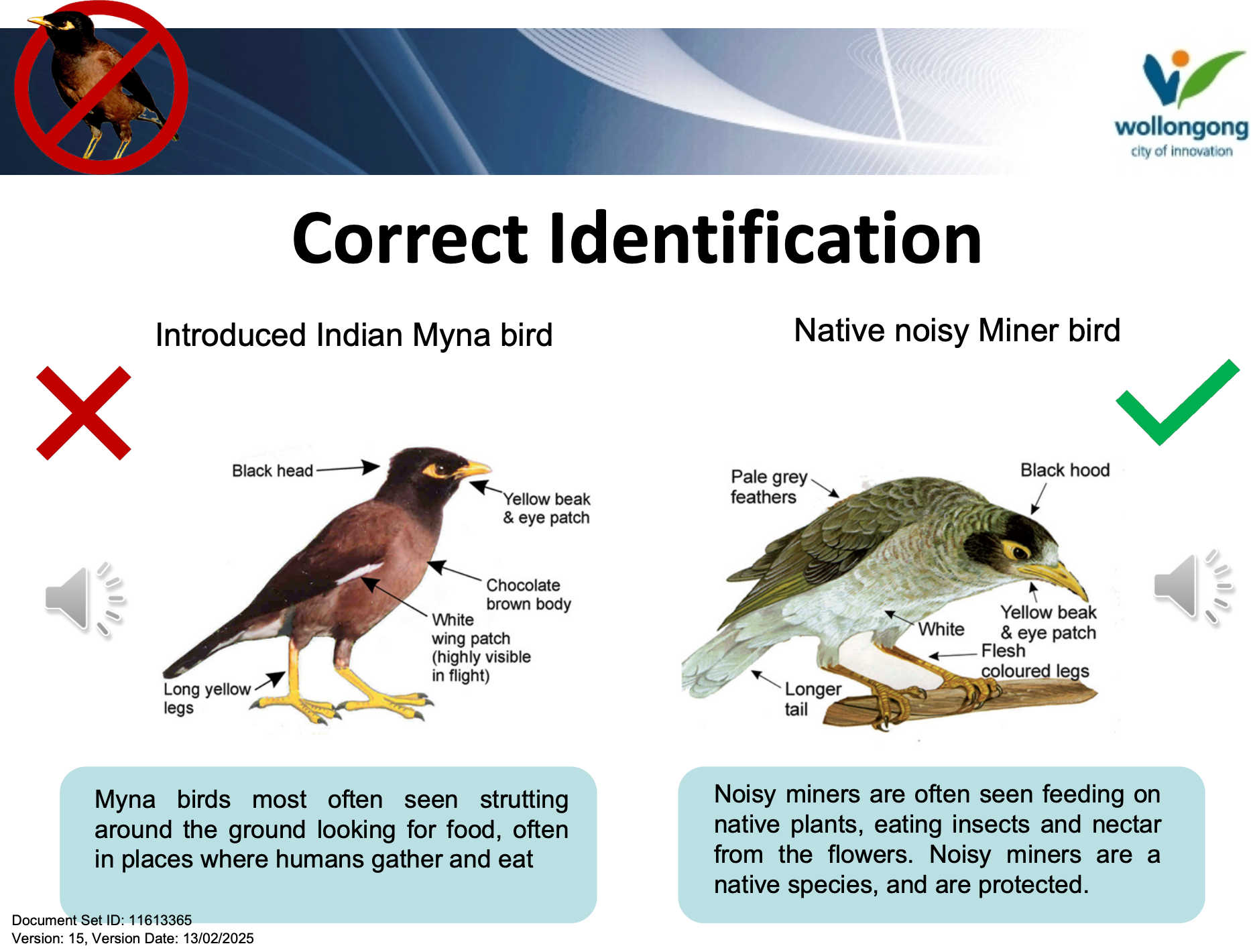
Make Sure You Know the Difference Between Indian Myna Birds and Native Noisy Miner Birds
Mackay Regional Council Declares War on Myna Birds
The Mackay Regional Council has labelled Indian Myna birds the “cane toads of the sky” and is encouraging residents to help reduce their numbers.
Mackay Mayor Greg Williamson said Indian Myna birds have established large populations along Australia’s eastern seaboard.
“Like the cane toad, the species was brought into Australia to try and control insects. They first arrived in the 1860s to control pests in market gardens in Melbourne,” Mayor Williamson said.
“They were then introduced to northern Queensland to control pests in sugar plantations.”
The species is a prolific breeder, with each mating pair laying up to 15 eggs per year.
Modelling shared by the Dubbo Indian Myna Control Program shows the exponential population growth from just one breeding pair.
“From those two birds, their young and future generations can produce more than 90,000 birds within six years,” Mayor Williamson said.
“Those figures are really alarming and show the importance of community action.”
Mackay residents are being encouraged to join a community-driven project aimed at reducing this highly invasive species.
The Mackay Indian Myna Bird Action Group (MIMBAG) has received traps built by members of the Mackay Men’s Shed, which will be loaned to residents free of charge.
BirdLife Mackay committee member John Morris said there has been increased awareness of the issue and now is the time to act.
“These pests pose significant threats to native bird species — harassing and evicting them from nests, killing young and destroying eggs,” he said.
“They also pose a biosecurity and economic threat to agriculture, as well as human health.”
“What we need now is for the community to learn how to trap the birds and get involved.”
What Happens in Lane Cove with Myna Birds?
Lane Cove Council has an Indian Myna Bird Targeted Control Program.
Lane Cove Council is undertaking the following measures:
- Working with local businesses
- Regular cleaning of potential food sources
- Targeted pest control methods undertaken by qualified professionals
- Installation of bird spikes to prevent roosting
- Use of enclosed bins for waste management
To complement these initiatives, Council asks residents not to feed birds in the Plaza or The Canopy and to dispose of rubbish promptly.
What Locals Can Do at Home
- Place food scraps in bins and cover pet food
- Do not feed birds in your backyard
- Block potential nesting sites such as holes in roofs or gutters
- Remove Myna nests from nest boxes or tree hollows on your property
- Ensure doors and flyscreens are self-closing
- Consider planting indigenous species through the Backyard Habitat program
Targeted Control Has Not Always Gone Smoothly
In 2024, a Myna bird was spotted in a cage above a restaurant at The Canopy, appearing distressed.
A Lane Cove Council spokesperson told ITC: “Indian Myna birds are an invasive species. They are territorial and highly aggressive birds that compete with and displace native wildlife. They take over tree hollows, eject nestlings and destroy eggs.”
“Our targeted control programs have included baiting and trapping. Traps are monitored remotely and birds are removed within 24 hours. Care is taken to avoid trapping native species.”
“We understand community concerns regarding animal welfare and ensure humane protocols are followed.”
RSPCA’s Position on Indian Myna Birds
The RSPCA acknowledges that pest animal control may be necessary but notes there is not universal agreement on culling Indian Myna birds.
The organisation suggests:
- Improving natural habitats to support native species
- Ensuring any control programs are humane and government-supervised
- Monitoring the effectiveness of any population control measures
Further information is available on the RSPCA website.
Report Myna Birds
You can report Myna birds in your area via the MynaScan website or app:
What you will be promoted to report:
- Myna bird activity/sightings
- Provide photos
- Myna bird damage
- Control activities trapping etc)
Lane Cove Plaza and The Canopy Prior Issues
This is not the first time ITC has reported on Indian Myna bird issues in Lane Cove.
In 2022, Council confirmed it was undertaking a targeted control program, including baiting, to manage populations in The Canopy and Plaza.
In earlier years, residents reported birds appearing unwell or dying in public areas, prompting investigations.
Lane Cove Council continues to monitor and adjust its approach to managing this invasive species.
Why Local News Matters
In the Cove delivers independent Lane Cove news every day — free, with no paywall and no external media influence.
We report for the community, from within the community.
Local journalism plays a vital role in keeping residents informed, highlighting issues that impact daily life and holding decision-makers accountable.
Covering stories like this takes time, resources and ongoing commitment.
Your support helps ensure Lane Cove continues to have a strong, independent voice.
Support Independent Community News
☕ Shout ITC a coffee:
buymeacoffee.com/inthecove
💛 Contribute any amount:
inthecove.presspatron.com
📣 Advertise with us:
inthecove.com.au/advertise