

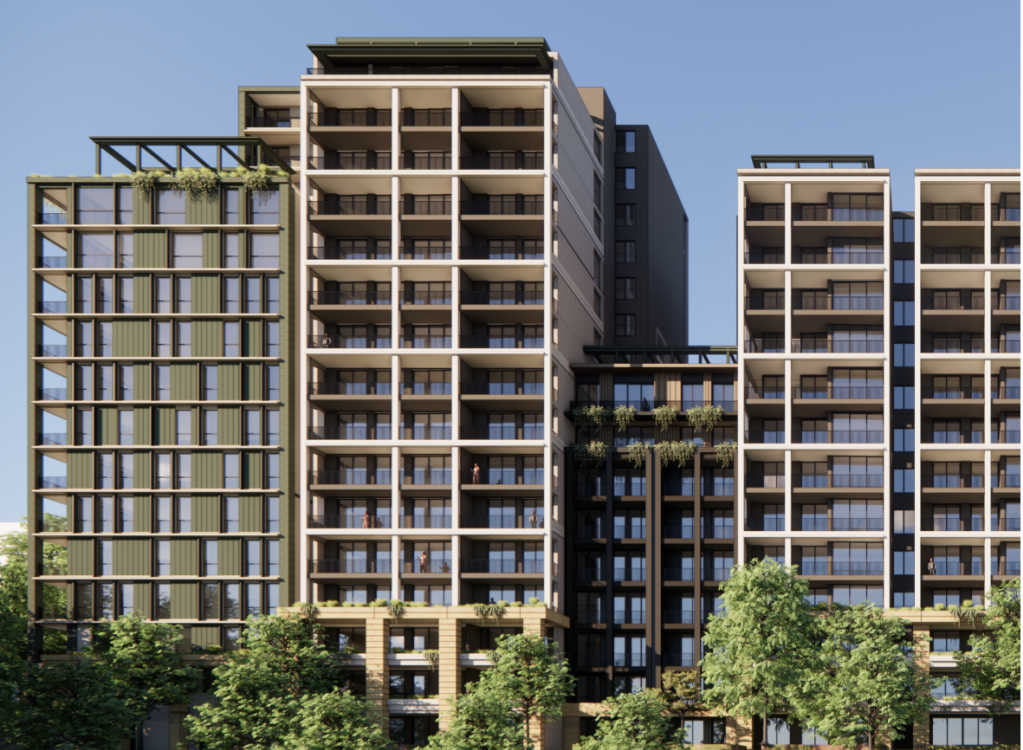
A major new apartment development proposed for 300 Burns Bay Road Lane Cove is now on public exhibition. This development was lodged via the Housing Development Application process and since the development was announced locals have been concerned that this is an example of overdevelopment.
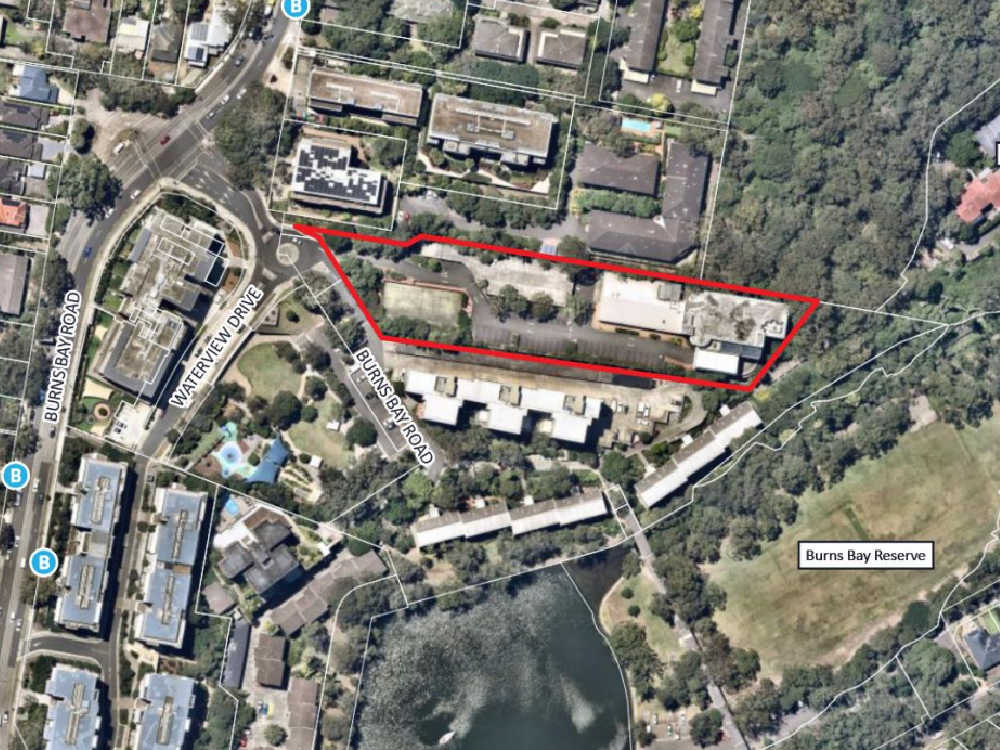
The proposal would see the current four-storey office building and warehouse demolished, making way for a residential development of up to 15 storeys.
Developer Level 33 is seeking approval for 225 apartments, including 34 affordable housing units, under the State Significant Development pathway.
They have lodged an Environmental Impact Statement with Planning NSW – you can view the EIS here.
What’s proposed?
The development is designed as three interconnected buildings stepping down towards the Lane Cove River.
Key features include:
- 225 apartments (191 market and 34 affordable)
- Heights ranging from 7 to 15 storeys (up to 54m)
- Rooftop and ground-level communal spaces
- 237 car parking spaces across basement levels
- Landscaping works and a new public park
The site sits within an R4 High Density Residential zone and is surrounded largely by apartment buildings, meaning the current commercial use is considered out of step with the surrounding area.
Concerns Raised by Locals
The EIS noted:
“The most commonly raised concerns related to:
- Proposed height and associated impacts (overshadowing, view impacts).
- Existing traffic issues and exacerbation of these.
- Road safety issues (function of the existing roundabout, and pedestrian safety)
- Construction related impacts (contamination, dust, traffic, parking, noise, pollution and waste).
- Infrastructure and the ability of local shops, transport, open spaces, schools and roads to accommodate additional demand.
- Increased population density.
- Impact on property values.”
Transport: not as well connected as it seems
The Environmental Impact Statement notes:
“The site is well located within proximity to public transport, with 3 bus stops (within 200m), which provides high frequency services to Chatswood, North Sydney, Burwood Station and Gladesville.”
This statement would come as a surprise to many locals who have been complaining about lack of transport options outside peak hours and on weekends.
While the site is close to several bus stops, the transport picture is more complex.
Transport for NSW defines high-frequency public transport as all-day, turn-up-and-go services operating at 10–15 minute intervals.
While Route 251 provides high-frequency service during weekday peak periods, it does not operate outside these times or on weekends.
Other routes servicing Burns Bay Road operate at lower frequencies or do not provide direct access to the Sydney CBD. It is therefore difficult to see how the site is directly serviced by high-frequency public transport.
A Green Travel Plan has been proposed to encourage walking, cycling and public transport use but questions remain about how effective this will be given existing transport limitations.
Traffic concerns
Traffic is a key issue for locals.
The Traffic Impact Assessment (TIA) acknowledges that Burns Bay Road and surrounding roads are already heavily congested during peak periods. However, the TIA concludes:
“the existing road network operates with ample spare capacity, and the existing level of service will be maintained following the construction of the proposed development. On this basis, the development would not adversely impact the existing road network operation, and no infrastructure upgrades are required.”
The report does not address the following concerns by locals:
- The road network is already operating near capacity
- Residential traffic is more concentrated than current warehouse use
- Standard modelling may not reflect real-world delays
Overall, there are concerns the development could worsen congestion, particularly during morning and evening peak periods.
Planning changes
To make this project possible, the developer is seeking significant changes to planning controls, including:
Increasing the maximum building height from 21m to up to 54.5m
Increasing floor space ratio from 2:1 to 3.22:1
One of the biggest talking points has been the proposed increase in building height.
Under current planning controls, the site allows for a maximum height of 21 metres. The proposal seeks to increase this to more than 54 metres—effectively more than doubling what is currently permitted.
For many residents, that raises a fundamental question: how much change is too much?
While the development has been designed to step down towards the Lane Cove River and break the massing into three buildings, the overall scale remains significantly larger than what is currently allowed.
There are also concerns about what this could mean longer term.
Approving a development of this height could set a precedent for future applications in Lane Cove, making it harder to refuse similar proposals and potentially leading to a gradual shift towards much taller buildings across the area.
Residents may also be worried about the day-to-day impacts of a taller development, including overshadowing, privacy, and changes to the local streetscape—particularly in an area known for its bushland setting and village feel.
Importantly, the height increase comes alongside a proposed uplift in density, with a higher floor space ratio also being sought. This means the development would not only be taller, but significantly more intensive overall.
Locals are questioning whether local infrastructure, particularly roads and public transport, is equipped to handle that level of growth.
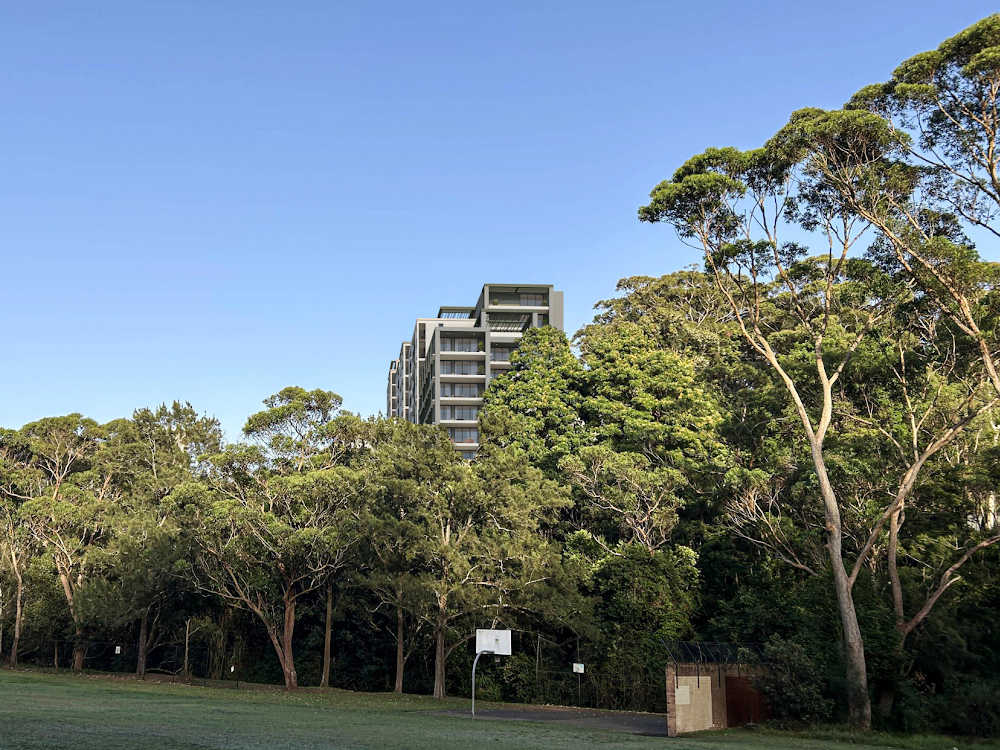
Source: EIS Planning NSW
Have your say
The proposal is currently on public exhibition, giving residents the opportunity to review the plans and provide feedback. Feedback must be submitted online by 21 April 2026.
Why Local News Matters
In the Cove delivers independent Lane Cove news every day — 100% free, with no paywall and no media owners influencing what we publish.
We write for the community, from within the community.
We are a proud member of LINA – the Local & Independent News Association, supporting small, independent publishers committed to accountable local journalism.
Why local news matters:
Local news strengthens community connection, keeps residents informed, spotlights issues bigger outlets overlook, and holds local decision-makers accountable. Your support helps ensure Lane Cove continues to have a strong, independent voice.
Independent reporting takes time, resources and a huge commitment to our community. Every contribution helps us continue covering the stories no one else does.
Support Independent Community News
 Shout ITC a Coffee (one-off):
buymeacoffee.com/inthecove
 Contribute Any Amount:
inthecove.presspatron.com
 Advertise with Us:
inthecove.com.au/advertise


